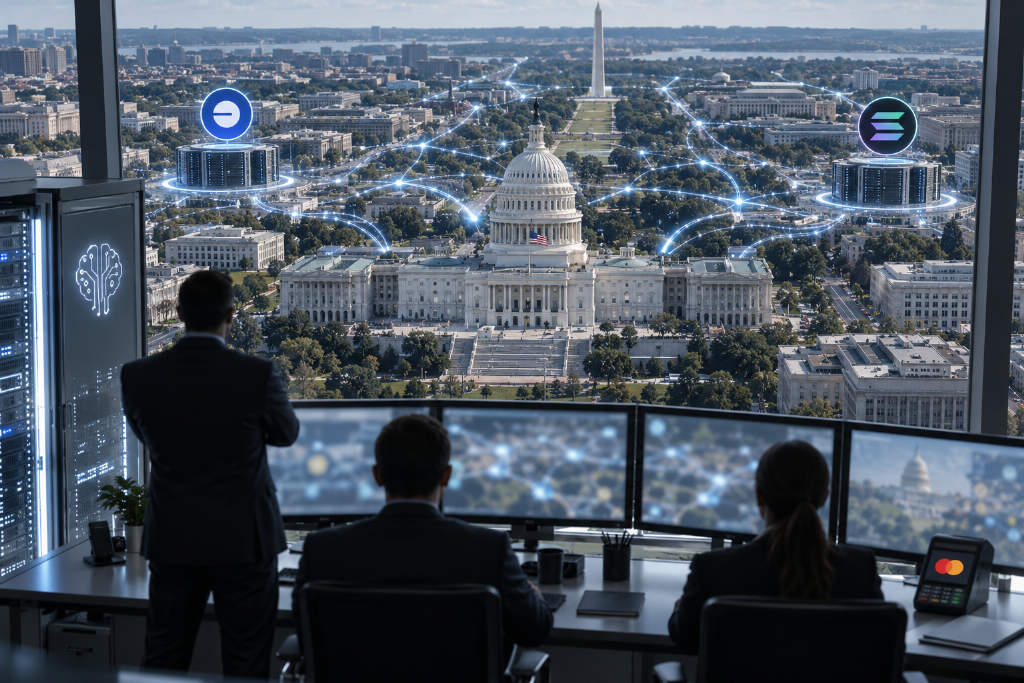
A U.S. Internal Revenue Service official has warned that AI-driven payment activity is expanding at a pace that conventional supervision may struggle to match. Speaking at the United Nations Future of Money Summit, IRS Risk and Controls chief Dottie Romo said AI agents can make millions of decisions per minute, making periodic reporting an increasingly slow way to spot fraud or other risks. She said the next phase of oversight may require algorithms monitoring algorithms.
The warning came alongside fresh transaction data cited from BeInCrypto’s “State of AI Agent Payments 2026” report. The study said researchers tracked 6.4 million x402 payment transactions on Base and Solana between July 23 and Aug. 26, totaling $119,900. While the individual payments were small, the report said AI agents have logged nearly 200 million settlement transactions since launch.
At the same event, Mastercard Financial Crime Solutions Manager Julius Moye pointed to the Knight Capital trading disaster and the Terra/Luna collapse as examples of why automated systems need strong safeguards. He said models should detect abnormal behavior through machines first, contain issues automatically, and escalate severe incidents to human operators.
Dottie Romo, head of risk and controls at the U.S. Internal Revenue Service, said AI agent payments are growing fast enough that traditional regulatory oversight may no longer keep pace.
Speaking at the United Nations Future of Money Summit, Romo said AI agents can make millions of decisions per minute. In that setting, relying on periodic reports to identify fraud or risk is too slow, she said. Her warning was blunt: oversight may eventually require algorithms to supervise algorithms.
BeInCrypto report tracked 6.4 million x402 payments
BeInCrypto’s report, State of AI Agent Payments 2026, said researchers tracked 6.4 million x402 payment transactions on Base and Solana from July 23 to Aug. 26, with total value reaching $119,900.
The report added that although the value of each payment was small, AI agents have recorded nearly 200 million settlement transactions since launch.
Mastercard executive calls for safeguards in automated systems
Julius Moye, a manager in Mastercard’s Financial Crime Solutions unit, cited the Knight Capital trading disaster and the Terra/Luna event as cautionary examples. His point was that automated systems need built-in safeguards before problems spread.
Moye said models should use machines to detect abnormal behavior and automatically control the issue. Severe incidents, he said, should then be escalated to human handling.
This article was originally published by Bit.Fan. For more cryptocurrency news and market insights, visit www.bit.fan. Disclaimer:
The market information, project data, and third-party content displayed on this platform are for industry information sharing only and do not constitute any form of investment advice or return commitment.
Cryptocurrency trading carries high risks. Users should fully assess their risk tolerance and make independent decisions. All profits, losses, and legal responsibilities are borne by the users themselves.