
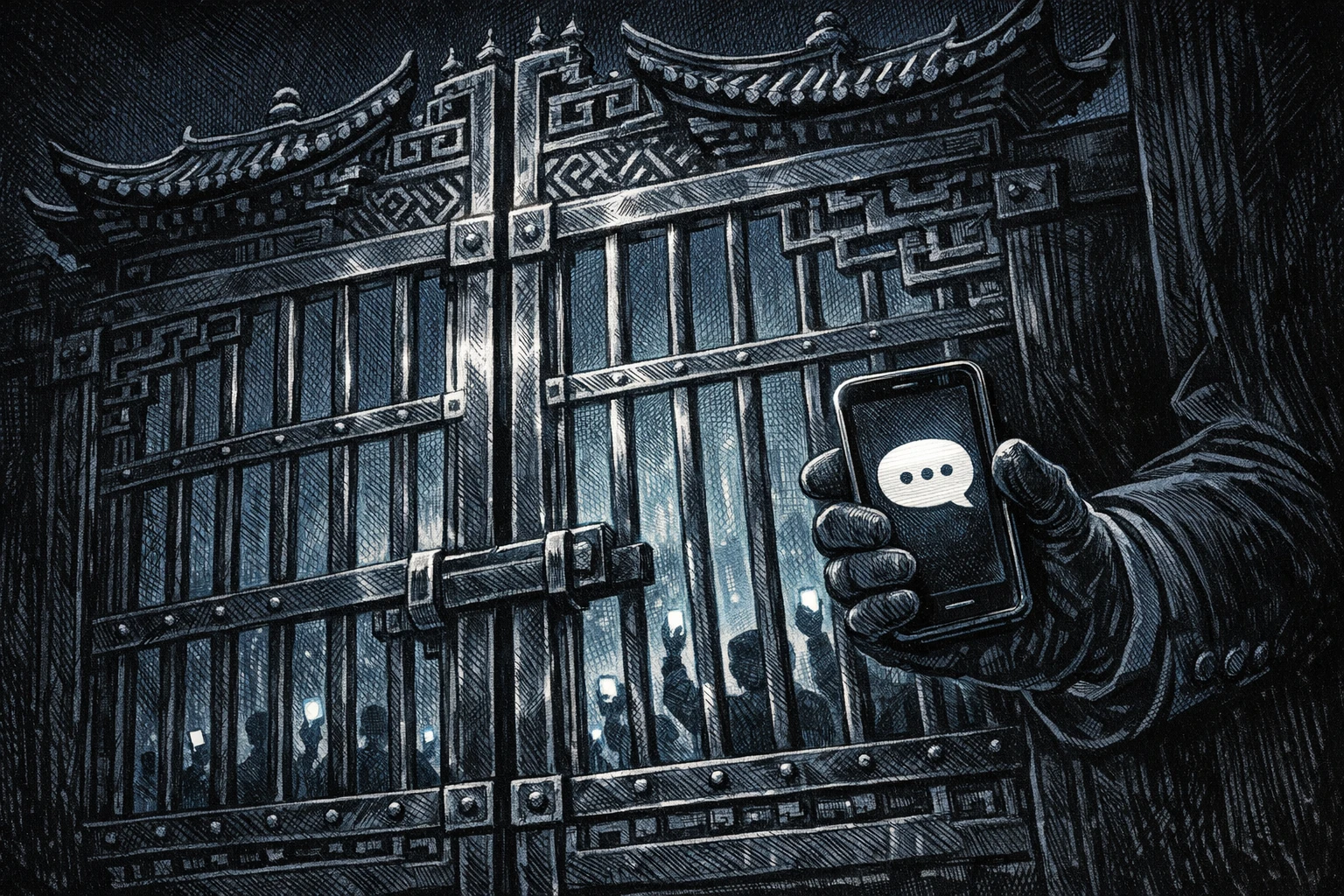
China's internet censorship machine has targeted another decentralized communication tool. Jack Dorsey, CEO of Block, posted a screenshot on X Sunday showing that China's Cyberspace Administration (CAC) demanded the removal of Bitchat from the Chinese App Store, including its TestFlight beta. Dorsey's caption was brief: "Bitchat pulled from the China App Store."
What makes Bitchat a threat in Beijing's eyes is its architecture: it runs entirely on Bluetooth and mesh networks, requiring no internet connection. This design enables communication during government-imposed blackouts or network shutdowns — exactly the scenario regulators want to prevent.
From protest hotspots to 3 million downloads
Over the past months, Bitchat surged in use amid protests in Madagascar, Uganda, Nepal, Indonesia, and Iran — all countries where authorities have attempted to cut off communications. Chrome download statistics show Bitchat has surpassed 3 million global installs, with over 92,000 new downloads in the last week alone. Google Play counts over 1 million installs. For perspective, WeChat has about 810 million users in China, covering nearly 58% of the population.
CAC cites 2018 regulation; Apple adds 'you are responsible'
In its takedown request, CAC invoked Article 3 of the "Security Assessment Regulation for Internet Information Services with Public Opinion Attributes or Social Mobilization Capabilities," which took effect in 2018. Any online service that can shape public opinion or mobilize society must undergo a security assessment before launch and "bear responsibility for the assessment results." Apple's review team drove the point home: "It is your responsibility to understand and ensure your app complies with all local laws, not just the review guidelines below." Bitchat remains available in other countries.
Decentralized comms vs. state censorship: the lines drawn
Bitchat follows the same fate as Damus, a decentralized Twitter-like app that lasted only two days on China's App Store earlier this year. From Damus to Bitchat, the clash between censorship-resistant communication tools and state-level surveillance is sharpening. As long as these tools are designed around peer-to-peer encryption and offline capability, the conflict will persist.