Nvidia may show how much further earnings can rise this week. Kevin Warsh may determine how much investors are willing to pay for those earnings.
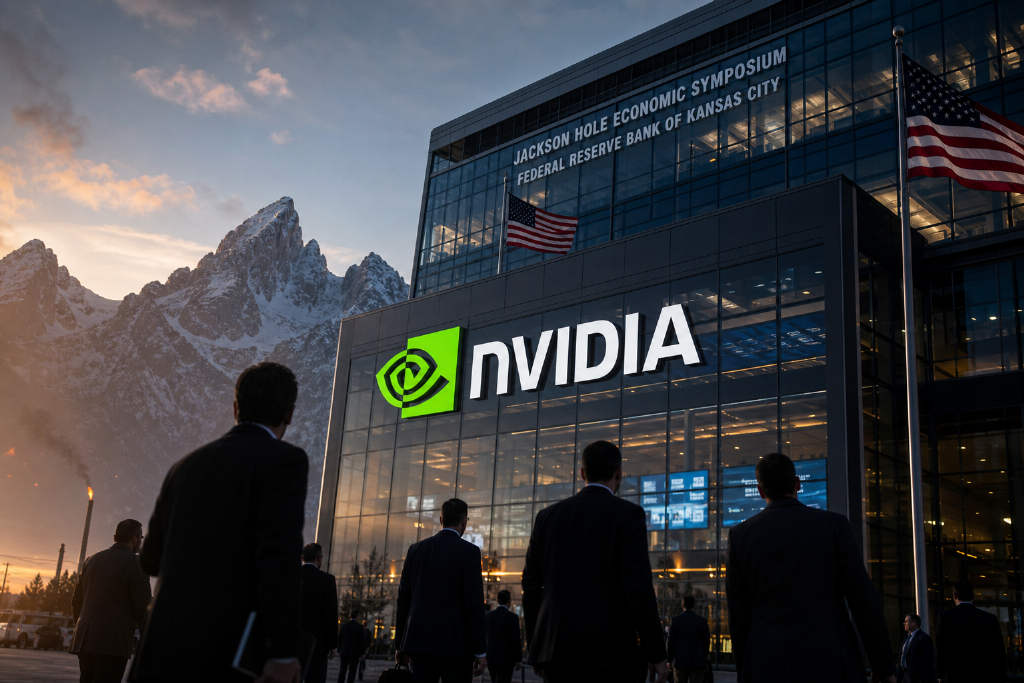
Every year in late August, central bankers, economists and financial market participants turn their attention to Jackson Hole, Wyoming. This year is no exception. The official theme of the annual Jackson Hole Economic Policy Symposium is "Financial Innovation: Implications for Payments and Policy."
For U.S. equities, though, the more pressing issue is not payment innovation. It is how the Federal Reserve will deal with increasingly expensive capital at a time when inflation remains above target, long-term rates stay elevated and global demand for capital is expanding quickly.
This year also carries an extra layer of attention: Warsh will appear on the main Jackson Hole stage for the first time as Federal Reserve chair.
Since taking over in May, Warsh has sharply reduced the kind of forward guidance markets had grown used to and has rarely signaled in advance what the next Federal Open Market Committee, or FOMC, should do. That makes this speech a key chance for markets to build a systematic view of the Warsh Fed policy framework.
The backdrop is difficult. Conflict in the Middle East and risks around the Strait of Hormuz have not fully faded. The U.S. 30-year Treasury yield recently moved above 5.3%, the highest level since 2007. The U.S. Treasury has unusually expanded the scale of long-dated bond buybacks. AI companies and the U.S. government are both entering the bond market at a rapid pace to raise funds.
With Nvidia earnings also due this week, the article argues that the real value of Jackson Hole extends far beyond a narrow debate over whether rates will go up again.
How Warsh may define this inflation cycle after oil moved above $90
The first issue is energy.
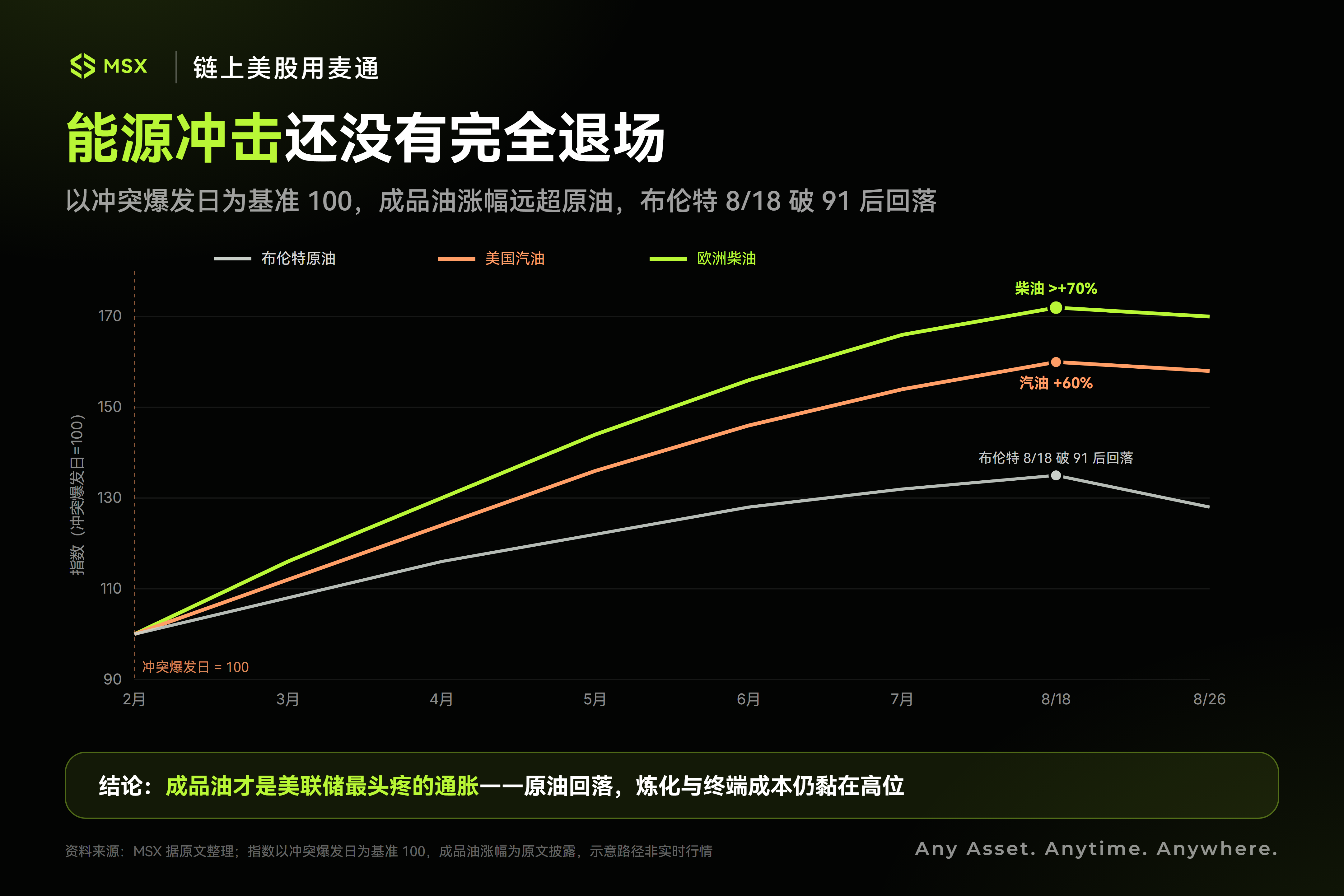
On Aug. 18, Brent crude briefly climbed back above $90 and settled at $91.02 a barrel. Prices later fell back toward the $86-$87 range by Aug. 26 as Iran and Oman resumed discussions over shipping arrangements through the Strait of Hormuz, but the article says the energy shock built over the past six months has not really disappeared.
Refined products may matter even more than crude itself.
Since the conflict broke out in February, a U.S. gasoline price benchmark has risen about 60% and European diesel prices have gained more than 70%. In the article’s telling, that means the energy shock is no longer confined to crude and is now passing into refined products, transportation costs and end-market prices.
That is exactly the kind of inflation the Fed finds hardest to handle. If the oil move is only temporary, policymakers can treat it as a supply disturbance and avoid overtightening in response to a short-term price spike.
If energy prices stay high for longer, however, they can keep flowing through transportation, manufacturing, food and services, and eventually affect consumer inflation expectations.
That makes one question central at Jackson Hole: whether the Fed sees the current energy inflation wave as a temporary supply shock or as a structural risk that could alter the inflation path again.
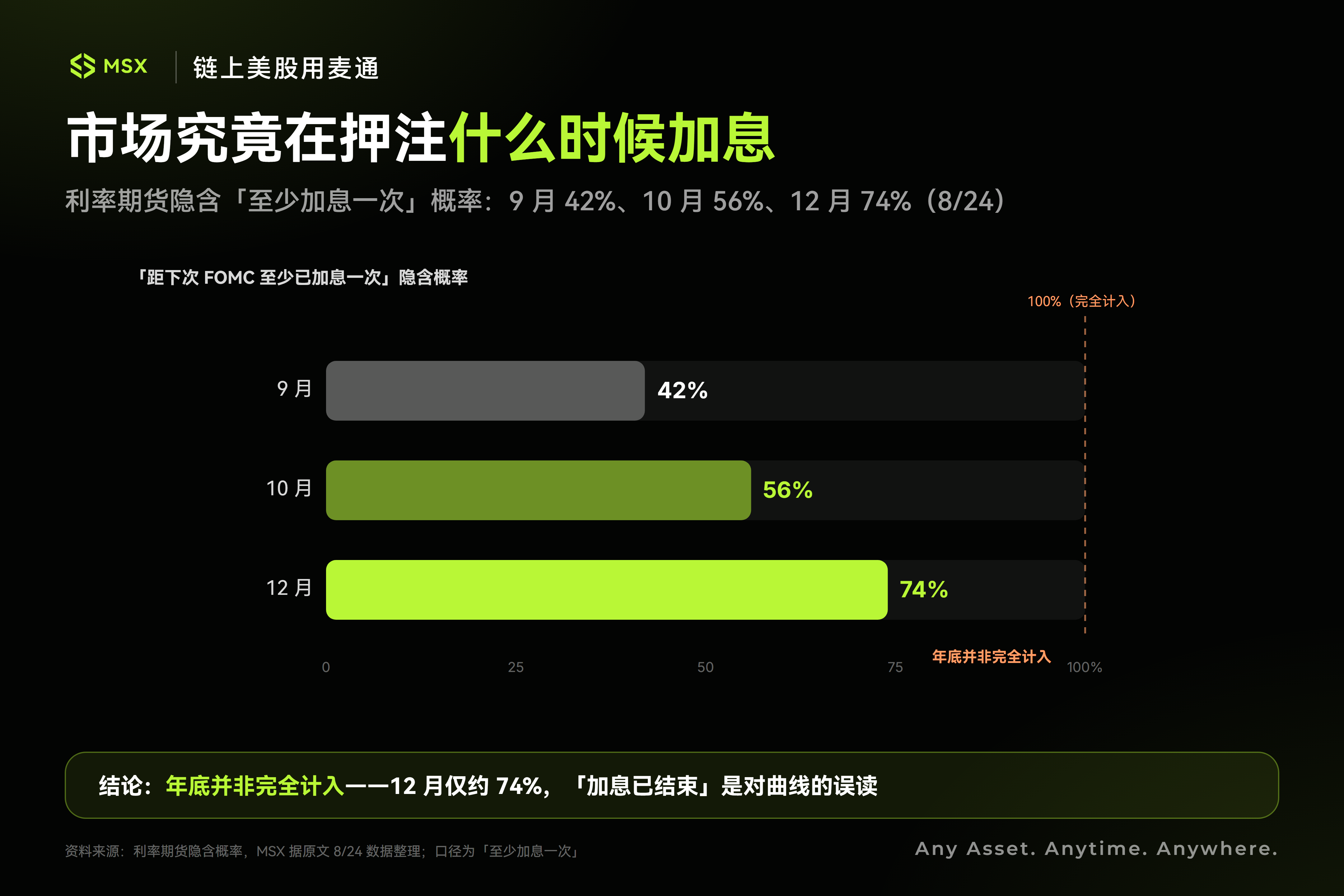
As of Aug. 24, interest-rate futures showed markets remained relatively cautious about an immediate hike in September, but the implied probability of at least one increase by year-end had risen to roughly three-quarters.
Divisions inside the July FOMC were already clear. The committee voted 9-3 to keep the federal funds rate at 3.50%-3.75%, though three members backed a 25-basis-point increase. Minutes released later showed that "many" participants believed more tightening would likely be needed if inflation failed to continue moving back toward the 2% target.
The article’s point is that markets are not just trying to judge whether Warsh will hint at a hike. They are trying to measure his tolerance for inflation.
What is really weighing on tech stocks: higher long-end Treasury yields
The piece says this is the part the market may be underestimating most.
Compared with short-end policy rates, the more immediate pressure on technology stocks has come from long-end yields.
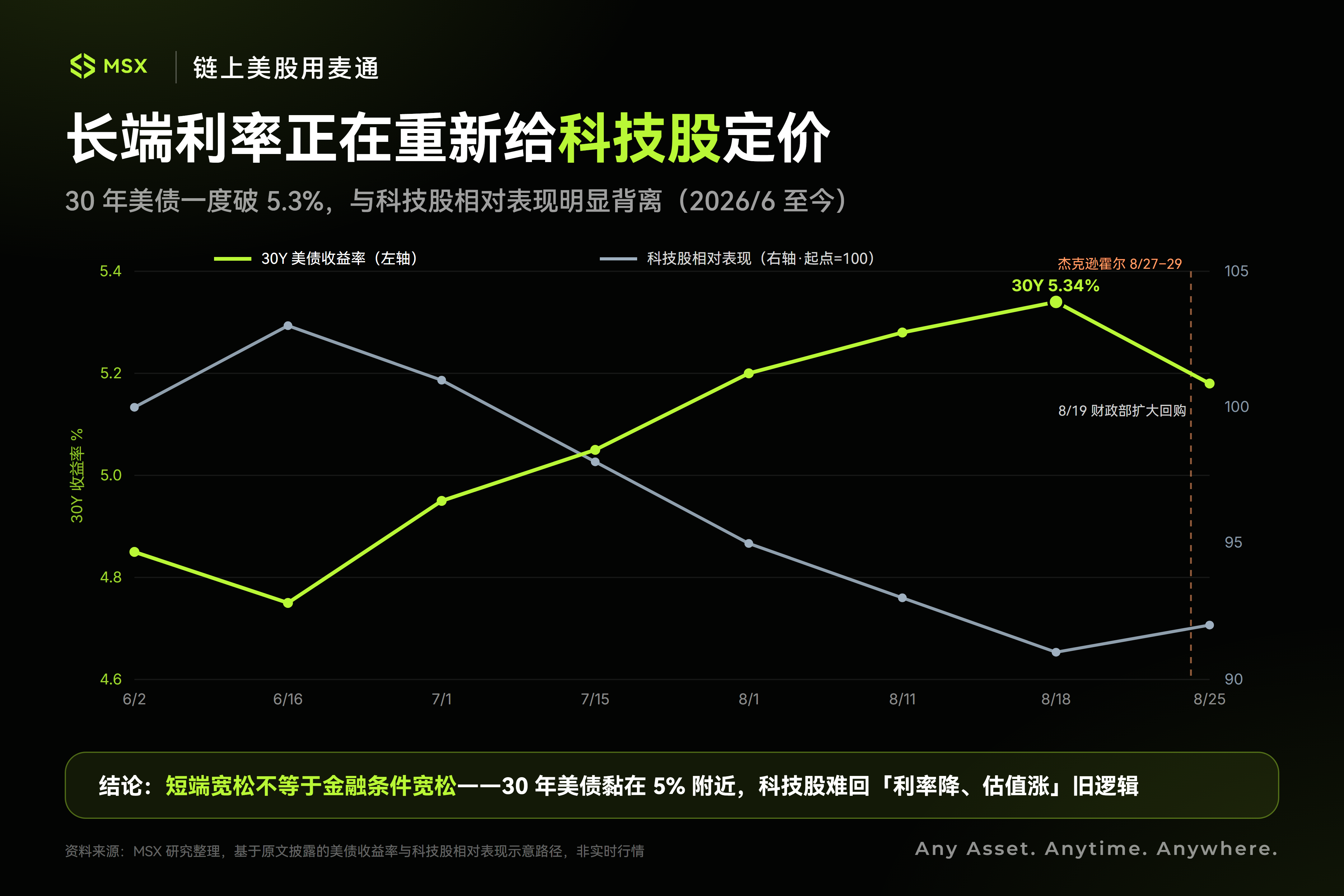
On Aug. 18, the U.S. 10-year Treasury yield rose to around 4.75% intraday, while the 30-year touched 5.34%, the highest since 2007. At the same time, Japan’s 10-year government bond yield briefly approached 3%, a level rarely seen since the 1990s. Long-term funding costs are rising across major economies.
MSX Research Institute says that move cannot be reduced to a simple view that markets are pricing in more Fed tightening. In its view, a deeper shift is underway: global competition for long-term capital is intensifying.
For much of the past decade, markets were more familiar with Ben Bernanke’s idea of a "Global Savings Glut" - abundant capital, weak investment demand and sustained central bank bond buying that kept real rates low for a long period.
The environment now looks different.
The U.S. government needs to finance persistent fiscal deficits. Europe needs investment in defense, energy and infrastructure. Population aging is adding pressure to public finances. At the same time, AI has opened an unusually large capital-expenditure cycle.
The article says Alphabet, Amazon and Meta alone have issued nearly $220 billion in bonds since 2026, more than double the $108 billion sold in all of 2025. The U.S. fiscal deficit is also expected to remain around 6% of GDP.
In other words, the competition for money is no longer just about governments. AI needs a great deal of capital too. That, the article argues, is why the latest rise in long-dated yields deserves far more attention from technology investors.
Long-end rates shape much more than sovereign borrowing costs. They feed into mortgage rates, corporate bond funding, the capital cost of data center projects and, crucially, the discount rate applied to future cash flows for growth stocks.
For technology shares whose valuations depend heavily on distant earnings, a 30-year Treasury yield above 5% implies a very different valuation system from a long-rate environment closer to 3%-4%.
So even if markets begin to expect a gentler path for short-end policy after Jackson Hole, tech stocks may not easily return to the old trade of falling rates and multiple expansion if the 30-year yield remains anchored near 5%.

Easier short-end policy does not automatically mean easier financial conditions. The article suggests that may be one of the most important points equity markets need to absorb.
After the Treasury expanded buybacks, what does Warsh need to address?
There has been another unusual development in the Treasury market.
On Aug. 19, the U.S. Treasury said it would raise the size of liquidity buybacks for 10- to 30-year Treasuries from the previously planned $2 billion each time to at least $4 billion. The new arrangement is set to run from Sept. 9 through Nov. 4.
After the announcement, the 30-year Treasury yield quickly fell from above 5.3% to around 5.18%.
The Treasury’s official explanation is still that the operation is intended to improve liquidity in the long-dated government bond market, not to directly control yields.
That distinction matters.
Even if buybacks rise from $2 billion to $4 billion, the article notes that the figure remains small relative to a U.S. Treasury market worth more than $30 trillion.
It may improve market structure, ease near-term selling pressure and signal that the Treasury is paying closer attention to the long end. It does not solve deeper issues such as the fiscal deficit, debt supply and the rapid growth in long-term capital demand.
U.S. federal debt surpassed $40 trillion for the first time in August. Against that backdrop, Washington is competing with AI giants issuing large amounts of debt for the same pool of global long-duration capital.
That leaves Warsh facing a policy setting far more complicated than a binary decision on whether to raise rates. The article says markets should listen for three points in particular:
- Under what conditions would the Fed raise rates again? A generic "data dependent" line may no longer be enough. Markets want to know what combination of core inflation, employment, energy prices and inflation expectations would lead Warsh to conclude that more tightening is required.
- How does Warsh interpret long-end yields? If he sees 30-year yields above 5% as already tightening financial conditions, the urgency of raising short-end policy rates could decline. If he sees the rise in long bonds as a sign of inflation expectations or policy credibility concerns, markets could hear something very different.
- How will the Fed manage an increasingly complex relationship with fiscal policy? The Treasury has become more active in managing long-end liquidity, while the Fed still needs to preserve anti-inflation credibility and policy independence. With U.S. debt above $40 trillion, that issue is growing more important.
For Warsh, who has only recently taken office, the article argues that this may be the central task of his first Jackson Hole address: he does not need to tell markets the answer for the next FOMC meeting in advance, but he does need to make clear what kind of policy framework he intends to build.
Nvidia may answer the earnings question; Warsh may answer the valuation question
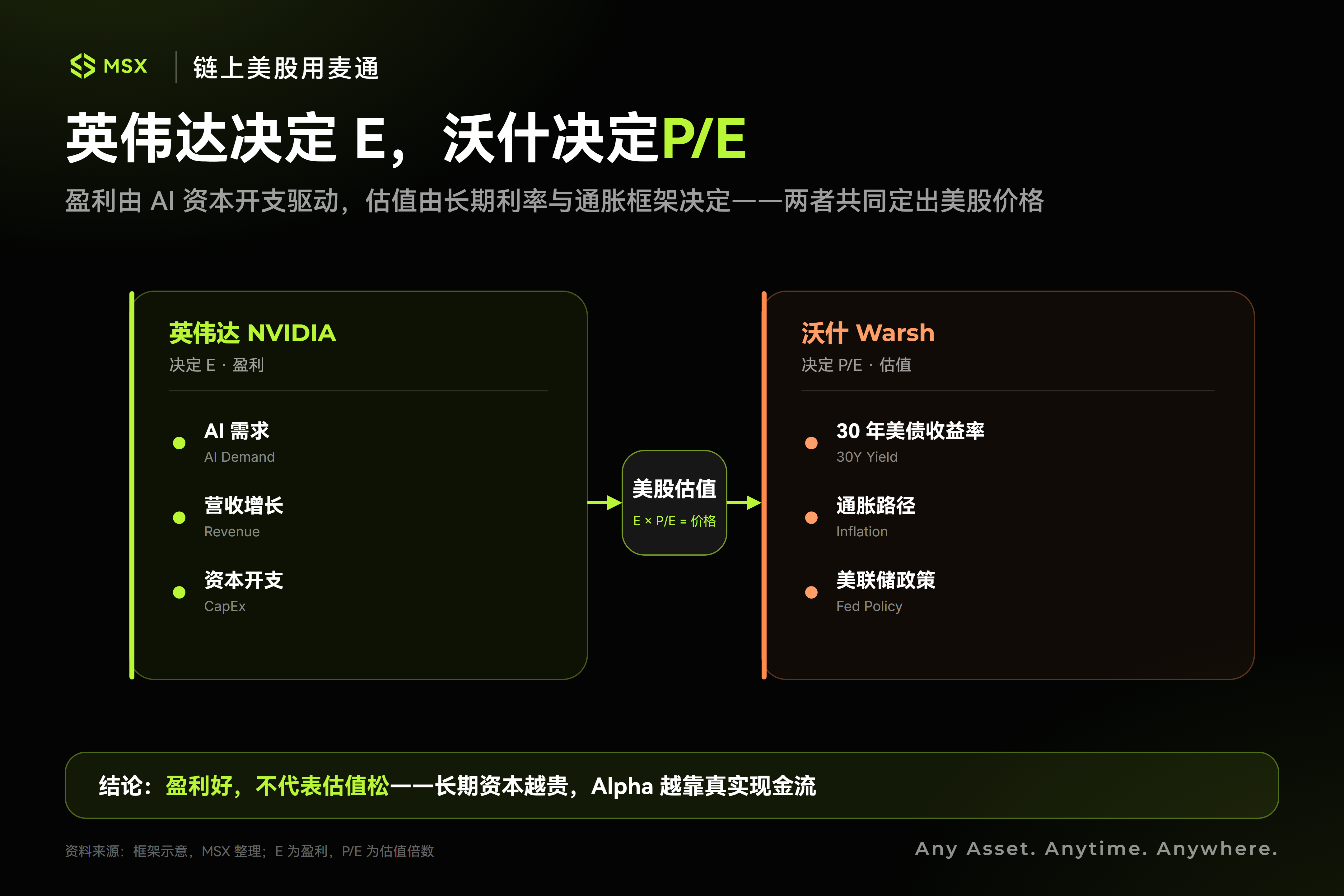
The article closes with a simple framing of the week’s two biggest events: Nvidia determines how much profits can still grow, while Warsh determines how much investors are willing to pay for those profits.
Nvidia will speak to AI demand, capital spending and whether corporate earnings can keep moving higher. Warsh will speak to how much valuation the market will still assign to those earnings when long-dated Treasury yields are near 5% and inflation remains above target.
One affects profits. The other affects the multiple placed on those profits.
If Nvidia again shows strong AI demand, energy prices ease further and Warsh convinces markets that inflation is under control, then a meaningful decline in long-end Treasury yields could still leave room for technology stocks to rise.
But if earnings remain strong while long-term capital keeps getting more expensive, U.S. equities may be moving into a different phase from recent years - one where profits can continue to grow but multiple expansion becomes more constrained, and alpha depends more on companies that can actually deliver cash flow and earnings growth rather than on a broad rise driven by lower rates alone.
That is why, in the article’s framing, the real question at Jackson Hole is how much U.S. stocks are worth when governments and AI giants are competing for capital at the same time and long-term rates have returned to elevated levels.
Disclaimer: Markets involve risk, and investment requires caution. This article does not constitute investment advice. Users should consider whether any views, opinions or conclusions in this article fit their own situation. Any investment decisions made on that basis are at their own responsibility.