
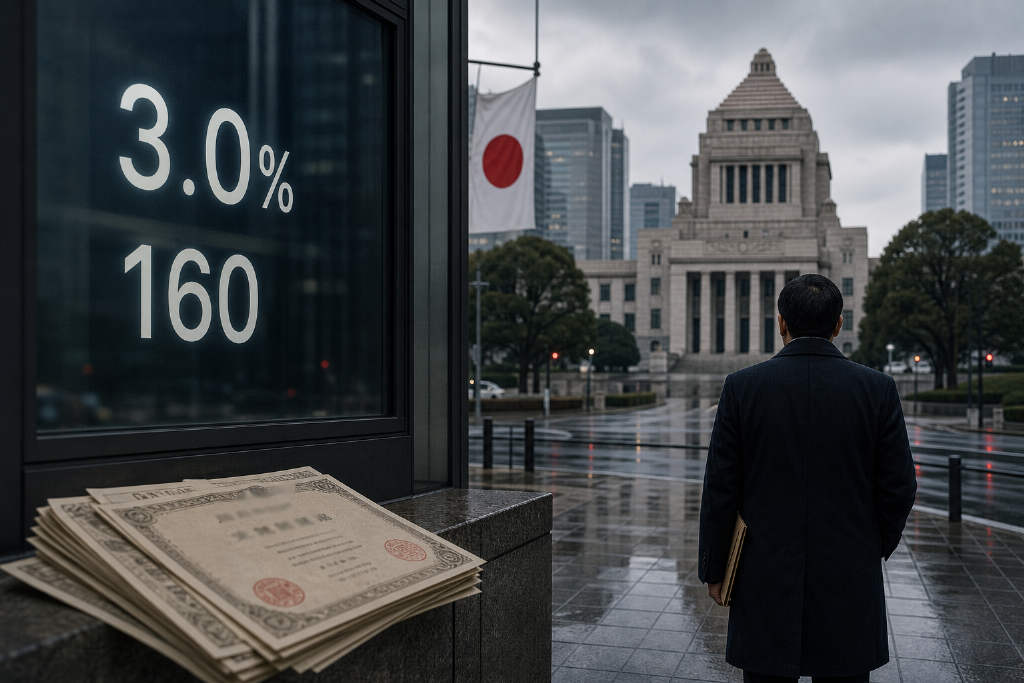
Japan’s borrowing costs rose to their highest level in nearly 30 years after the country’s benchmark 10-year government bond yield briefly touched 3% on Tuesday, according to CNBC. It was the first time the yield reached that level since September 1996, reflecting a broader sell-off in global sovereign debt under inflation and fiscal pressure.
Bessent points to possible action to support the yen
The rise in Japanese bond yields came as U.S. Treasury Secretary Scott Bessent spoke publicly about the yen and Japanese policy. In a CNBC interview on Monday, Bessent said, 「I have information that the market does not have; I believe the Japanese government and the Bank of Japan will take action to strengthen the yen.」
The remarks suggested that markets could expect Tokyo and the Bank of Japan to respond to the weak yen. Higher Japanese government bond yields were also linked to expectations that interest-rate policy may shift and that fiscal supply pressure is increasing.
Yen approaches the 160 level again
In currency markets, the yen weakened to about 160.1 against the U.S. dollar, marking a third straight trading day around the 160 level, which some traders treat as an intervention alert threshold. The U.S. and Japan had jointly intervened at the end of July to support the yen, but the currency has since almost erased those gains.
Why the move matters for crypto markets
The development is closely watched in crypto because the yen has long served as a major funding currency for global carry trades. Investors borrow low-yielding yen and put that money into assets with higher returns or higher risk.
If the yen strengthens and rate differentials narrow, those carry positions may be forced to unwind. That could pull liquidity from global risk assets, including cryptocurrencies.