
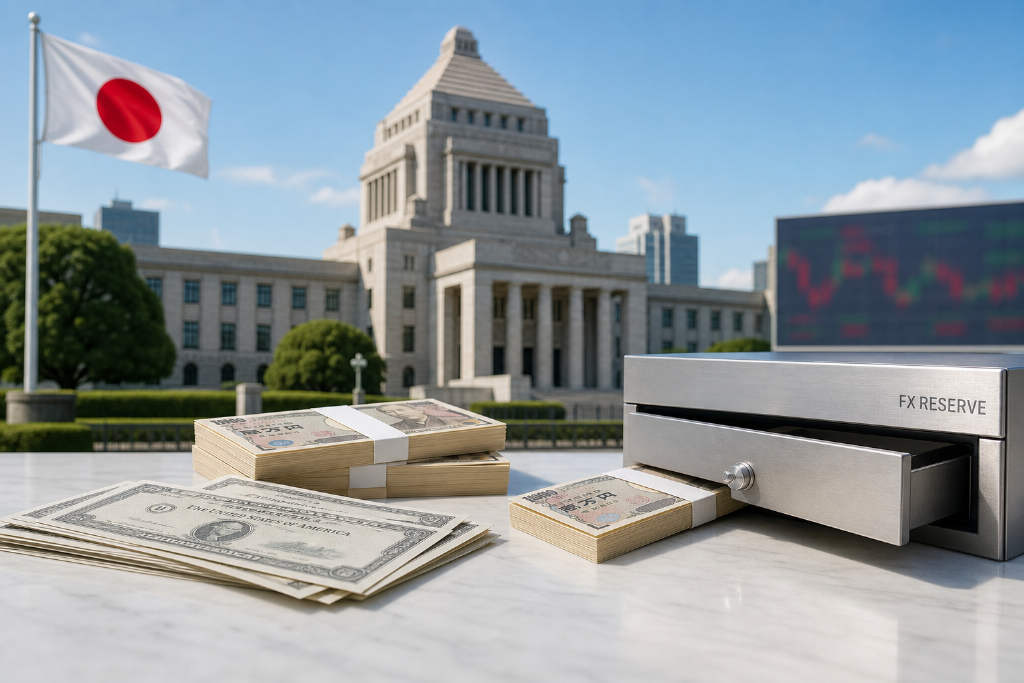
Japan may have funded its record yen-buying intervention by selling U.S. Treasuries and other foreign securities, a move that has revived concern over additional supply pressure in the Treasury market.
Foreign exchange reserve data released Monday by Japan’s Ministry of Finance showed that the country’s holdings of foreign securities fell by $87.8 billion at the end of August from a month earlier, a drop that closely matched the size of the intervention conducted during the same period. The ministry had previously confirmed that Japanese authorities spent about ¥15.4 trillion, or around $98.6 billion, on FX intervention in the month through Aug. 26. That was the largest monthly intervention on record, and part of it was carried out jointly with the United States.
As a result, Japan’s total foreign exchange reserves declined by $94.6 billion to $995 billion, pushing the stockpile below the $1 trillion threshold.
Sharp fall in foreign securities holdings points to possible Treasury sales
The Ministry of Finance data showed an $87.8 billion decline in foreign securities holdings at the end of August, almost the same scale as the intervention outlay for the month. While the data did not break down the composition of those securities or their maturity profile, market participants estimate that about 70% of Japan’s FX reserves are invested in U.S. Treasuries.
Market pricing also added to that view. The price of the 10-year U.S. Treasury at the end of August was only slightly lower than at the end of July, which suggests valuation changes accounted for only a limited share of the decline in foreign securities holdings. That has strengthened the case that Japan actively sold Treasuries.
¥15.4 trillion intervention set a monthly record, with U.S. participation in part of the operation
According to the ministry, Japan spent about ¥15.4 trillion on FX intervention in the month through Aug. 26, setting a monthly record and marking the largest single-month yen intervention ever carried out by the authorities. Part of the operation was conducted jointly with the United States.
The intervention came as the yen was under clear pressure, forcing authorities to step into the market on a large scale to support the currency. The fact that some of the action was coordinated with Washington also points to deeper policy coordination between the two countries on exchange-rate issues.
U.S. officials are also focused on Treasury market stability
As Japan appears to have turned again to Treasury sales to finance intervention, U.S. officials have been paying closer attention to the stability of the Treasury market. Treasury Secretary Bessent recently said the government would double the scale of long-dated bond buybacks over the two months through Nov. 4. Market participants have interpreted that step as an effort to restrain rises in long-end yields, showing growing concern in Washington over Treasury market stability.
Japan’s latest move suggests that even as U.S. sensitivity to Treasury market conditions increases, Tokyo is still willing to use Treasury sales if needed to fund intervention.
Reserves dropped below $1 trillion, but room for future intervention remains
Although Japan’s FX reserves have now fallen below $1 trillion to $995 billion, authorities believe the remaining reserves are still large enough to support potential future intervention.
Foreign currency deposits are another possible funding source for intervention. Those deposits were down by $6.9 billion at the end of August, according to the data.
Japanese Finance Minister Satsuki Katayama said after the joint intervention with the United States that future operations could also draw on the Federal Reserve’s Foreign and International Monetary Authorities Repo Facility, or FIMA Repo Facility. The tool would allow Japan to obtain as much as $60 billion in daily liquidity without selling Treasuries outright, which could limit the impact on Treasury yields while expanding room for additional intervention.