
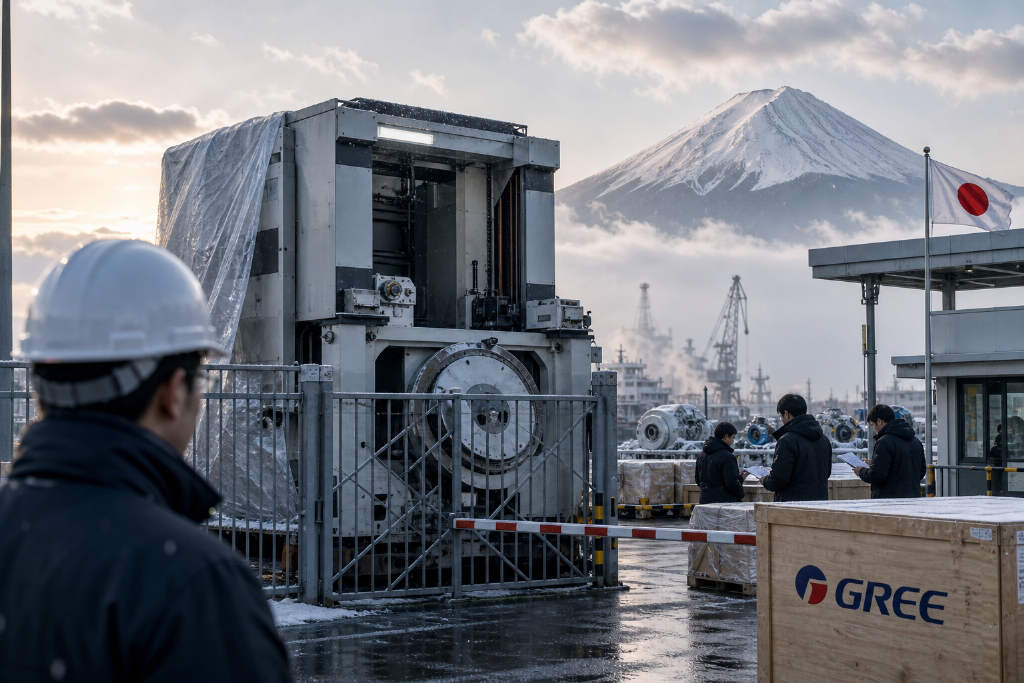
Japan's New Export Rule: Case-by-Case Review for Sub-3-Micron Five-Axis Machines
On August 16, Japan's Ministry of Economy, Trade and Industry enforced a revised Export Trade Control Order. High-end five-axis machine tools with positioning accuracy at or below 3 microns—along with high-precision rotary tables, linear scales, CNC systems, underlying algorithms, and manufacturing process parameters—were all shifted from batch licensing to individual case review.
The approval window stretched from 15 days to as long as 180 days. Rejection rates for procurement in sensitive fields exceed 80%.
A decade ago, Gree Electric chairwoman Dong Mingzhu made a remark few took seriously at the time: "Sooner or later, we won't be able to buy a single high-end machine tool." Many dismissed it as alarmist—money could solve everything, they thought. That prediction has now come true.
Gree's Decade-Long Grind Into Machine Tools
In 2013, Gree knew better than most what "buying" really meant. The impeller inside an air-conditioning compressor demands extremely high curved-surface precision and can only be machined on a five-axis simultaneous CNC machine. Gree had exactly two options: Germany or Japan.
A single unit cost upward of ten million yuan, and waiting a year or more for delivery was routine. Worse, sellers installed GPS tracking and remote-lock systems inside the machines. Move the equipment a few centimeters on the factory floor and the system locked it down—unlocking required contacting the vendor's engineers and paying a hefty fee. The vendor might even ask: "Are you moving this machine to use it somewhere else?"

Dong Mingzhu refused to accept that arrangement. Around 2013, she greenlit an internal push to build machine tools from scratch. In 2015, Zhuhai Gree Intelligent Equipment Co. was formally established, with machine tool R&D designated a core strategic priority. A company known for air conditioners going after the "mother of all industrial machines" drew plenty of skepticism.
The effort consumed a full decade. Every critical component was developed in-house: motorized spindles, linear motors, CNC systems, five-axis swivel heads, and high-precision rotary tables—hardware and algorithms rewritten line by line.
To crack the thermal stability problem in motorized spindles, the team transplanted air-conditioning heat-dissipation technology, holding temperature rise within ±1°C and thermal deformation below 1 micron. Linear motor drives replaced traditional ball screws, pushing acceleration to 1.2G and boosting efficiency by more than 30%.
In 2017, Gree's first fully self-developed five-axis simultaneous CNC machine, the GA-F500, rolled out. By 2025, its high-speed dual-five-axis gantry machining center debuted at the CIMT exhibition and won a gold medal at the 50th Geneva International Exhibition of Inventions—one of the world's three premier invention shows alongside Pittsburgh and Nuremberg, with notoriously strict judging standards.
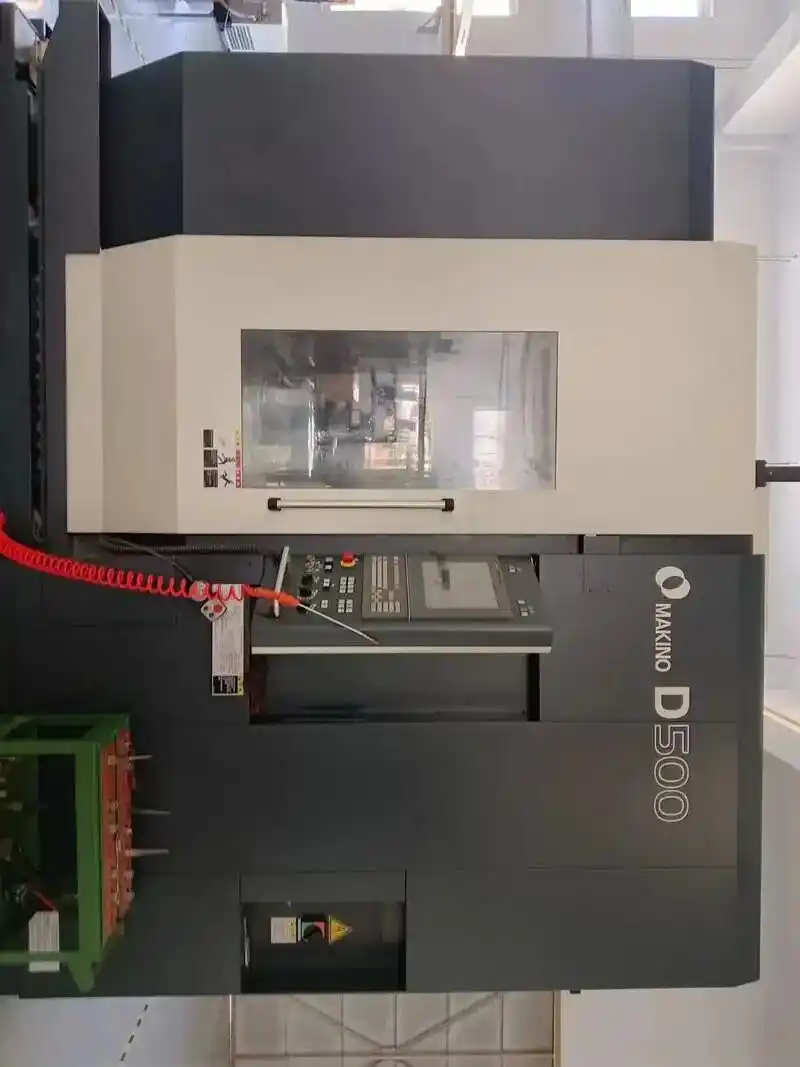
Gree's Specs Stack Up Against Japanese Rivals
By 2026, exports accounted for over 75% of Gree's five-axis machine tool sales. The flagship product is the GA-FMB3020D high-speed dual-five-axis gantry machining center, purpose-built for new-energy vehicles. It targets large aluminum alloy parts—integrated die-cast components, battery trays, front and rear floor panels—and ranks among the top three domestic suppliers in this niche by shipment volume.
On paper, the specs hold their own against comparable Japanese models:
- Rapid traverse speed: 120 m/min; acceleration: 1.1G
- Spindle speed: 20,000 rpm
- Repeat positioning accuracy: ±0.012 mm
- Six-face machining in a single setup, 80% more efficient than conventional single-five-axis machines
Mazak's gantry five-axis of comparable size edges Gree out by roughly half an order of magnitude on precision, yet offers no clear advantage in aluminum machining speed or batch production throughput—and costs twice as much.
In 2026, Gree machines ship in volume to BYD, Tesla, and BMW. Pricing sits at 40–60% of German and Japanese equivalents, with a 90-day delivery cycle versus the typical one-year wait for Japanese equipment.
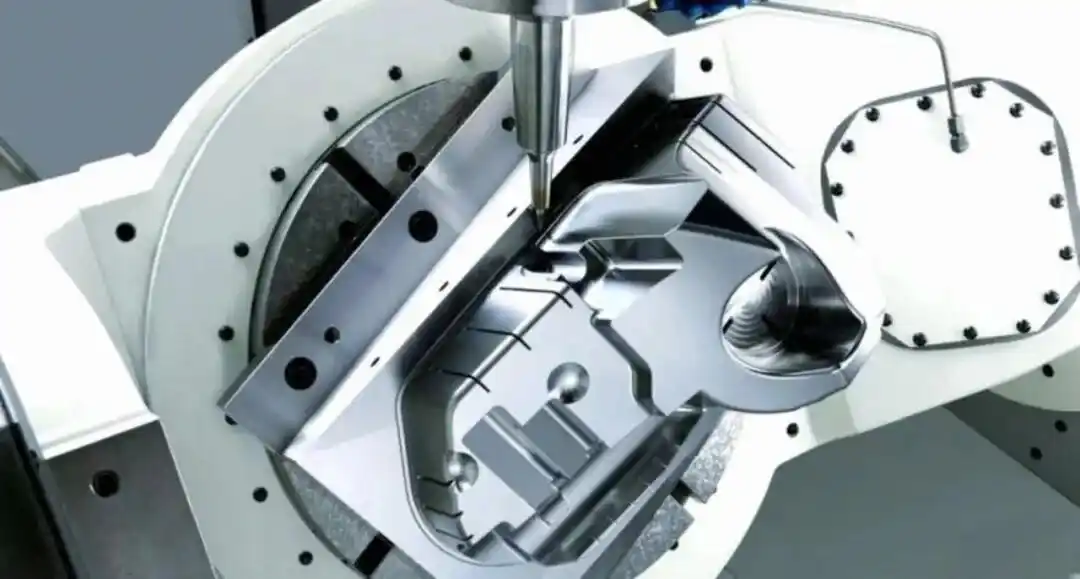
Gree's CNC machine tool lineup now spans horizontal machining centers, five-axis simultaneous machining centers, and mill-turn compound machining centers, serving 3C electronics, automotive, and mold industries. To be fair, Gree has not yet fully replaced top-tier Japanese equipment. But Dong Mingzhu's long-term bet has plugged a critical gap in China's industrial base—backed by Gree's manufacturing ecosystem, steady cash flow, and continuous iteration, it can step in when supply chains get choked.
Above 3 Microns: The Domestic Substitution Map Is Largely Complete
Japan drew the red line at 3 microns with precise calculation. In the 3-to-50-micron range, China's five-axis localization rate already approaches 60%. The overall domestic rate hit 59.5% in 2025, surpassing imported brands for the first time.
Below 3 microns—the higher-precision tier—gaps remain. Two domestic champions lead the charge: KEDE Numerical Control, which goes big, and Beijing JingDiao, which goes small. Both have entered the mass-production substitution phase for core applications.
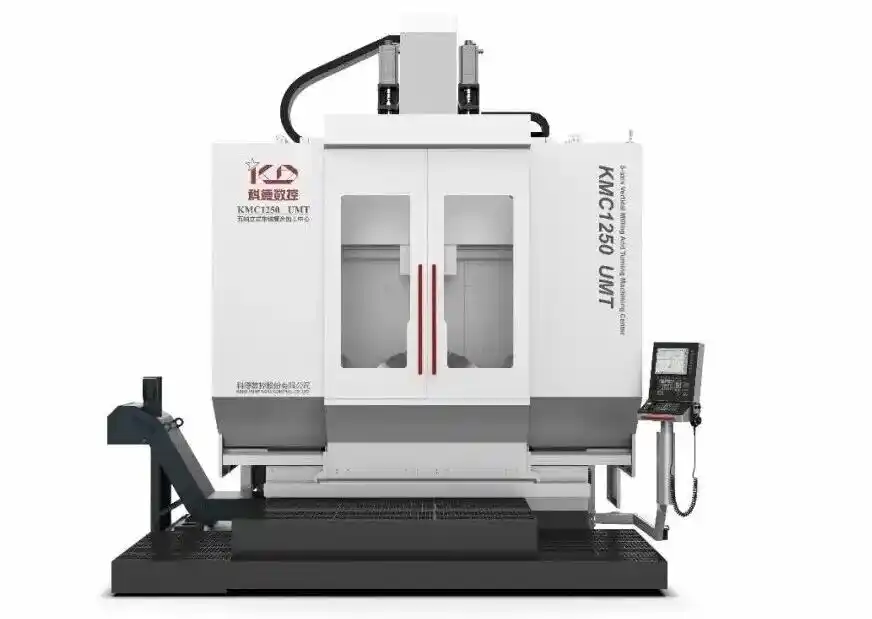
KEDE's trump card is its high-end CNC system. The GNC62 is the only domestically developed high-end CNC system built entirely from proprietary source code. Its five-axis machines achieve over 90% localization, and the company delivered 1,047 five-axis units in 2025. KEDE depends on neither Siemens nor Fanuc, having self-developed everything from underlying algorithms and servo motors to high-precision dual-axis rotary tables.
Beijing JingDiao specializes in micron-level ultra-precision machining—tiny dimensions, 1–2 micron tolerances, work that previously only Japan's Makino or Switzerland's Mikron could handle. Using self-developed 30,000–40,000 rpm high-speed motorized spindles and on-machine measurement systems, JingDiao achieves hundreds of hours of zero-drift continuous machining. The system automatically detects workpiece thermal expansion during cutting and applies micron-level reverse compensation, ensuring "first piece qualified."
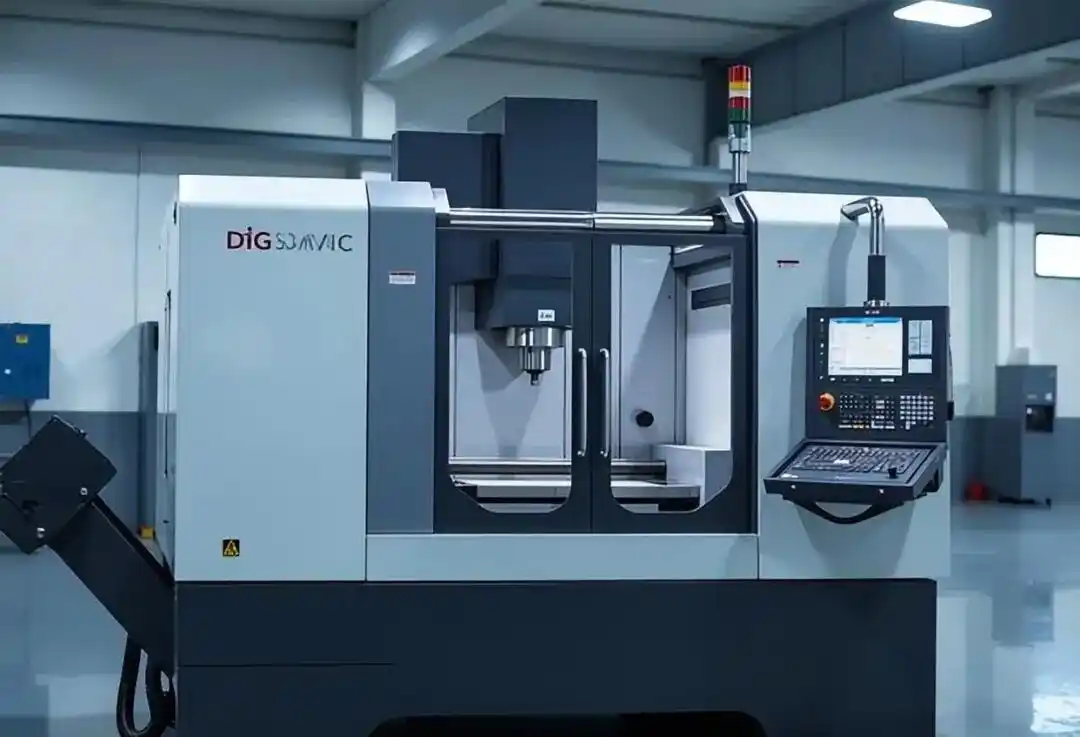
The three companies each hold a distinct position, assembling a comprehensive domestic substitution map.
The Gap That Remains: Japan's Big Three Still Hold a Generational Edge
KEDE and JingDiao have achieved breakthroughs in labs and on specific models, and commercial mass production is advancing. Yet in long-run precision retention, Japan's big three—Fanuc, Yamazaki Mazak, and Makino—still hold a generational advantage.
Fanuc's CNC systems command 31.7% of installed capacity in China's five-axis system market; Siemens holds 24.8%. Together they account for more than half. Many Chinese machine tool makers build the body but still buy the "brain" from Fanuc.
Gree excels at large aluminum parts for EV integrated die-casting, 3C precision components, and humanoid-robot part machining. But for long-cycle heavy-duty cutting of titanium alloys and high-temperature nickel-based superalloys—extremely hard, difficult-to-machine materials—its process database lags Japan's big three by more than a decade.
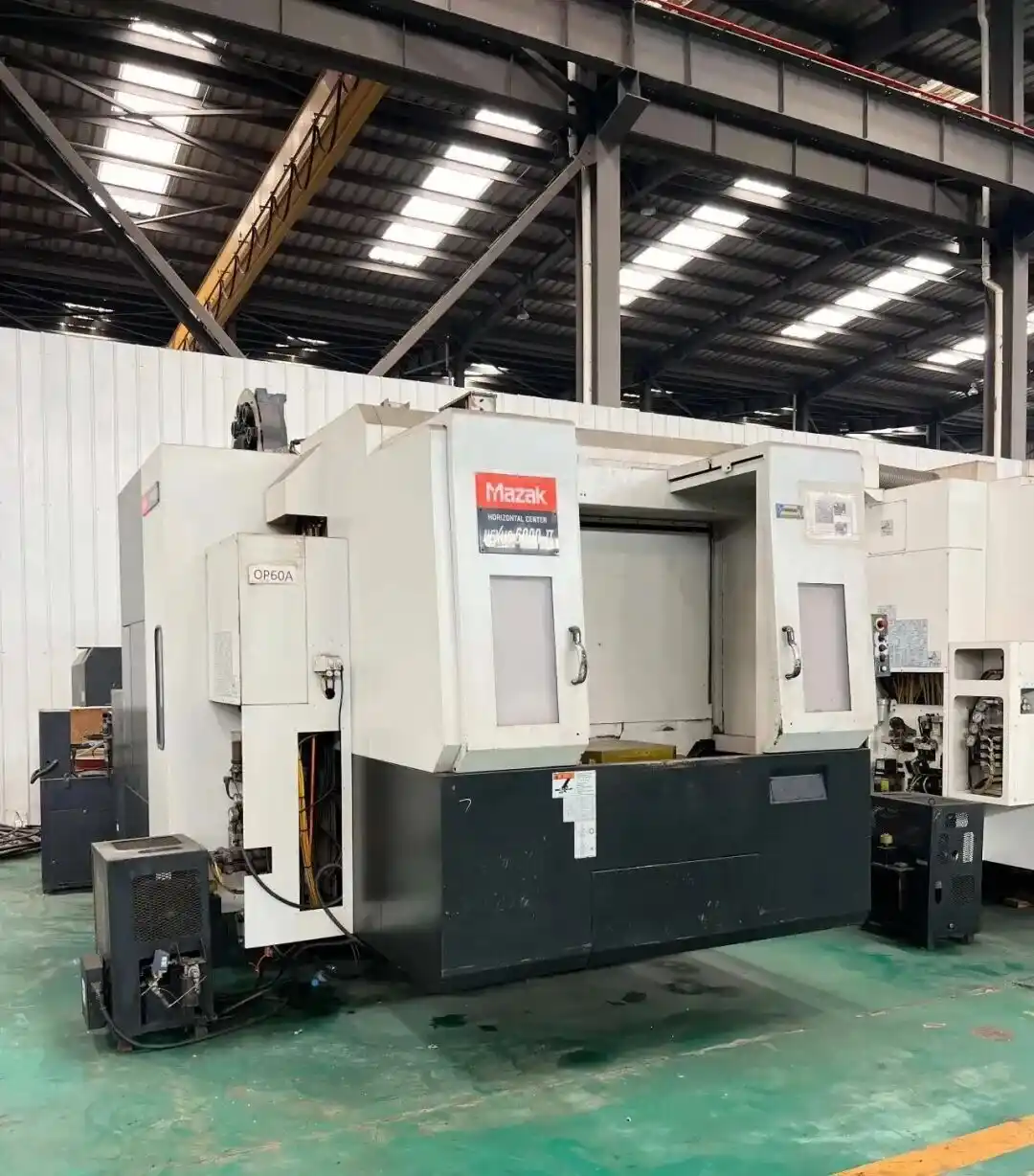
Japan's trio has been in the machine tool business for close to a century. Makino's ultra-precision mold machines process hardened high-hardness mold steel to mirror-finish surface roughness and maintain micron-level precision degradation over thousands of continuous hours. Mazak's heavy-duty five-axis machines tackle titanium and superalloys used in aerospace, setting industry benchmarks for tool life and machining stability.
Gree handles standard molds, 3C thin-wall parts, and compressor impellers without issue, but cannot yet take on hardened molds or aerospace-grade superalloys. Gree solved the "can we make it at all, and can we avoid being choked" question. Japan's decades of accumulated process know-how addresses "how stable is it, and how long does it last."
Precision drift after 10,000 spindle hours, cutting-parameter library adaptability across different materials, reliability under extreme conditions—none of these have shortcuts. They can only be built with time.
The Ban Backfires: Domestic Orders Surge
Gree has invested over 2 billion yuan across the past decade. KEDE is deeply tied to the C919 program. JingDiao's machines have entered aerospace production lines. Domestic equipment has become the only option.
KEDE's first-half 2026 revenue surged 44.8% year-on-year, with new orders up 37.5%. The moment the ban hit, Chinese manufacturers accelerated the replacement of aging German and Japanese five-axis machines with domestic equipment—orders are, in the industry's words, "coming in faster than they can be processed." The flood of real-world machining data is rapidly closing the stability gap for domestic machines.
Dong Mingzhu said a decade ago: "You can buy equipment, but you can't buy industrial security." Nobody paid attention. Ten years later, Japan's control order landed, and people realized the most clear-eyed person in the room had already started building.
The 3-micron line is precisely drawn. Japan aims to choke China's industrial mother-machine sector, but in doing so it is also surrendering roughly 70% of the market share it held for over a decade. Gree, KEDE, and JingDiao have moved past the "can we do it" stage. What comes next is production ramp-up and long-term reliability—a road with no shortcuts, only one step at a time.
This article is from the WeChat public account "Redian Weiping" (ID: redianweiping), authored by Wang Xinxi.