
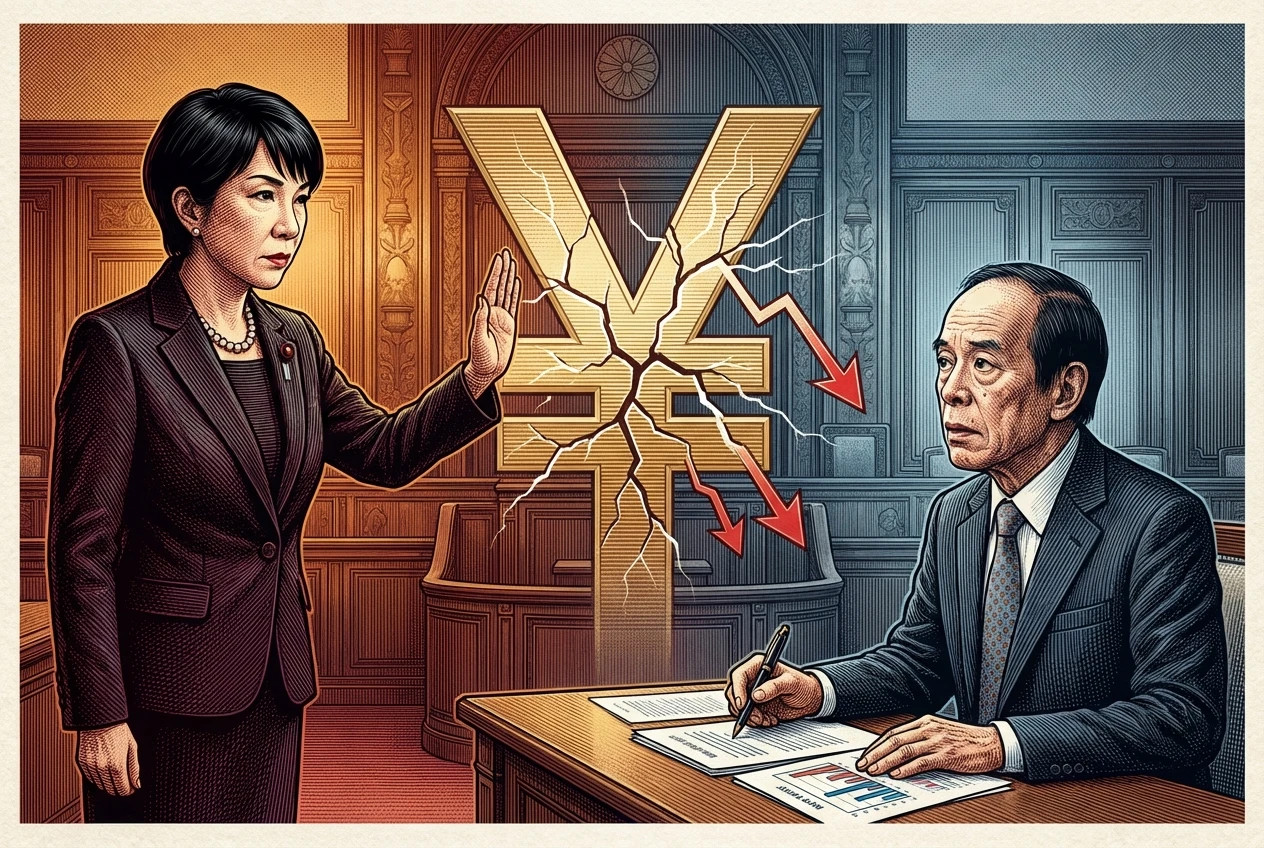
Japan's Prime Minister Shigeru Ishiba — wait, the original story says Takaichi? Let me double-check: 高市早苗 is Sanae Takaichi, the current PM. Correct. According to Japan's Mainichi Shimbun on Tuesday, citing sources, PM Takaichi met with Bank of Japan Governor Kazuo Ueda last week and conveyed concerns about further interest rate hikes. Following the report, the yen weakened against both the US dollar and the euro. If true, this marks the first time Takaichi has privately pressured the central bank since taking office, potentially complicating BOJ's timeline for a rate hike as early as March or April.
Conflicting Accounts of the Meeting
Governor Ueda played down the meeting, describing it as a general exchange on economic and financial conditions, and stressed that the PM made no specific monetary policy demands. Takaichi herself declined to discuss details, only saying she wanted the BOJ to work closely with the government to achieve the 2% inflation target alongside wage growth. Yet the Mainichi report, if accurate, signals open political opposition to tightening — a rare move that could strain the central bank's independence.
Market Reaction: Yen Falls, Rate-Hike Bets Slashed
The news hit markets immediately. The yen dropped to around 150 against the dollar, and similarly against the euro. Traders interpreted the report as a sign that the BOJ could delay its tightening schedule under political pressure. Before the report, markets had priced in roughly a 60% chance of a rate hike in March, when the BOJ next meets. That probability has now fallen below 40%. The BOJ only raised its benchmark rate to 0.75% in December, the highest in 30 years, as part of its gradual exit from ultra-loose policy.
What This Means for Crypto
For crypto investors, BOJ rate decisions are a big deal. Since 2024, every surprise BOJ rate hike has triggered more than 20% declines in Bitcoin, largely due to the unwinding of yen carry trades. When the yen strengthens and interest rate differentials narrow, leveraged positions funded with cheap yen liquidate, causing cascading sell-offs in risk assets. If Takaichi is indeed pushing back against hikes, the near-term risk of a sudden liquidity squeeze recedes — a positive for Bitcoin and altcoins. However, over the medium term, continued yen depreciation will fan domestic inflation in Japan, eventually forcing the BOJ to hike more aggressively. When that happens, the market shock may be even greater.
A Tokyo-based forex analyst told Bloomberg that political intervention can only delay the inevitable, not reverse fundamental imbalances. Crypto traders should watch Japan's upcoming CPI data and spring wage negotiations closely; those numbers will determine whether the BOJ ultimately defies political pressure and tightens anyway.