
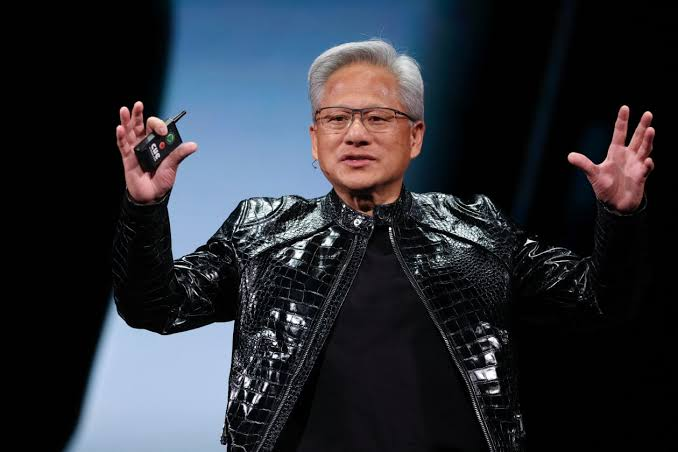
NVIDIA CEO Jensen Huang has offered a sharply different take on the recent market panic around China’s Kimi K3 model. In an exclusive interview with Axios, Huang strongly defended Chinese open-source AI models and said U.S. companies should “absolutely” use strong models coming out of China. He argued that Wall Street and Washington are looking at the issue the wrong way, because cheaper and open AI applications would end up driving stronger demand for hardware and chips.
The remarks came as Moonshot AI’s Kimi K3 has shaken markets with performance described as close to the frontier at a very low price. The report said the model triggered the most severe sell-off panic in chip stocks since the DeepSeek episode in January 2025. Huang, however, said the so-called Kimi panic is a misunderstanding.
Huang says free and open AI is good for hardware
Huang made the comments in Fort Worth, Texas, where he attended the opening of an advanced AI infrastructure plant built by Taiwanese contract manufacturer Wistron. Speaking to Axios, he said fear in Washington and on Wall Street over Chinese open-source AI models was “exactly backwards.”
His argument was straightforward. Cheaper and open models would bring more people and more businesses into AI, expanding the market as a whole. As those applications spread, demand for NVIDIA chips, data centers, and computing power would rise with them. “Free AI should be great for hardware, great for chips, great for data centers,” Huang said.
Opposes blanket crackdowns framed as national security
Recently, Trump administration officials including U.S. Treasury Secretary Scott Bessent, along with some American AI labs, have accused Chinese models of stealing U.S. technology through distillation and have lobbied Washington for sanctions and restrictions.
Huang took a clear position against that approach. He said learning from other sources of knowledge and distillation are “fundamental to intelligence.” In his view, governments should punish specific violations rather than suppress models themselves.
He also rejected concerns about a potential “Beijing backdoor,” calling that a misunderstanding because companies can customize and monitor model use inside secure sandbox environments. Huang put it bluntly: “Under no circumstances could China drive American companies out of the race. Zero chance.”
Open models, he argues, make AI safer
Huang went a step further and said restricting open models on national security grounds could leave the United States more vulnerable. He said openness allows outside researchers around the world to inspect models, identify weaknesses, and build defenses.
His warning was direct: if the world ends up with a single model, a single point of attack, and a single point of failure, the system becomes far more fragile.
He applied the same logic to U.S. developers. Huang publicly called on Anthropic to open access to its restricted cybersecurity model, Claude Mythos, to “everybody,” so that faster testing and fixes can strengthen defenses instead of limiting access from the outset.
Huang said the AI race is not a contest with a finish line. The United States and China will both remain in the field for the long run, and in his view, embracing openness is the best way to accelerate growth across the AI industry.