
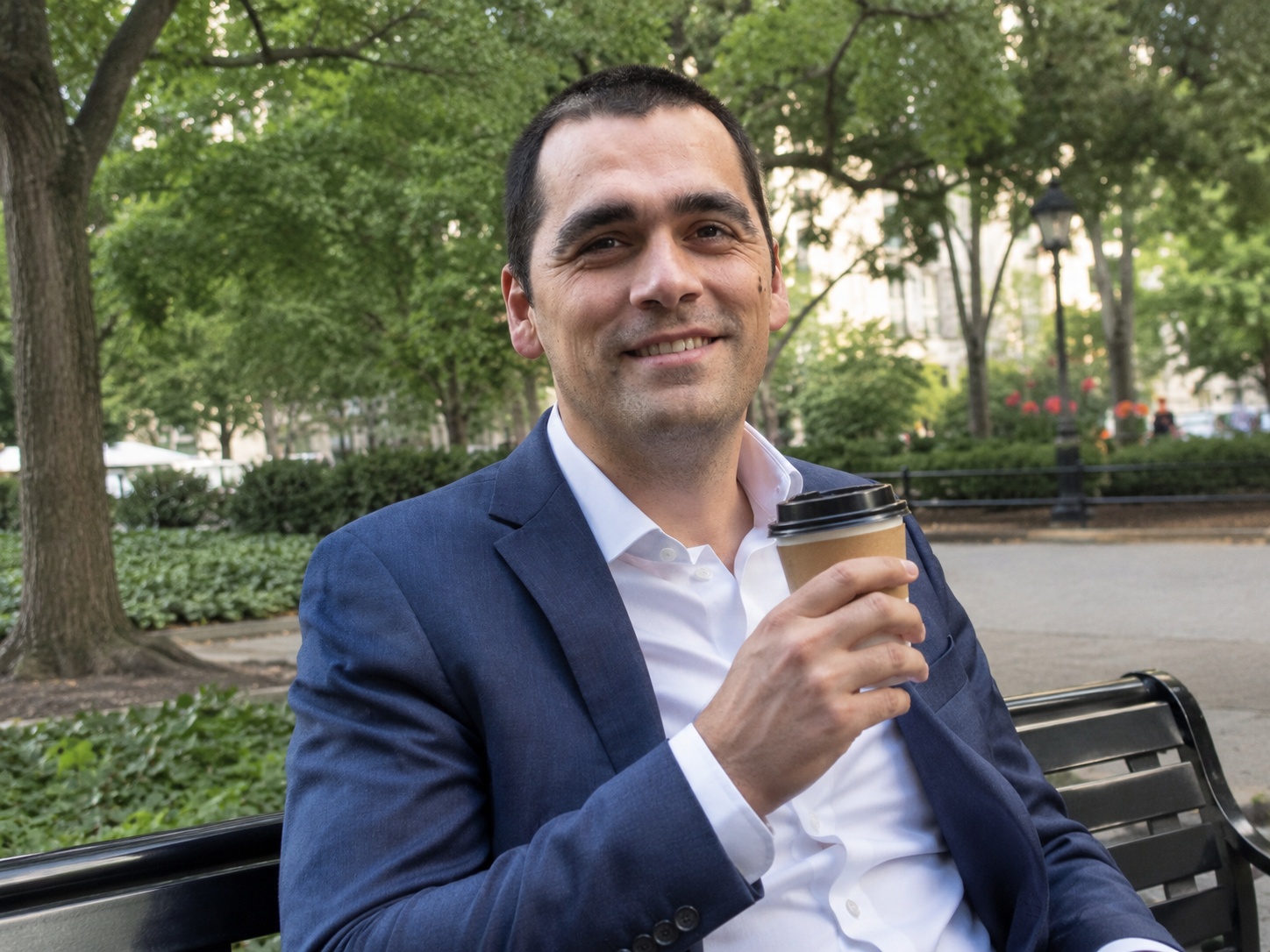
Three years after publishing a book urging investors to keep buying regardless of market swings, Wall Street data analyst Nick Maggiulli admits he got bearish for the first time — he shifted his retirement account from 100% equities to an 80/20 stock-bond allocation. By his own standard, "that counts as being bearish."
The trigger was AI valuations. He compared Nvidia's current price-to-sales ratio to Microsoft in 1999 — "literally identical." He favors price-to-sales over price-to-earnings because revenue is harder to manipulate than earnings. At one point he thought "this looks crazier than the dot-com bubble."
Anthropic's ARR Soared from $3B to $45B in a Year — He Admitted He Was Wrong
What made him turn bullish again was also data. He cited Anthropic's annual recurring revenue surging from $3 billion to $45 billion in just one year. "I couldn't imagine how a company could do that, and they did it easily." He described a gradual realization that he was wrong, no single a-ha moment. "Many things I thought wouldn't happen actually happened. So I was wrong — that's fine." Even at his most bearish, he never fully cashed out, just made slight tactical adjustments.
Waiting for a Correction? Three Years Later You Buy Higher
Nick shared a classic example: an investor in early 2017 said "I'll wait for a crash," and finally bought at the March 2020 COVID bottom (a 33% drop). Despite perfect timing, the entry price was still higher than if they had bought in 2017. "Most people don't look back to calculate whether the price on their bottom-fishing day was actually lower than the price they could have bought earlier." He also referenced the 1931 Depression: the market was already down 50% — a seemingly great buying opportunity — but it fell another 60% by summer 1932. Bottom-fishing carries the risk of catching a falling knife.
On selling call options, he invoked Taleb's turkey problem: the turkey is fed every day until the farmer arrives with a cleaver. He also mentioned the XIV fund, which was a money printer in low-volatility environments until volatility spiked and the fund went to zero. His mantra is "buy fast, sell slow": historical data shows that lump-sum investing beats 12-month dollar-cost averaging by about 4% on average. If DCA gives you peace of mind, losing 4% isn't fatal, but don't stretch it beyond one year.
The Biggest Problem with Stock Picking Isn't Being Wrong — It's Wasting Time
Nick opposes individual stock picking for three reasons. First, the SPIVA report shows about 80% of professional fund managers underperform the benchmark over five years. Second, the existential problem: two people picking stocks may need a decade to tell skill from luck. "No one wants to look in the mirror and admit they were just lucky." Third, the time-value argument: $1,000 earning 10% yields $100; $1 million earning 10% yields $100,000. For most people still building capital, spending an hour writing, freelancing, or skill-building creates more value than researching a single stock.
His own allocation is straightforward: roughly 80% stocks (split evenly between U.S. and international), 20% bonds (all short-term, under five years), 2% fixed in Bitcoin (based on a 2019 portfolio optimizer result), and gold plus other non-yielding assets under 5% combined. He currently holds a higher short-term Treasury weight because he's saving for a house — purely a life-planning decision, unrelated to his market view.
Nick offers no stock picks or price predictions. He simply reiterates the philosophy of staying alive through uncertainty with diversified holdings.