

Digital asset brokerage K33 said in a report published Tuesday that Bitcoin may be nearing a cycle bottom, with more than 50% of the circulating BTC supply now held at an unrealized loss. According to the firm, this condition has historically appeared during the later stages of bear markets, when selling pressure is often closer to exhaustion than expansion.
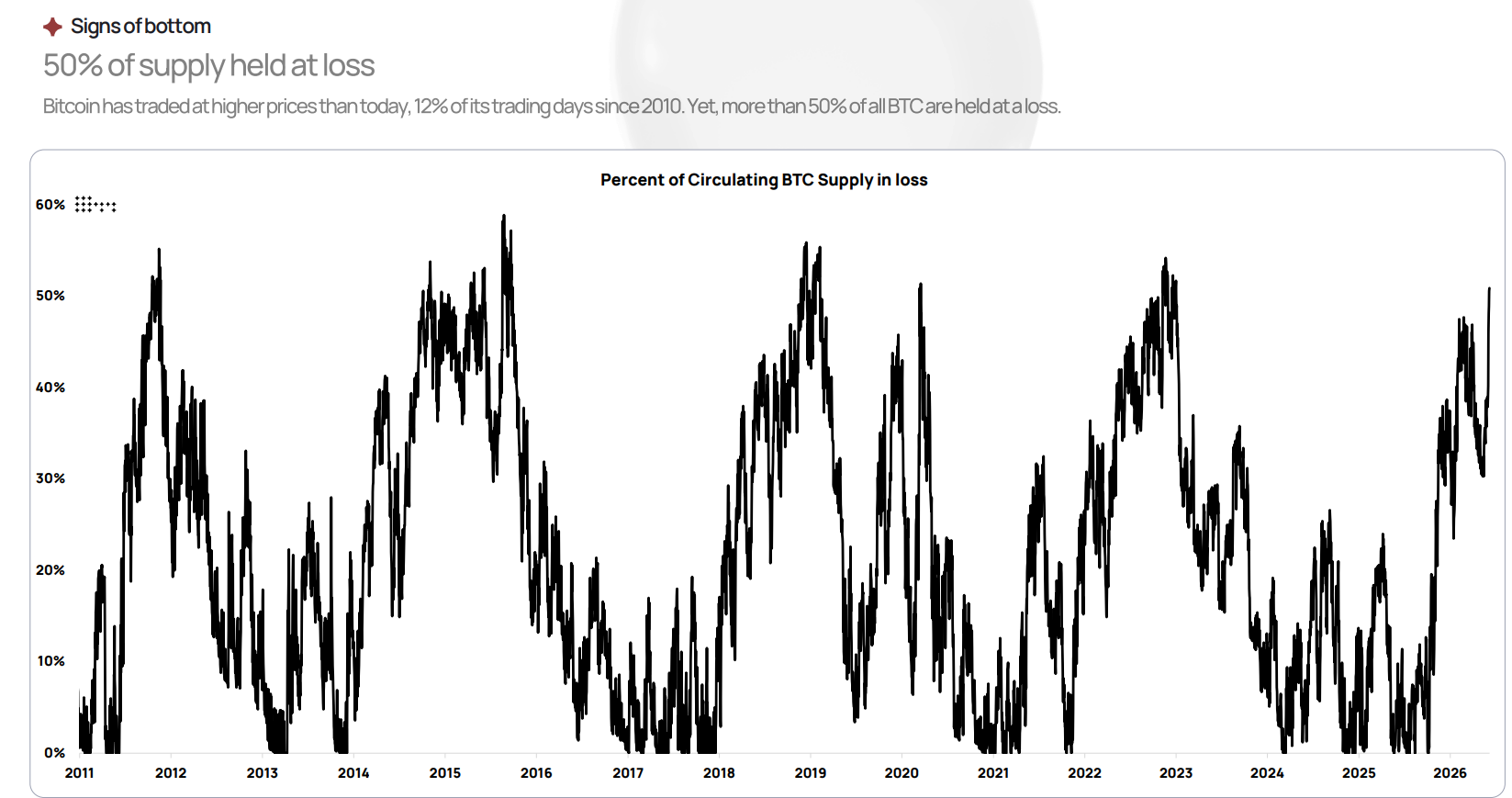
K33 said the metric is one of several signals analysts use to assess whether the market is entering a late-cycle washout phase. When more than half of Bitcoin’s circulating supply is underwater, it has often coincided with periods in which long-term holders are under stress and marginal sellers have already exited. The brokerage added that because the past year’s bull market was less extreme than in prior cycles, the current downturn may also end up being less severe than previous drawdowns.
Earlier bear markets often bottomed within weeks of the signal
Looking at prior cycles, K33 said Bitcoin has usually found its bottom within weeks after more than half of the supply fell into loss. In the 2017 bear market cycle, Bitcoin bottomed 31 days after the threshold was crossed. In November 2018, the market bottom came 23 days later. In November 2022, the lag was even shorter, at roughly 13 days.
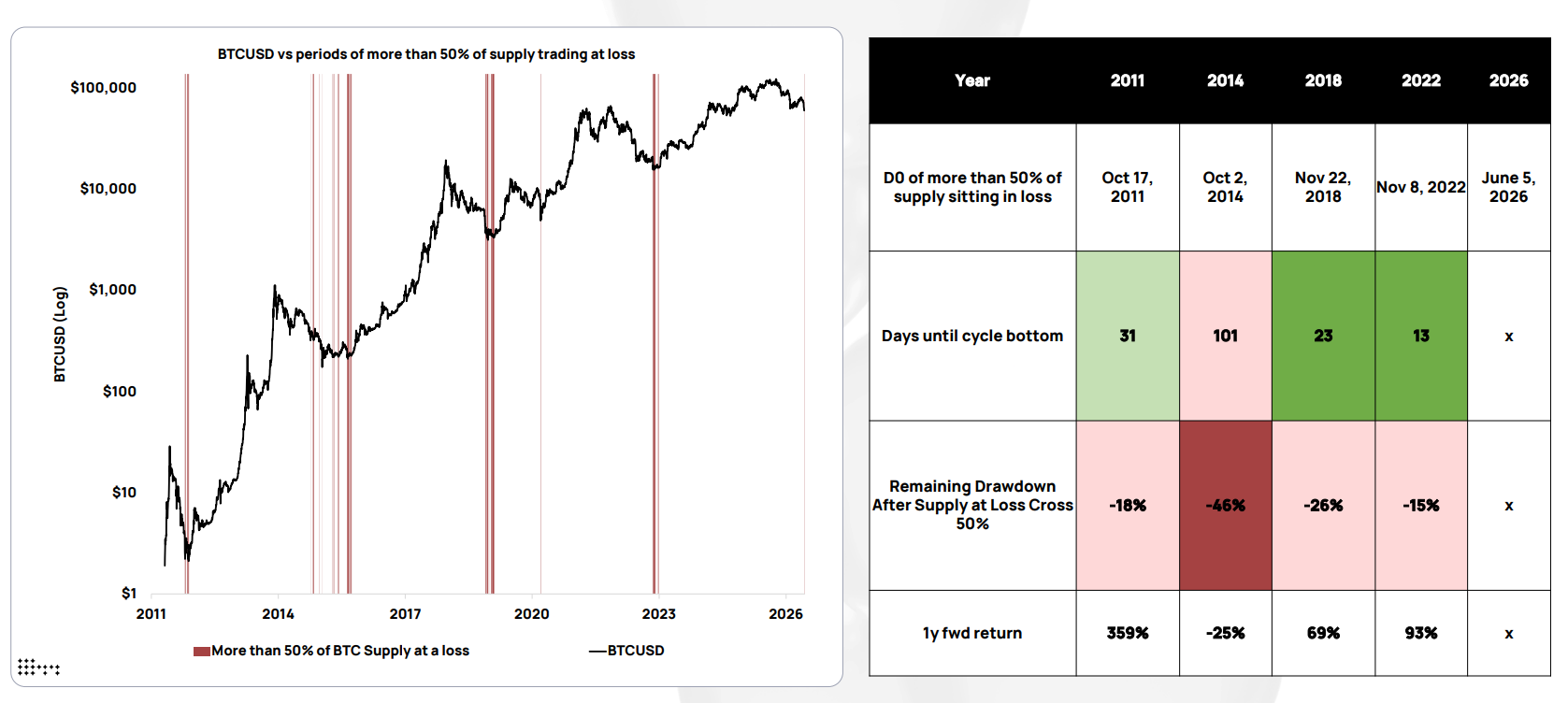
The main exception was the 2014 cycle. In that case, Bitcoin did not bottom until 101 days after more than 50% of the supply was held at a loss. It was also the only cycle in K33’s comparison where BTC traded lower one year after the signal, posting a 25% decline over that period. That outlier suggests the metric is useful for context, but not sufficient on its own to call an exact bottom in real time.
K33 nevertheless argued that the broader historical pattern remains constructive. In most previous cycles, once the share of supply in loss moved above 50%, downside time appeared more limited than not. That does not guarantee an immediate reversal, but it does suggest that Bitcoin may be entering a zone where risk-reward begins to improve relative to earlier stages of the drawdown.
At the same time, the firm cautioned that the current cycle could still behave differently from the past. One reason is the growing role of large, price-sensitive sellers, including holders of spot Bitcoin exchange-traded funds. Their size and responsiveness to market conditions could create a different trading dynamic than in earlier cycles, when ETF-linked flows were not part of the structure.
ETF flows remain a key variable for near-term price action
Data from Farside Investors showed that spot Bitcoin ETFs recently recorded two consecutive days of net inflows, including $265 million on Monday. Even so, the broader monthly picture remained weak. June ended with $4.51 billion in net outflows, making it the worst month on record for spot Bitcoin ETFs.

That contrast illustrates the current market setup. Short-term inflows may offer temporary support, but the scale of recent monthly redemptions shows that ETF-related selling pressure is still a major factor. For traders and allocators, this means onchain bottoming signals may need to be read alongside institutional fund flow data rather than in isolation.
Block Scholes risk appetite index also points to a possible bottom
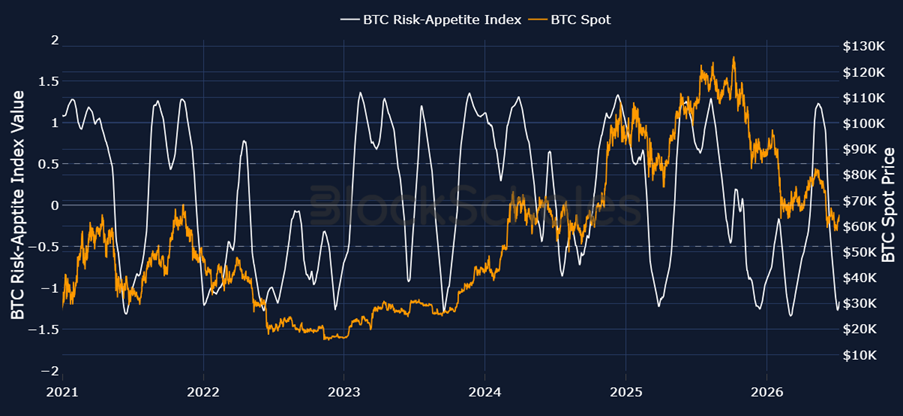
K33’s view is not the only one leaning in that direction. Another indicator flagged in the report came from Block Scholes, whose Risk Appetite Index tracks bullish and bearish momentum across digital assets. The index fell to -1.27 on July 3 before rebounding, a move that has historically aligned with improving forward performance in Bitcoin spot markets.

According to Block Scholes, across eight previous cases that matched this setup, Bitcoin went on to deliver a median spot return of 12% over the following 100 days. The firm told Cointelegraph that, historically, such a rebound in risk appetite has preceded stronger bullish outperformance in spot prices and may encourage further allocation into risk assets, including crypto.
Taken together, the K33 supply-in-loss metric and the Block Scholes risk appetite signal both suggest Bitcoin could be moving closer to a cycle low zone rather than the beginning of a fresh leg down. Still, the path from here may not mirror prior market bottoms perfectly, especially with ETF flows and other large-holder activity now playing a much larger role in price formation.

For now, the data points to a market in late-stage stress rather than clear capitulation resolution. Whether Bitcoin confirms a durable bottom in the coming weeks will likely depend on how price reacts alongside ETF flow stabilization and whether risk appetite continues to recover from recent lows.