
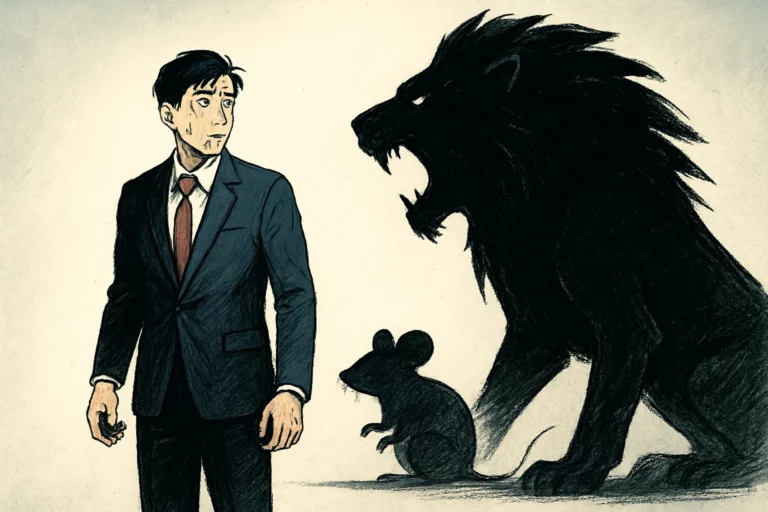
Stop obsessing over charts or macro data. The real reason you keep getting rekt may have nothing to do with technicals – Nobel winner Daniel Kahneman laid it out in Thinking, Fast and Slow: your brain runs a parallel “mental account” to protect its emotional balance, making you systematically deceive yourself and incapable of rational stop-loss.
The Downgraded Dollar: How Mental Accounting Shelters Losses
Why won't you cut a losing trade? Because your mind maintains two ledgers: a “real account” for daily expenses, and a “mental account” for positions – treating them like play money. When a position goes red, the brain isolates the loss: as long as you don't close, the red digits are just pixels, “floating,” “not real.” Stop-loss hurts because it forces that isolation to break, converting floating losses into actual pain. To avoid that settlement, you bury your head like an ostrich. But in finance, there's no such thing as “floating” – every second's market value is your net worth right now. Not selling is a new buy decision.
Loss Mode Flipped: Prospect Theory’s Cruel Reality
Kahneman's prospect theory reveals a schizophrenic risk profile: when you're up, you become hyper risk-averse; when you're down, you become a risk-seeker. Facing a 20% drawdown, logic screams to exit, but the animal brain howls: “Hodl, it might bounce!” Once you're in loss territory, the brain no longer serves to maximize gains – it serves to avoid admitting you were wrong. A critical distinction: “strategic float” based on pre-trade rules versus “emotional grip” driven by post-hoc regret. The latter is what we're putting on trial. In the quicksand of losses, to escape a certain loss, you'll bet the farm on a tiny chance of getting even – you've entered a biological “loss-chasing” state.
Willpower Won’t Cut It: Only Hard Stops, No Mental Stops
If you still think “next time I'll use willpower to stop,” you're likely to blow up again. Trying to use willpower to override million-year-evolved instincts amidst surging adrenaline is hubris. To survive, you need rules that require zero willpower:
- Set conditional orders, lock in hard stops: Place a stop-loss order at the same time you open the trade. Delegate the decision to the exchange server, not your fingers. If you're afraid to set one, you already prepared to be the ostrich from the start.
- Implement an overnight circuit breaker: Most catastrophic losses come from refusing to sleep on a loss. Impose a rule: if your account is red at market close (or before bed), force-sell half unconditionally. Continuity fuels gambler's psychology; the breaker's essence is to sever that continuity, letting the brain switch from “recovery mode” back to “rational mode.” This rule targets two types: subjective traders without rigorous backtesting, and those already showing strong emotional volatility.
- Redefine your capital: Forget your deposit amount and entry price. Each day before the open, write down your current net equity. That's your capital for today. If it's only $50,000, manage positions as if you had $50,000. Never try to earn back the money you've already lost – physically, that money is no longer yours.
Markets aren't just wealth transfer machines; they're meat grinders for human nature. A stop-loss is an anti-human purging: it wounds the instinct for perfection and the pride that refuses to concede. Your brain was designed for survival; markets were designed to harvest. They never reward instinct, but they leave a narrow path for those willing to impose self-discipline.