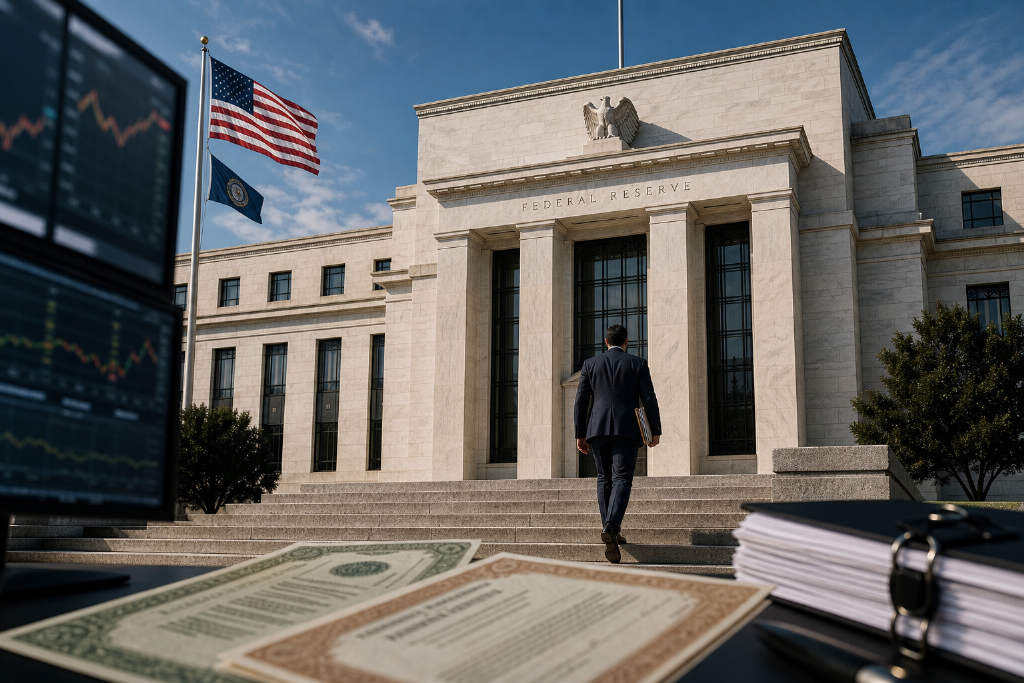
Minneapolis Federal Reserve President Neel Kashkari said on Aug. 24 that the recent rise in the 10-year U.S. Treasury yield to around 4.7% does not represent a historically abnormal level and does not signal dysfunction in the Treasury market. In his view, the Federal Reserve does not need to adjust policy in response to bond yield volatility and should keep inflation control at the center of its mandate.
Kashkari said long-term Treasury yields are being shaped by several forces, including inflation expectations, AI investment, government borrowing, economic growth and productivity, and that it is still too early to identify the main driver behind the recent global rise in bond yields. He added that Treasury issuance and debt market management should remain the responsibility of the U.S. Treasury Department, while the Fed should stay focused on inflation and employment.
He also warned that the Iran conflict could lift energy prices, while trade friction between the United States and Canada may prolong supply-side price pressure. Kashkari noted that the Fed has repeatedly expected inflation to return to 2% within one to two years, but that timeline has kept slipping. Markets are now watching this week’s Jackson Hole meeting, with Waller’s Friday remarks seen as a possible source of fresh signals for the September rate decision.
BlockBeats reported on Aug. 24 that Minneapolis Federal Reserve President Neel Kashkari said the recent move in the 10-year U.S. Treasury yield to around 4.7% is not historically unusual and does not point to dysfunction in the Treasury market. He said the Federal Reserve does not need to shift policy because of Treasury yield swings and can continue to keep inflation control as its core task.
Kashkari said long-dated Treasury yields are affected by several factors, including inflation expectations, AI investment, government borrowing, economic growth and productivity. He added that it is still not possible to determine the main force behind the recent synchronized rise in global bond yields.
He also said Treasury issuance and debt market management should be handled by the Treasury Department, while the Federal Reserve should remain focused on its inflation and employment goals.
Kashkari warned that the Iran conflict could push up energy prices and that trade friction between the United States and Canada could extend supply-side price pressure.
On inflation, he said the Fed has repeatedly projected over the past few years that inflation would return to 2% within the next one to two years, but that timeline has continued to be delayed. He said he still cannot be confident that inflation is moving back to target quickly.
Markets are now watching this week’s Jackson Hole meeting, and Waller’s remarks on Friday may offer more signals for the September rate decision.
This article was originally published by Bit.Fan. For more cryptocurrency news and market insights, visit www.bit.fan. Disclaimer:
The market information, project data, and third-party content displayed on this platform are for industry information sharing only and do not constitute any form of investment advice or return commitment.
Cryptocurrency trading carries high risks. Users should fully assess their risk tolerance and make independent decisions. All profits, losses, and legal responsibilities are borne by the users themselves.