
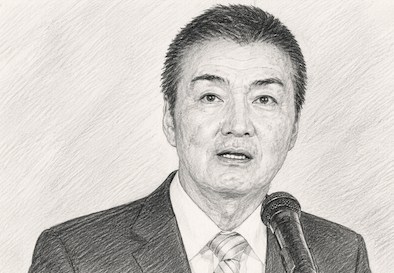
Japanese mystery novelist Keigo Higashino died of colorectal cancer on July 23 at the age of 68. The news was announced on July 27 by Kodansha, his longtime publishing partner, and was confirmed by major Japanese media outlets including NHK, Sponichi and Oricon.
Readers were struck by the timing. The latest full-length entry in his Galileo series, Eien no Kioku — tentatively translated as Eternal Memory — is scheduled for publication on Aug. 5 by Bungeishunju. Higashino, one of Japan’s most prolific popular writers, will not see the release of what is now being viewed as his final work.
From engineer to bestselling author
Higashino was born in Osaka in 1958. After graduating from the electrical engineering department of Osaka Prefecture University, he worked as an engineer at auto-parts manufacturer DENSO. In 1985, he won the Edogawa Rampo Prize for the school mystery Houkago (After School), then left his job and moved to Tokyo to write full time.
His path in publishing did not turn immediately. For more than a decade after his debut, sales remained modest. That changed after film adaptation rights for Secret were sold in 1998 and Byakuyako (Journey Under the Midnight Sun) became a major talking point in 1999. In 2006, The Devotion of Suspect X earned him both the Naoki Prize and the Honkaku Mystery Award. His earlier run of Naoki Prize nominations without a win had already become a well-known story in Japanese literary circles.
After that, Higashino became one of the most reliable names in commercial fiction. The Galileo series, the Kaga Kyoichiro series and the Masquerade Hotel series all sold strongly, and his cumulative sales in Japan passed 100 million copies. Screen adaptations also reached a wide audience, including Galileo starring Masaharu Fukuyama and the film version of The Devotion of Suspect X starring Shinichi Tsutsumi and Yasuko Matsuyuki.
Fiction that tackled data-driven surveillance
ABMedia pointed to another side of Higashino’s work that stands out today: as an author with an engineering background, he was among the earlier Japanese popular writers to bring large-scale data surveillance into mainstream fiction.
His 2010 novel Platina Data (Platinum Data) imagines a national DNA database in Japan, with police using an algorithmic system to match genetic information and identify suspects, sharply improving case clearance rates. The story then reveals that the system contains intentionally designed loopholes and excludes data tied to privileged groups. The questions raised in the novel — who oversees algorithms, who controls the database, and how systemic bias or backdoors are embedded — remain closely aligned with current debates on algorithmic accountability in AI governance. The book was adapted into a film in 2013 starring Kazunari Ninomiya.
Starting in 2015, the Laplace’s Witch series drew on the idea of Laplace’s demon in physics: if all data in the world could be known, the future could in theory be calculated. As ABMedia framed it, that thought experiment now sounds strikingly close to the philosophical premise behind large AI models that try to predict the world from data.
The third installment in the series, 2023’s Majo to Sugoshita Nanokakan — tentatively translated as Seven Days Spent With a Witch — moved even closer to a near-future surveillance setting. In that story, Japan has universal DNA registration, facial recognition throughout public spaces and widespread AI-led investigations. Fugitives have to find ways to evade systems that identify them almost everywhere. The book keeps returning to the same core questions: where AI reaches its limit, and what remains of human intuition and judgment once machines take over recognition and inference.
A longtime holdout on e-books
ABMedia also noted that Higashino resisted digital editions for years and was widely known in Japan’s publishing industry as a committed defender of print books. It was not until the pandemic period in 2020 that he first allowed a small number of works, including Byakuyako, to be released as e-books.
A final release still set for Aug. 5
Higashino wrote nearly 100 books over his lifetime, and his work was translated into dozens of languages. He was also one of the best-selling Japanese authors in the Chinese-speaking market. According to the schedule cited in the report, Eien no Kioku will still be published on Aug. 5, making it both the final case in the Galileo series and his farewell work to readers.