


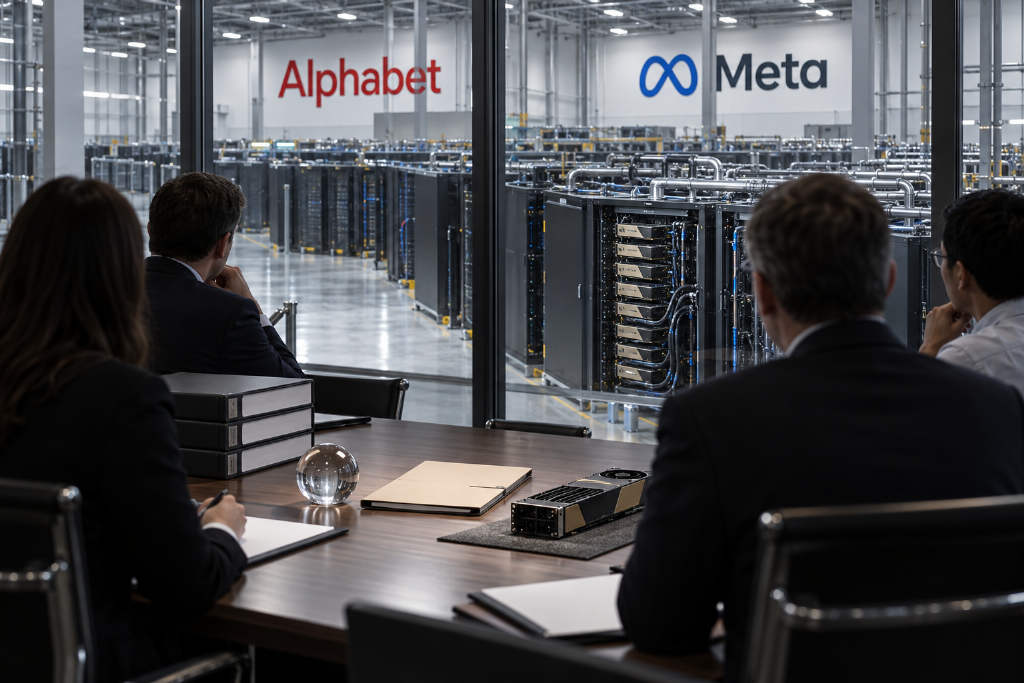
Crypto researcher Kerman Kohli published a Substack post titled Compute Financing on Oct. 19, 2026, laying out his view that capital, especially credit, is one of the main bottlenecks in building out compute capacity.
He wrote that early spending in the sector mostly came from balance-sheet cash and later moved into equity financing. As examples, Kohli pointed to Alphabet’s $85 billion financing and said companies including Meta raised capital by diluting shareholders. In his view, the next phase will come from credit markets.
How Kohli frames lender assumptions
Kohli grouped current lender thinking into three points and said they are not compatible with one another: AI may be a bubble; the biggest risk is counterparty risk in offtake contracts; and the underlying GPUs are not worth much and should depreciate like standard hardware.
Demand, supply and offtake contracts
On demand, Kohli argued that demand is closer to unlimited. He said agentic AI demand is growing about 2.5x to 5x per year, while supply may at most double by the end of 2030. The post also said memory is already sold out in 2027, aggregate compute commitments have reached the trillions of dollars, and Jane Street has made commitments in the billions of dollars. Kohli also mentioned demand from pharmaceutical companies, research, defense and cybersecurity.
On efficiency, he said that every 90% drop in the cost of intelligence leads to an even larger increase in usage, with a baseline above 10x, and cited Jevons paradox.
On offtake, Kohli argued that compute is more substitutable than real estate. If one buyer walks away from a commitment during a period of strong demand, another buyer will take that capacity. He added that many lenders ask for contracts lasting two to three years and down payments of 20% to 30%, and sometimes as high as 50%. Locking in long-term discounted contracts, he wrote, effectively leaves lenders short compute.
The post also said compute rental prices rose about 50% over the past six months and about 100% over the past year, while B300 supply remains tight.
His view on GPUs as collateral
On collateral, Kohli wrote that A100 chips from 2020 are still running and are being rented out through 2029, which he said points to at least roughly nine years of useful value. He also said the current price of the B200 is about 50% higher than it was around the time of its launch about two years ago, and that a six-year-old A100 still holds about 25% of that value.
At the end of the post, Kohli said compute will surpass real estate as the largest asset class, and that credit-backed compute at scale is only getting started.