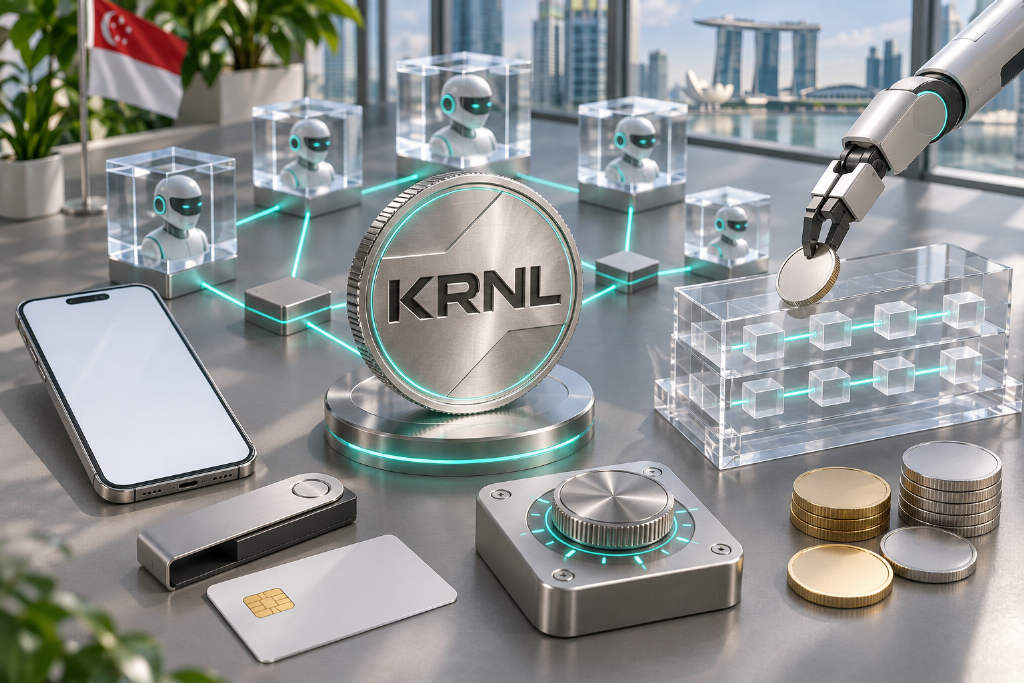
Kernela has started the token generation event for KRNL, the native utility token of its network. The project describes itself as on-chain infrastructure for autonomous agents that can operate in real environments using available information and turn resolved market and real-world outcomes into verifiable records. It also says agents on the network can coordinate by sharing data, skills, and information sources, while proven capabilities and verified performance can be reused across the network. On the product side, Kernela says users can create DEX trading agents with one click. Those agents keep funds in self-custody, allow capital controls, and record every execution on-chain for auditability. According to the official description, KRNL is designed for agent deployment and execution, access to data and capabilities, reading and writing result records, settlement between agents, staking and capital routing based on verified performance, and governance of the open protocol.
Kernela has announced the start of the token generation event, or TGE, for KRNL.
According to the project’s official description, Kernela is on-chain infrastructure built for autonomous agents. The platform says agents can enter real environments, act on available information, and convert resolved market and real-world outcomes into verifiable records. It also says agents can coordinate with one another by sharing data, skills, and information sources, while capabilities and verified performance records can be reused across the network.
What Kernela says the platform offers
Kernela says users can create DEX trading agents with one click. Those agents keep funds in self-custody, support capital controls, and place every execution on-chain so it can be audited.
How KRNL is positioned
The project describes KRNL as the native utility token of the Kernela network. According to the official introduction, the token is intended for agent deployment and execution, access to data and capabilities, reading and writing result records, settlement between agents, staking and capital routing based on verified performance, and governance of the open protocol.
This article was originally published by Bit.Fan. For more cryptocurrency news and market insights, visit www.bit.fan. Disclaimer:
The market information, project data, and third-party content displayed on this platform are for industry information sharing only and do not constitute any form of investment advice or return commitment.
Cryptocurrency trading carries high risks. Users should fully assess their risk tolerance and make independent decisions. All profits, losses, and legal responsibilities are borne by the users themselves.