
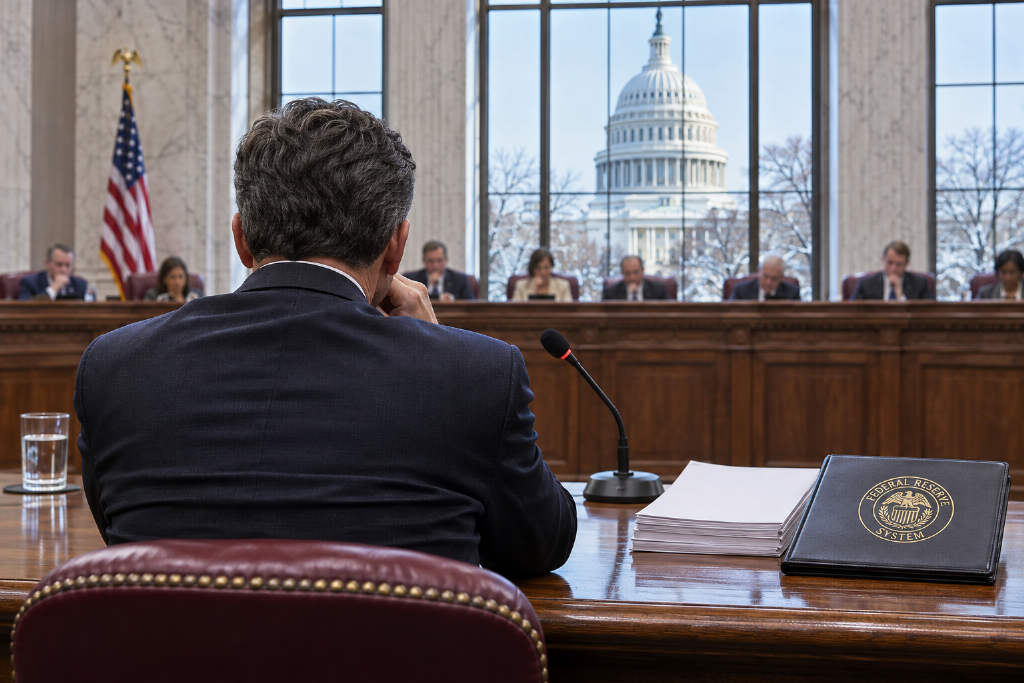
Federal Reserve Chair Kevin Warsh is preparing to face a new Congress led by Democrats. Democrats will take control of both chambers in January, while Warsh’s publicly recorded contacts with Democratic lawmakers remain limited.
The Washington Post reported on Wednesday that all six members of Congress listed in Warsh’s public September schedule were Republicans. Public records show that his most recent contact with a Democratic lawmaker was a July 14 call with Virginia Sen. Mark Warner.
Limited ties with Democrats
Massachusetts Democratic Sen. Elizabeth Warren is expected to become chair of the Senate Banking Committee. She has repeatedly criticized Warsh’s relationship with the White House and once called him President Donald Trump’s “puppet.”
Warsh won Senate confirmation in May by a 54-45 vote, with only one Democratic lawmaker supporting him. The Washington Post said that was the narrowest confirmation margin for a Federal Reserve chair nominee since the Senate began holding formal votes on such nominations nearly 50 years ago.
Michael Pedroni, chief executive of Washington consulting firm Highland Global Advisors, said Warsh “doesn’t have the same working relationships on the Democratic side. To some extent, that is a consequence of the Fed becoming so politicized.”
Warsh has not always aligned with Trump on interest rates. During his tenure, he raised rates while Trump was calling for lower rates.
Sarah Binder, a political scientist at the Brookings Institution who studies relations between the Federal Reserve and Congress, said the central bank needs political support from Congress to carry out its responsibilities. Facing a new Democratic-led Congress, she said, Warsh will need to keep communication channels open and speak with lawmakers from both parties.
Support for independence, pressure for accountability
Warren and other Democrats have consistently supported preserving the Federal Reserve’s independence. The new Congress will not directly set monetary policy, but Democratic control of the Senate could limit the White House’s ability to reshape the Fed through personnel decisions.
The Washington Post said a Democratic-led Senate would be unlikely to confirm new Federal Reserve nominees. It could also slow Trump’s effort to remove Fed governor Lisa Cook.
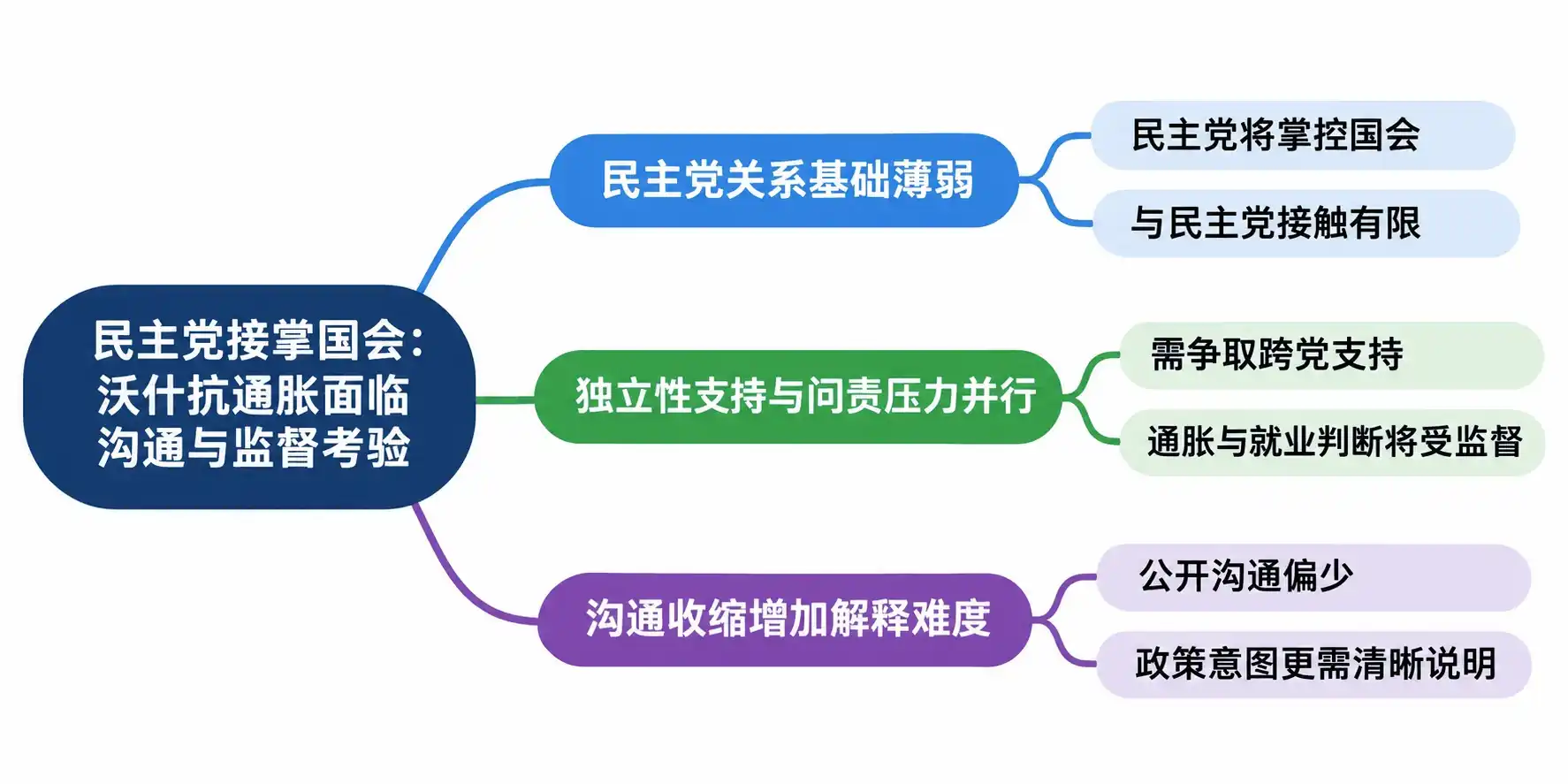
The Fed chair must explain monetary policy to Congress twice a year and answer questions from committees in both chambers. If Congress is unhappy, Pedroni said, lawmakers “can take certain steps to make life very difficult for the Federal Reserve.”
Clay Lowery, executive vice president of the Institute of International Finance, said Warsh could face pressure from both the president and Congress. He described that as an inherent condition of serving as Fed chair.
A narrower communication policy may invite more questions
Since taking office, Warsh has argued for reducing public communication. He has said that some speaking practices developed by the Federal Reserve during crises are no longer appropriate. The Washington Post noted that speaking less could also make it harder for lawmakers to understand the basis for the Fed’s decisions.
Jon Faust, a former adviser to Fed Chair Jerome Powell and now a researcher at the Johns Hopkins University Center for Financial Economics, said Powell spent substantial time speaking with relevant lawmakers. Those discussions helped ensure that they understood what action the Fed was preparing to take and how officials were approaching the issues.
Inflation measurement could become one area of congressional oversight. The Washington Post said Democratic lawmakers may question Warsh about his interest in alternative inflation measures, some of which show lower increases than the measures the Fed usually uses.
Employment could become another point of dispute. The Federal Reserve treats a 4.1% unemployment rate as evidence that the economy is at or near full employment. But data from the Bureau of Labor Statistics cited by the Post show that nearly 2 million Americans have been unemployed for more than six months, an increase of more than one-third from when Trump began his current term.
By Zhu Yu, Jin10 Data.



