
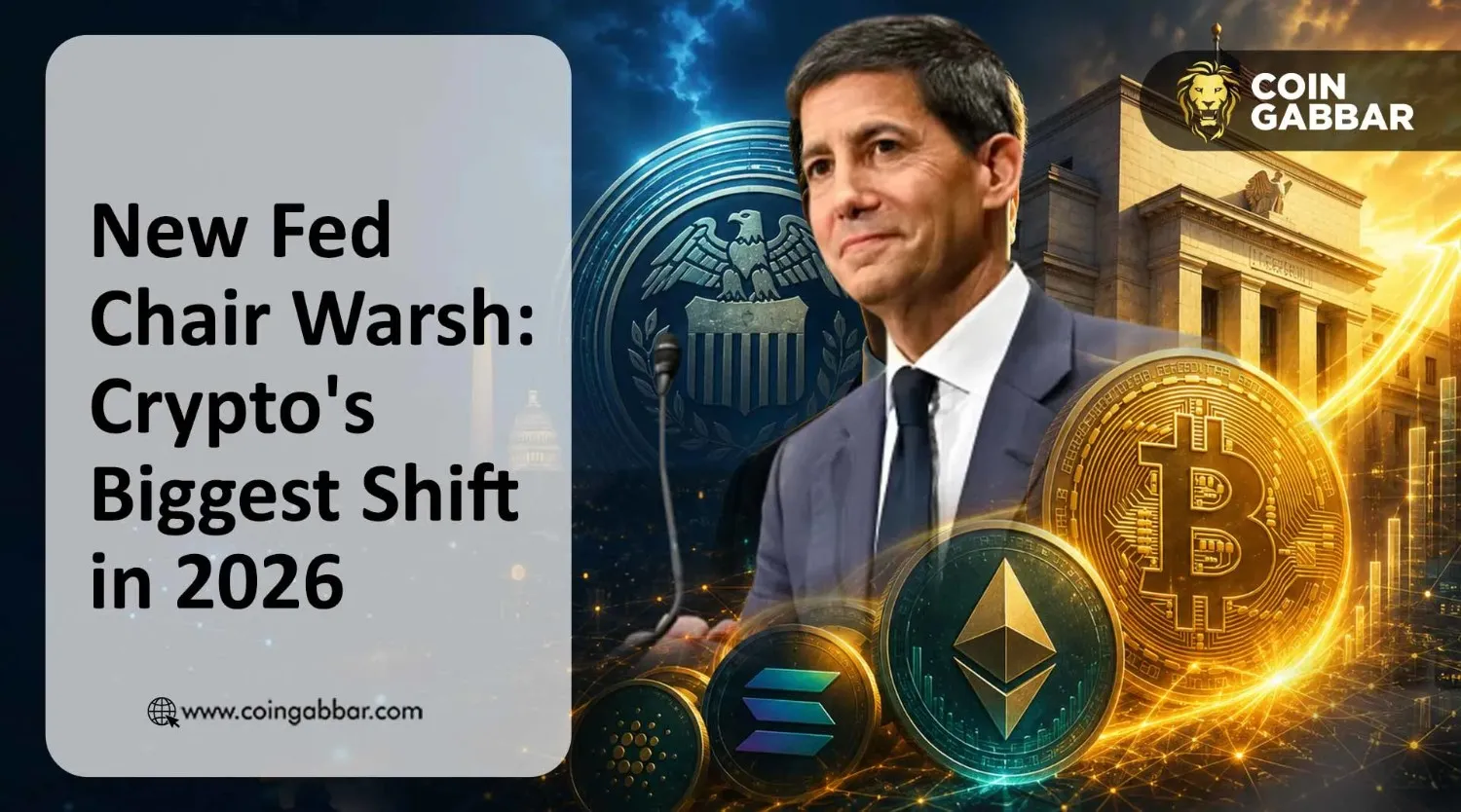
The Federal Reserve's leadership transition is complete. Jerome Powell stepped down as Fed Chair on May 15, 2026 after eight years. His successor, Kevin Warsh, secured Senate confirmation by a 54-45 vote just days before. The margin was tight but enough to trigger a new dynamic between the Fed and the crypto market.
Powell himself hasn't fully left — he retains a voting seat as a Fed governor until he decides to depart. That unresolved presence adds a layer of uncertainty inside the central bank.
Powell's Eight Years: Crises and Inflation
Powell navigated a pandemic, historic inflation, and multiple banking scares. Critics hammered him for slow rate hikes in 2021–2022, with Warsh himself calling those moves "fatal policy errors." Now the critic is in charge.
Warsh has publicly stated that "Bitcoin is the new gold for people under 40" and sees it as a sustainable store of value, not a threat to the dollar. Before his confirmation, he disclosed personal investments in more than 30 crypto and DeFi projects, including Solana, Polymarket, Blast, and Bitwise. He must divest them now, but the disclosure alone makes him the first Fed chair with real, hands-on exposure to the industry.
Warsh's Crypto Stance: Pragmatic and Friendly
He views Bitcoin as a useful signal for whether the Fed is getting policy right. Unlike most central bankers, he says Bitcoin "does not make him nervous." He also strongly opposes a U.S. central bank digital currency (CBDC), calling it a bad policy choice — removing one of the sector's biggest regulatory fears. Crypto communities quickly dubbed him the most crypto-friendly Fed chair in U.S. history after his nomination.
Monetary Policy: Hawkish on Inflation, but AI Could Open Door for Cuts
Warsh is a traditional hawk: he wants a strict 2% inflation target, rejects the average inflation targeting framework adopted in 2020, and aims to shrink the Fed's balance sheet to around $3 trillion from current levels. He has called quantitative easing "reverse Robin Hood" for benefiting asset owners.
But he believes AI-driven productivity growth is a disinflationary force — stronger output without price pressure. In that environment, he is open to rate cuts. Lower rates historically push money toward risk assets like Bitcoin. He has even floated the idea of running quantitative tightening alongside rate cuts, an unusual mix that could create a liquidity environment favorable for risk assets without reigniting inflation. However, if price data stays hot, his hawkish instincts may delay those cuts.
What Comes Next for Crypto Investors
Warsh served as a Fed Governor from 2006 to 2011, experiencing the 2008 financial crisis firsthand. He has since been vocal about the Fed's mistakes, drawing on monetarist thinking — particularly Milton Friedman's focus on money supply as inflation's root cause. Analysts expect him to steadily shrink the balance sheet, push for clearer communications, and reform inflation measurement, favoring trimmed mean PCE — which strips out outlier price swings.
The crypto-friendly Fed era is officially open. Whether Warsh can balance rate cuts with inflation control will define his tenure — and likely steer Bitcoin's direction over the next two years.