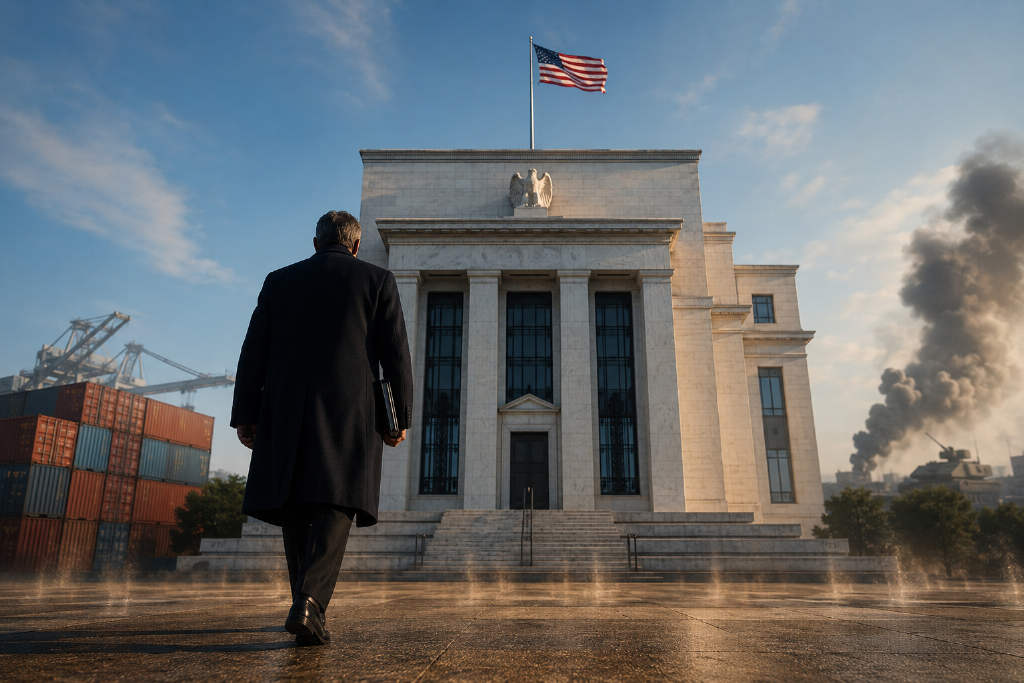
Wall Street Journal reporter Nick Timiraos, often described in markets as a key Federal Reserve watcher, wrote that Federal Reserve Chair Kevin Warsh faces a defining question ahead of his first major Jackson Hole speech this week: why inflation in the United States is still running too high. The issue is whether price pressure stems from one-off shocks such as tariffs and war, or whether the economy itself remains too hot. That distinction carries direct policy consequences, because it would shape the case for where interest rates go next. Timiraos said this is also the Federal Reserve’s biggest internal divide at the moment. At the July meeting, three officials backed a rate hike, while other policymakers signaled that more tightening could still be possible. Warsh, however, has not clearly stated his position. Since taking office, he has deliberately offered less policy guidance, leaving both markets and Fed colleagues waiting for his first full explanation. Timiraos added that a central test of Warsh’s tenure will be how he explains why his predecessor’s policies failed to return inflation to 2%, especially if the labor market turned out to be stronger than the Fed had judged.
According to Odaily, Wall Street Journal reporter Nick Timiraos wrote that Federal Reserve Chair Kevin Warsh will confront a central question in his first major speech at Jackson Hole this week: whether persistently high U.S. inflation reflects one-off shocks such as tariffs and war, or whether the economy itself is still running too hot.
That judgment would directly shape the path of interest rates. Timiraos said it is also the biggest point of disagreement inside the Federal Reserve right now. At the July meeting, three officials supported a rate increase, while other policymakers also indicated that additional tightening remained possible. Warsh has not yet made his own position clear.
Timiraos wrote that Warsh has deliberately cut back on policy guidance since taking office. Markets and fellow Fed officials are now waiting for his first systematic explanation of how he sees the inflation problem.
The analysis said a key test of Warsh’s tenure will be how he explains why his predecessor’s policies failed to bring inflation back to 2%. If the rate cuts and pro-employment stance of the past two years were themselves a policy mistake, because the labor market was actually stronger than the Fed believed, then Warsh would need to push for a reversal of those rate cuts.
That course, however, would put him at odds with Donald Trump and Bessent, who had previously called for further rate cuts.
This article was originally published by Bit.Fan. For more cryptocurrency news and market insights, visit www.bit.fan. Disclaimer:
The market information, project data, and third-party content displayed on this platform are for industry information sharing only and do not constitute any form of investment advice or return commitment.
Cryptocurrency trading carries high risks. Users should fully assess their risk tolerance and make independent decisions. All profits, losses, and legal responsibilities are borne by the users themselves.