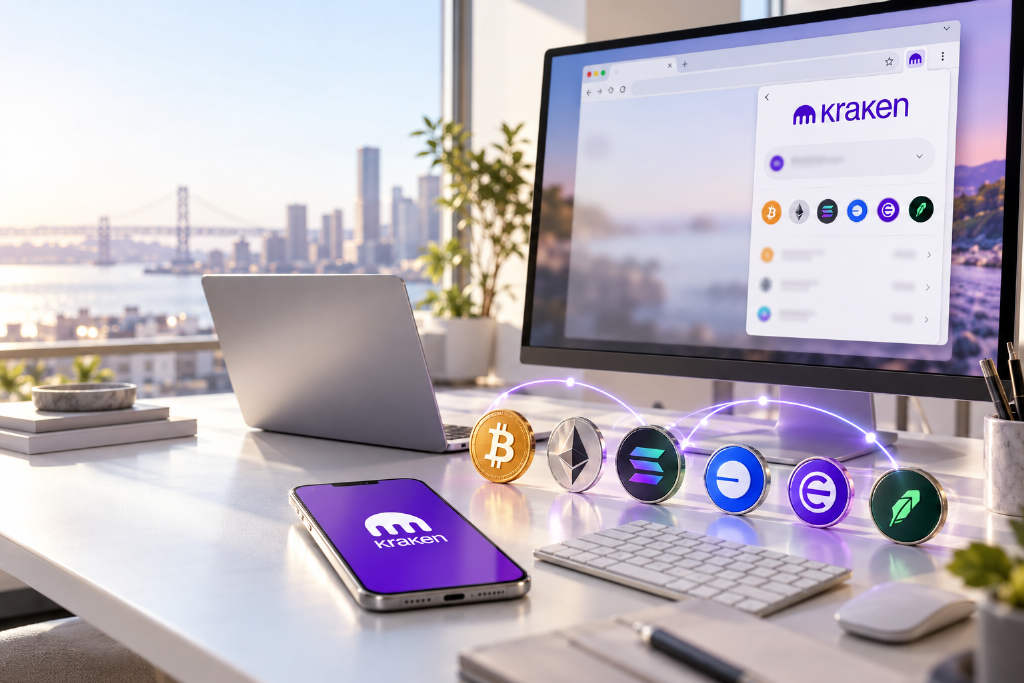
Kraken’s self-custodial wallet, Kraken Wallet, has released its browser extension, according to a post from the project on X. The team later shared a Chrome Web Store download link, allowing users to install the extension directly in their browsers.
Washington Sanchez, head of product for Kraken Wallet, said the extension supports multiple networks, including Bitcoin, Ethereum, Solana, Ink, Base, and Robinhood Chain. Users can create or import wallets with a seed phrase or private key, with support for standards including BIP39. The extension also supports watch-only wallets and offers sign-in options through email, Google, Apple, and passkeys.
Inside the extension, users can access same-chain swaps, cross-chain swaps, and cross-chain bridging. The fee is set at 10 basis points.
Kraken Wallet, the self-custodial wallet under crypto trading platform Kraken, said in a post on X that its browser extension is now live. The team later shared a Chrome Web Store download link, allowing users to install it in their browsers.
Washington Sanchez, head of product for Kraken Wallet, said the extension supports multiple networks, including Bitcoin, Ethereum, Solana, Ink, Base, and Robinhood Chain. Users can create or import wallets with a seed phrase or private key, with support for standards including BIP39. It also supports watch-only wallets, as well as login options through email, Google, Apple, and passkeys.
The extension includes same-chain swaps, cross-chain swaps, and cross-chain bridging. Fees are set at 10 basis points.
This article was originally published by Bit.Fan. For more cryptocurrency news and market insights, visit www.bit.fan. Disclaimer:
The market information, project data, and third-party content displayed on this platform are for industry information sharing only and do not constitute any form of investment advice or return commitment.
Cryptocurrency trading carries high risks. Users should fully assess their risk tolerance and make independent decisions. All profits, losses, and legal responsibilities are borne by the users themselves.