

Kyle, a DefiLlama researcher, says the 2026 cycle may finally be the one in which the market gives more weight to tokens backed by fundamentals rather than to price action alone. He writes that this idea is not new. From the earliest days of smart contracts, some of the first DeFi supporters imagined moving institutional financial infrastructure onto blockchains, but cycle after cycle, the market kept showing that most participants wanted one thing first: number go up.
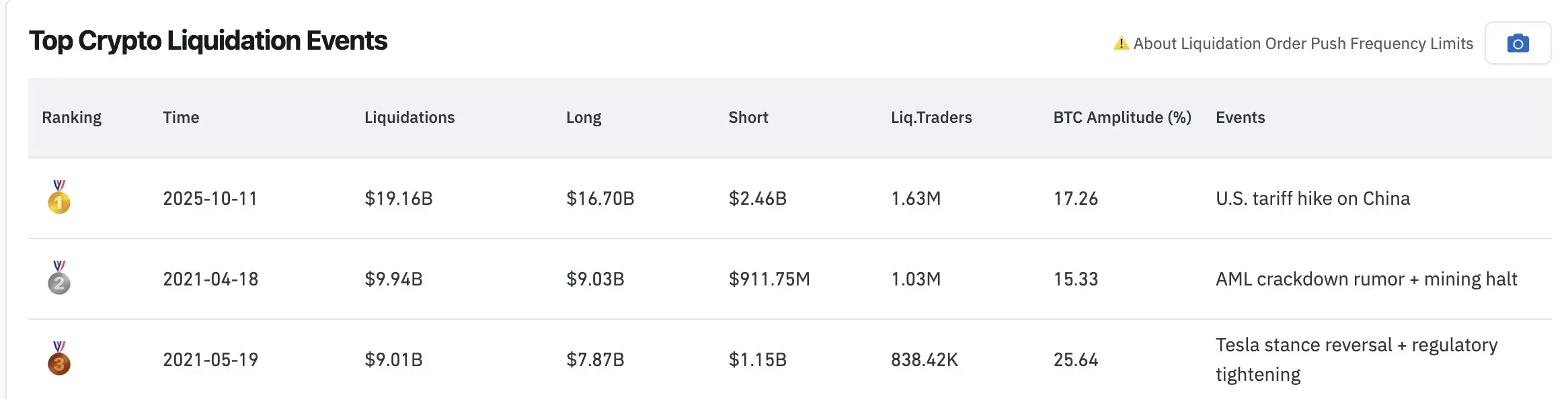
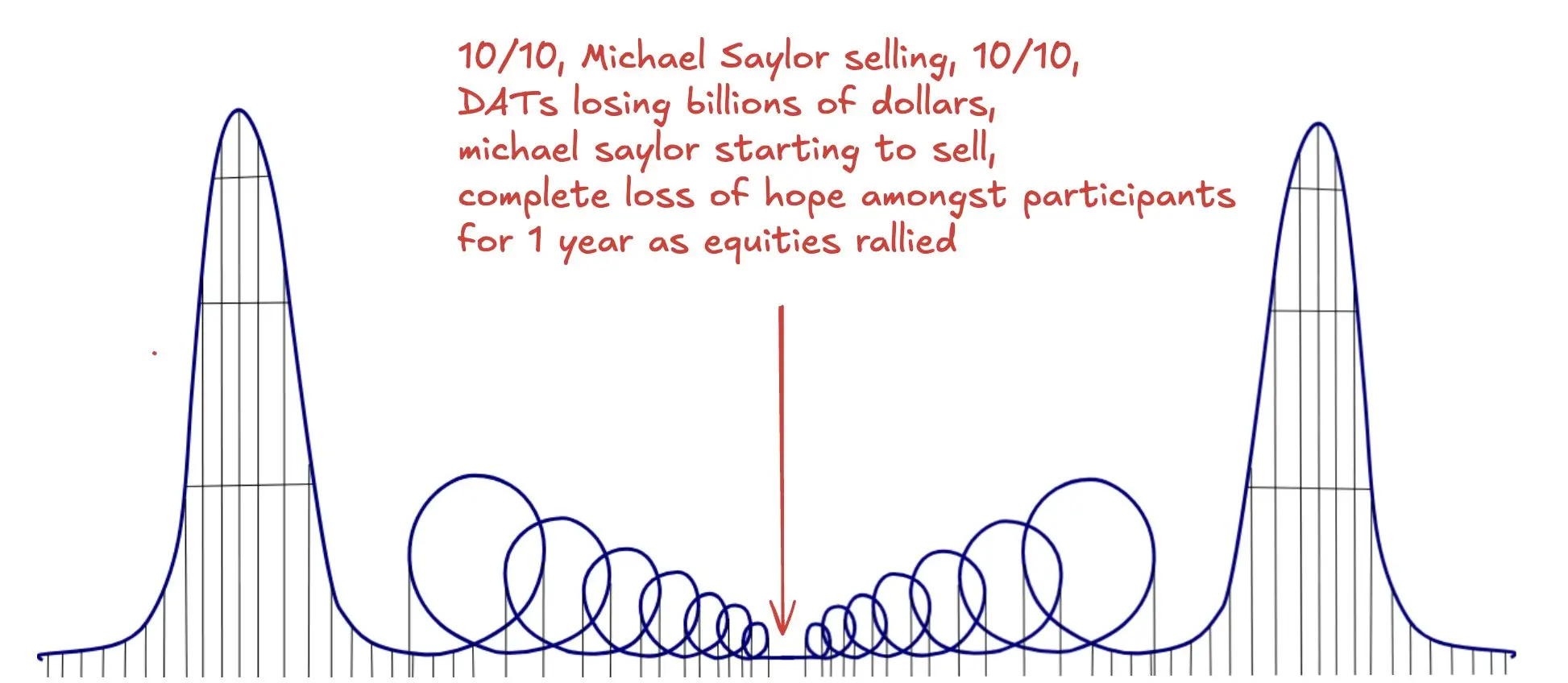
In Kyle’s account, the disappointment of 2025 mattered. Many participants believed the market had reached an inflection point after Donald Trump was elected, Gary Gensler had left, and the White House had a “crypto czar.” What followed, he argues, was the opposite of what many had expected. Trump-related token activity pulled tens of billions of dollars from the crypto market, digital asset treasury companies helped shape a two-peak “double top” structure, and on Oct. 10 the market was hit by what he describes as the largest liquidation event in history, one that arrived with almost no warning.
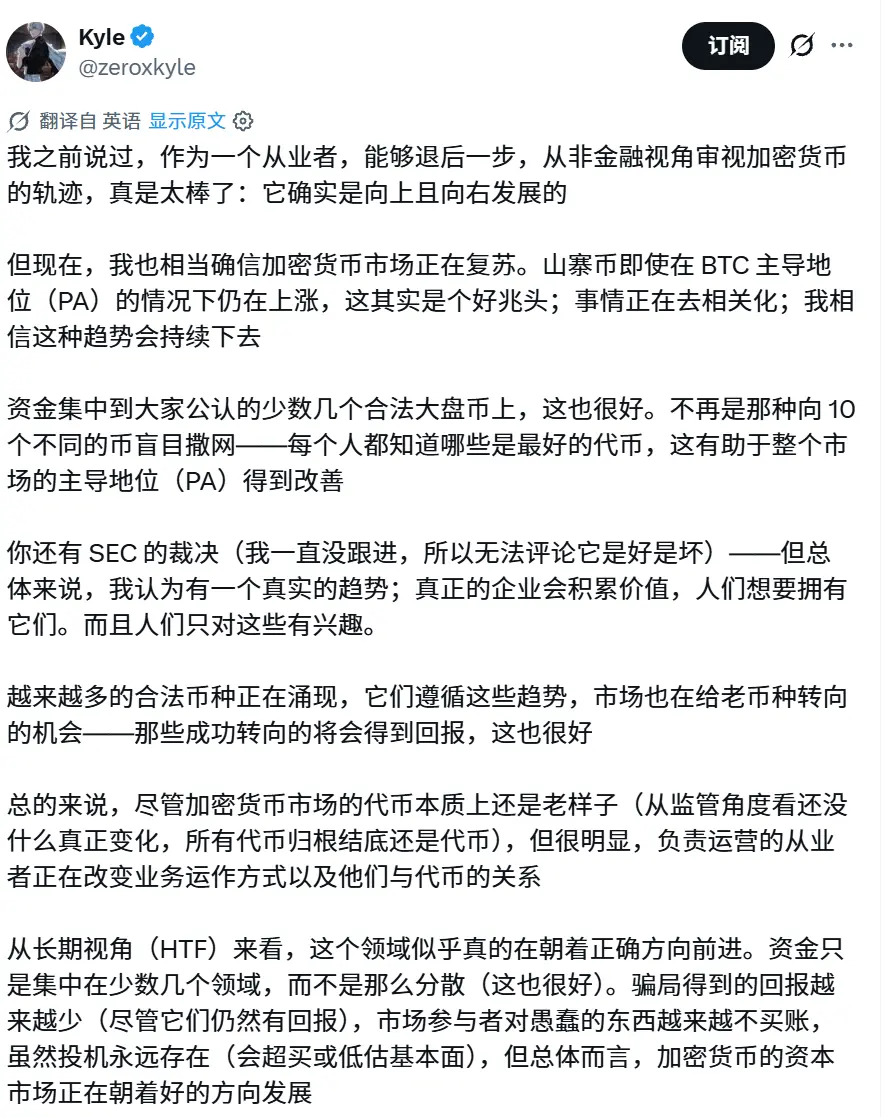
At the same time, equities kept climbing. Semiconductor and memory chip stocks stood out, the S&P kept printing all-time highs, and broader sentiment around the economy stayed relatively constructive. The result, he says, was that many long-time crypto participants left the market, himself included. Looking back, he sees the familiar marks of a bear-market bottom: depressed token prices, project shutdowns, repeated DeFi hacks, and a steady exit of capital allocators.
What made this bear market harsher, in his telling, was not only the drawdown but the collapse of hope. The industry waited for traditional finance to arrive, then watched a sitting president extract liquidity through a token while crypto insiders repackaged themselves in traditional-finance clothing and sold assets to another layer of crypto participants through Nasdaq-listed holding companies. That experience, he argues, left market participants carrying trauma into the current cycle.
Kyle says every genuine bull market begins by climbing a wall of worry. He believes the old era is ending and a new one is starting, with what he calls an “internet capital market” beginning to take shape. In the next few cycles, he expects the key theme to be the combination of traditional financial markets and internet-native assets with equity-like characteristics. None of that is new, he says, and he is sure he said similar things in 2025. The real issue has been timing more than growth, because the data still point to the same conclusion: actual crypto usage has kept rising even when prices did not.
Investment approach: lengthen the horizon and prepare for deeper swings
Kyle’s first point for investors is straightforward. If the issue is timing rather than a lack of real usage, then the right response is to extend the holding period and be ready for sharper volatility than in prior cycles.
He says lessons from the past year in the stock market are useful here. On X, many people have already noticed that the world is looking more and more like a speculation game, with markets increasingly driven by bubbles in speculative assets while the Benjamin Graham style of searching for undervalued companies on fundamentals has faded into the background. On that topic, he strongly recommends 0xSmac’s piece, “Let The Bubble Wash Over You.”
He also argues that macro headlines are now moving markets more often. Nearly every week brings a new variable: Trump reaching an agreement with Iran, 10-year Treasury yields hitting levels “not seen since 1990,” currency-crisis concerns possibly tied to the yen, bearish takes on AI or accelerationist arguments, and persistent geopolitical uncertainty. His answer is to stretch the time frame and reduce exposure to short-term noise.
That approach has worked in equities, he says, and he expects it to become a central strategy in crypto as well. In his view, Hyperliquid’s HYPE is the first token that genuinely gave investors a chance to profit through regular accumulation over time.
Why most tokens fail as long-term holdings
Kyle argues that asset selection matters more in crypto than in almost any other market. For years, the baseline assumption was that everything was a scam, everything would eventually go to zero, and the only rational move was to sell. He says that assumption was often correct for most of crypto’s history. Hyperliquid, in his view, opened a different path by showing that some assets can be accumulated over time and still work as investments.
That changes the structure of the market. A large share of altcoins are poor long-term holdings for a simple reason: few investors want to keep buying something that could fall 90%. Equities work differently because time can be an ally when the underlying business keeps growing. The logic behind consistently buying the S&P comes from the expectation that the U.S. economy will keep expanding. Kyle argues that crypto assets can become investable on similar terms only when the underlying businesses show durable growth.
Once that happens, he says, a reflexive loop begins to form: business growth attracts investment capital, price rises, and that price support helps the business grow further. That is the mechanism he sees behind the formation of an internet capital market.
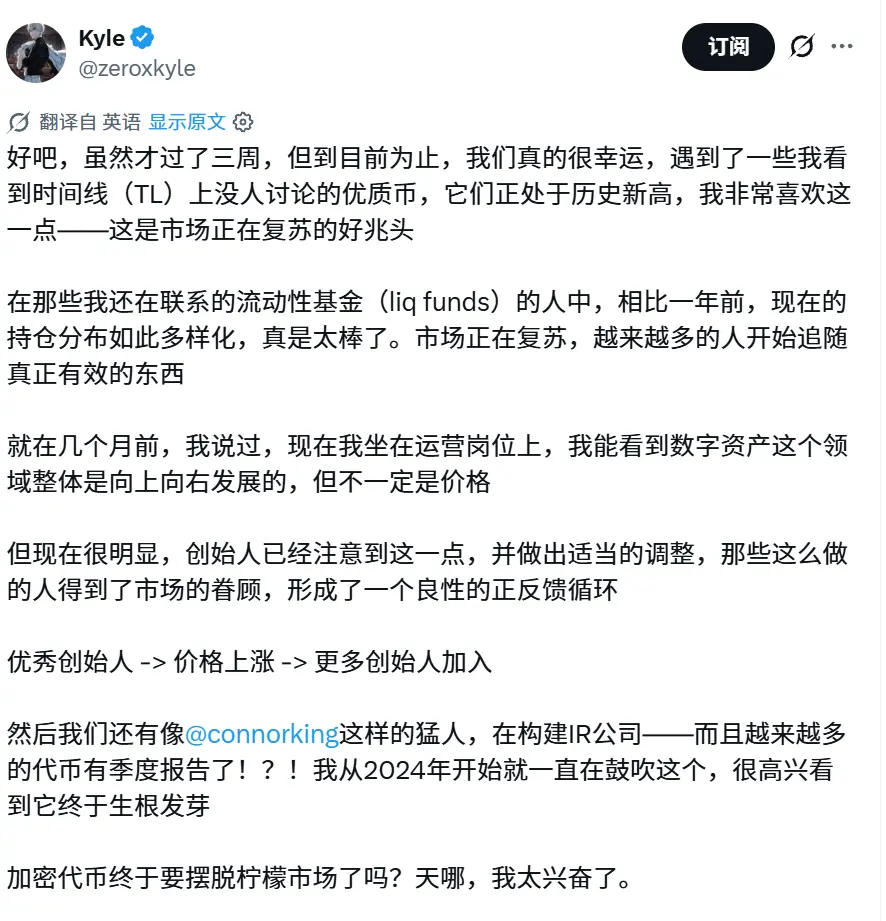
He lists several structural reasons why crypto has long resembled a lemons market, where buyers cannot easily tell good assets from bad ones:
- Low float and high fully diluted valuations, paired with large unlock schedules and steady sell pressure, leave the market absorbing new supply for years. Even if a project executes well, sellers are waiting.
- Many projects are not profitable. Their products do not truly meet market demand, so they cannot sustain growth and instead depend on short-lived narratives that work in bubble conditions and disappear just as fast.
- Token holders and company shareholders are often not aligned. The business creates value for equity holders while the token functions mainly as a marketing layer, leaving token buyers with little claim on cash generation.
- Disclosure and accountability are weak. In public equities, companies have to report revenue, insider sales, and risks, and there are consequences for false reporting. In crypto, insiders, venture funds, and market makers often control unlock schedules, OTC activity, and the real numbers. Teams can sell tokens, fake metrics, or walk away quietly while investors have little recourse.
What a good token should look like
Kyle argues that the market is finally finding ways to repair some of these lemons-market problems. Investors are applying tougher standards, and teams are getting clearer signals on what needs to change.
He uses Ethena as the clearest example. According to Kyle, the team has done four things that matter:
- It bought back tokens held by some early investors who had sold.
- It aligned token holders and equity holders by placing the protocol’s intellectual property and created value under a foundation governed by token holders.
- It proposed using protocol revenue to automatically buy back ENA.
- It ended the monthly venture-capital unlock schedule after the Ethena Foundation reached an agreement with major investors to release still-unvested tokens, removing the rolling overhang from future monthly unlocks.
The market, he says, responded quickly. ENA rose 95% over the past 14 days, creating a positive feedback loop.
From that example, Kyle builds a checklist. He says investors should buy projects that have already solved the lemons-market problem and avoid those that have not. These are not hard rules, he adds, but teams should meet most of them, ideally all of them:
- Token holders should be able to share in the value created by the business. Kyle says some structures that also include equity can still work if incentives are arranged fairly, and he points to Venice as an example. At a minimum, investors need to see that the team cares about the token and is not shifting value that should belong to the token over to equity holders.
- The product should meet real market demand and be profitable. He argues that durable growth and profits are what draw capital. Prices can rise because valuation multiples expand or because earnings grow, but only earnings growth can compound over time in a way a business can control.
- Token supply matters. He says there is no single formula that fits every project. Some tokens with little overhang still perform badly, while others with some overhang do fine. But in general, large potential sell pressure limits upside, and the best teams try to solve that directly, as Ethena did by repurchasing investor-held tokens.
He also names a few bonus factors:
- Buybacks. Unless the scale is huge, as with Hyperliquid, he does not think the dollar amount is the main point. For many protocols, reinvesting into the business may be the better use of capital. The real signal from a buyback is that the founders care about the token.
- Transparency and investor relations. In Kyle’s view, this should be close to mandatory. If teams want people to hold their tokens, they should explain clearly what those tokens do and where the value comes from. Public companies release quarterly reports and host investor calls; crypto teams asking for capital should offer similar communication and disclosure.
His broader conclusion is that crypto is starting to heal. Real businesses are appearing, teams are improving value accrual and supply structures, and the market is at last rewarding quality rather than hype. Digital assets, he says, are beginning to have genuine long-term investment value for the first time, not just trading value. The condition is simple: investors have to own the right assets.
Start with sectors, then pick teams
When it comes to finding opportunities, Kyle says it is easier to begin with sectors and only then move to individual names. In his view, only a small set of categories has already proved product-market fit, and those are the areas worth screening for long-term exposure.
He also sets out a separate view on onchain markets. Put simply, he says that beyond a small number of good tokens, many onchain projects are not worth the time. What the market is seeing onchain now, he argues, is the effect of AI-assisted software development. AI is excellent for small, narrow, quickly built products, but much harder to roll out across large organizations. The result is a kind of K-shaped split in productivity gains.
For crypto, that makes the lemons-market problem even worse. In the past, a polished website at least suggested that a team had put in real effort. Now that surface-level polish is cheap. Every token below a $10 million market cap can look refined on the outside, whether the people behind it are serious builders or outright scammers. Ideas are cheaper too. After Orbio hit a new all-time high, Kyle says, the market quickly saw 20 different inference-market copies, and there could easily be 200 more because anyone can hand Orbio’s website to an AI tool and ask for a copy.
That is why he says the edge in onchain investing can no longer come from software alone. It has to come from the team: who they are and whether they can deliver. Founder quality and founder character matter most. That is also why he thinks buying larger established tokens is now easier than hunting for microcaps. If a project has reached a certain scale, it has at least proved something. Researching 100 tokens with market caps above $1 billion and finding the good ones is easier, he says, than studying 10,000 tokens under $10 million where a new “good idea” appears every hour.
Six sectors on Kyle’s list
1. AI inference: real demand from outside crypto
Kyle ranks AI inference as one of the strongest themes in the market. He defines inference as the process where trained models handle requests and generate outputs. In his view, it is the only crypto-related sector with real demand that comes from outside crypto itself. People and companies pay for AI because they need it, not because they are farming token incentives.
He says improving open-weight models and falling usage costs are making AI services cheaper to provide, allowing firms to compete with major AI companies on both privacy and price. This is also a theme retail investors can understand immediately. Everyone uses AI, and several related assets have already posted explosive growth, which he sees as evidence of product-market fit.
Kyle argues that current inference demand reflects Jevons paradox: lower costs increase usage and end up pushing total demand higher. He says the data point that way, and they also show users moving from frontier models toward other types of AI, including open-source models. Even if open models draw regulatory scrutiny, he says many are already general enough to handle 99% of work needs. People want AI; they do not need the most frontier model every time.
His investment point is blunt. If an investor wants exposure to a good AI product and to rising inference demand, the directly investable vehicle, he says, is often the token market. Semiconductors benefit indirectly, but much of that expectation is already reflected in prices. Anthropic and OpenAI are not public. Going long Zhipu is possible, but Hong Kong does not offer the same valuation premium. Some tokens, by contrast, provide direct exposure to that theme.
His top picks here are VVV and ORBIO. Other names he lists are NEAR and CHIP. He also recommends a report from Galaxy.
2. Tokenized stocks and RWAs: the addressable market is still tiny
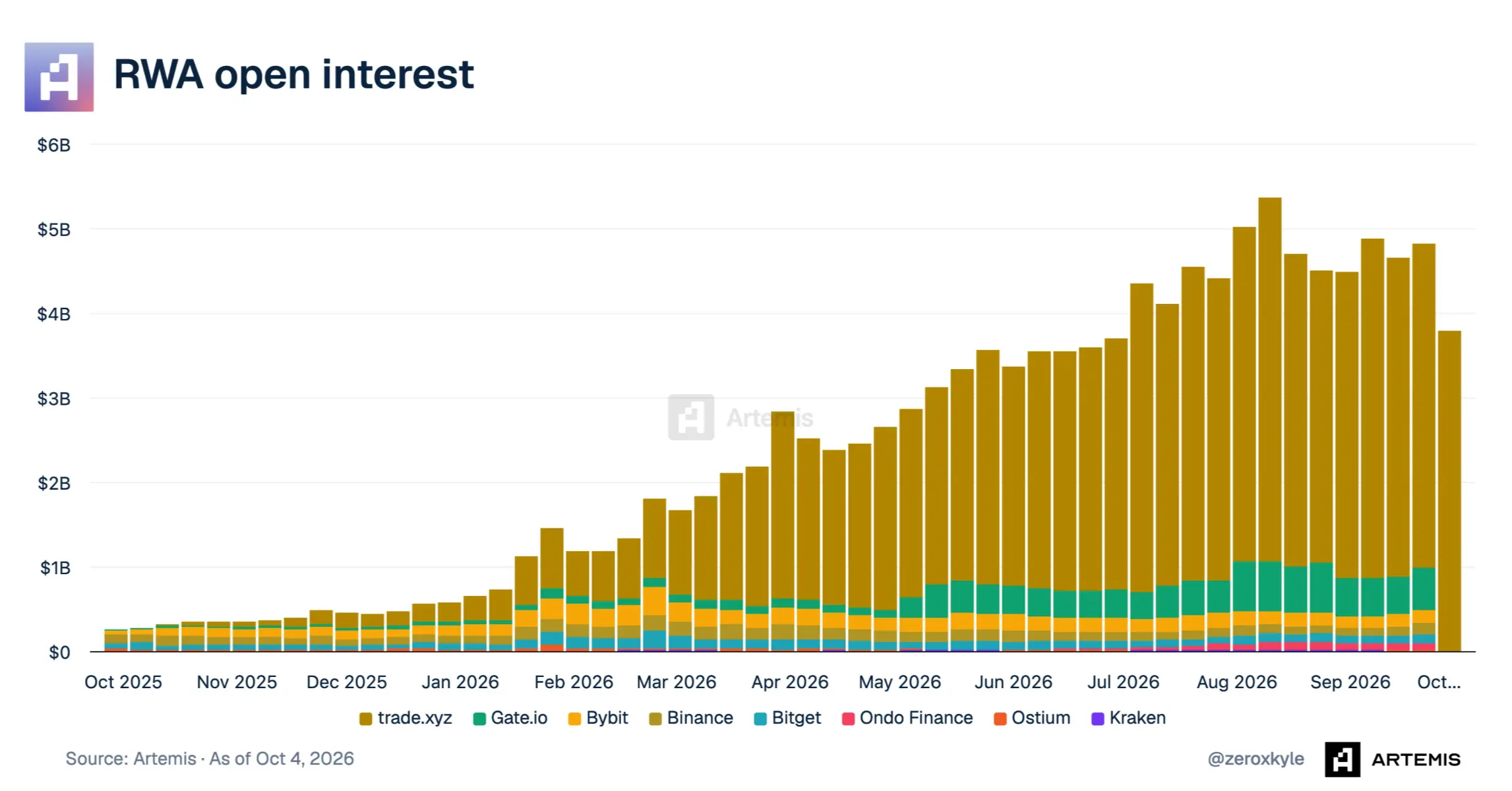
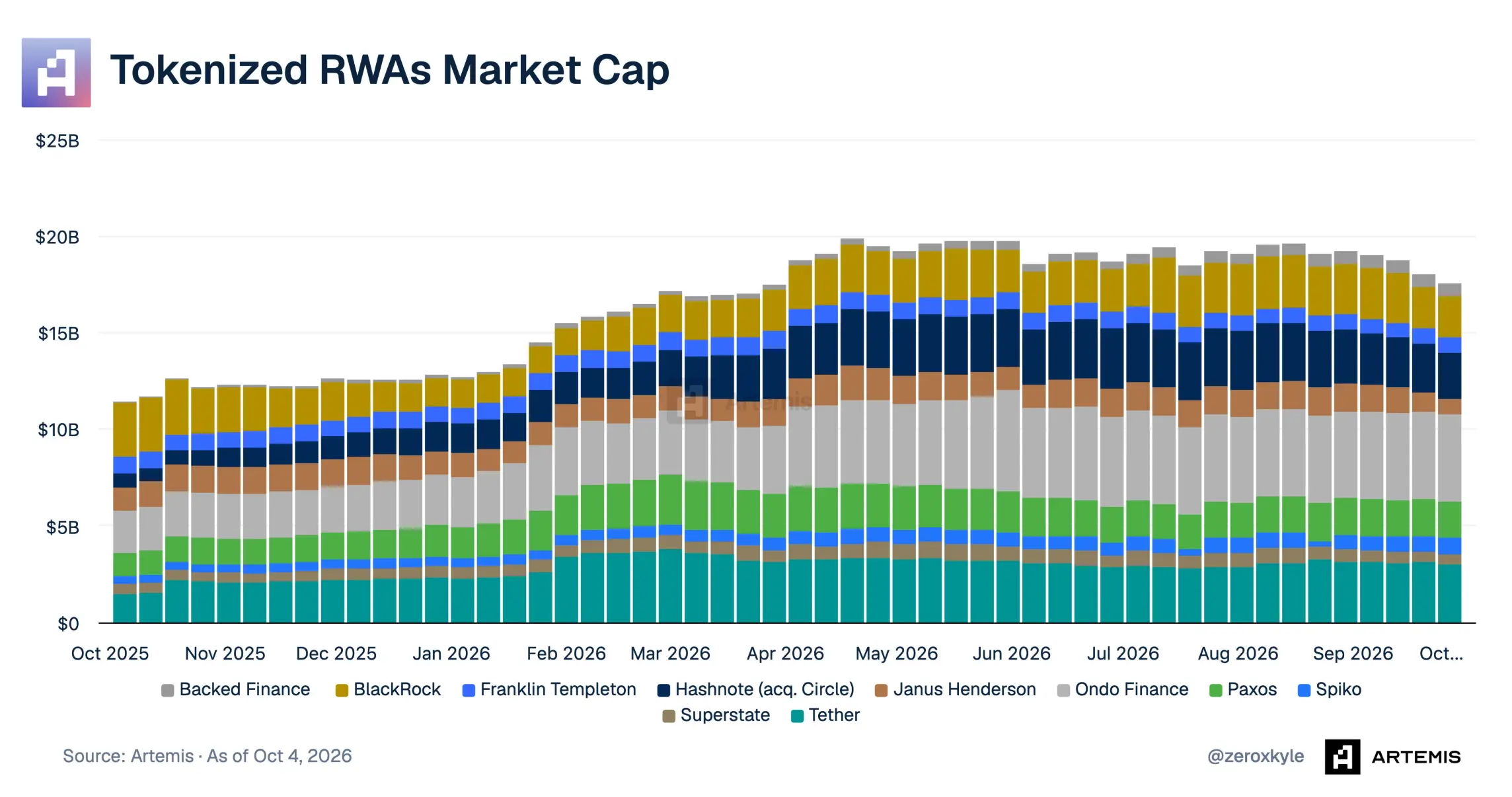
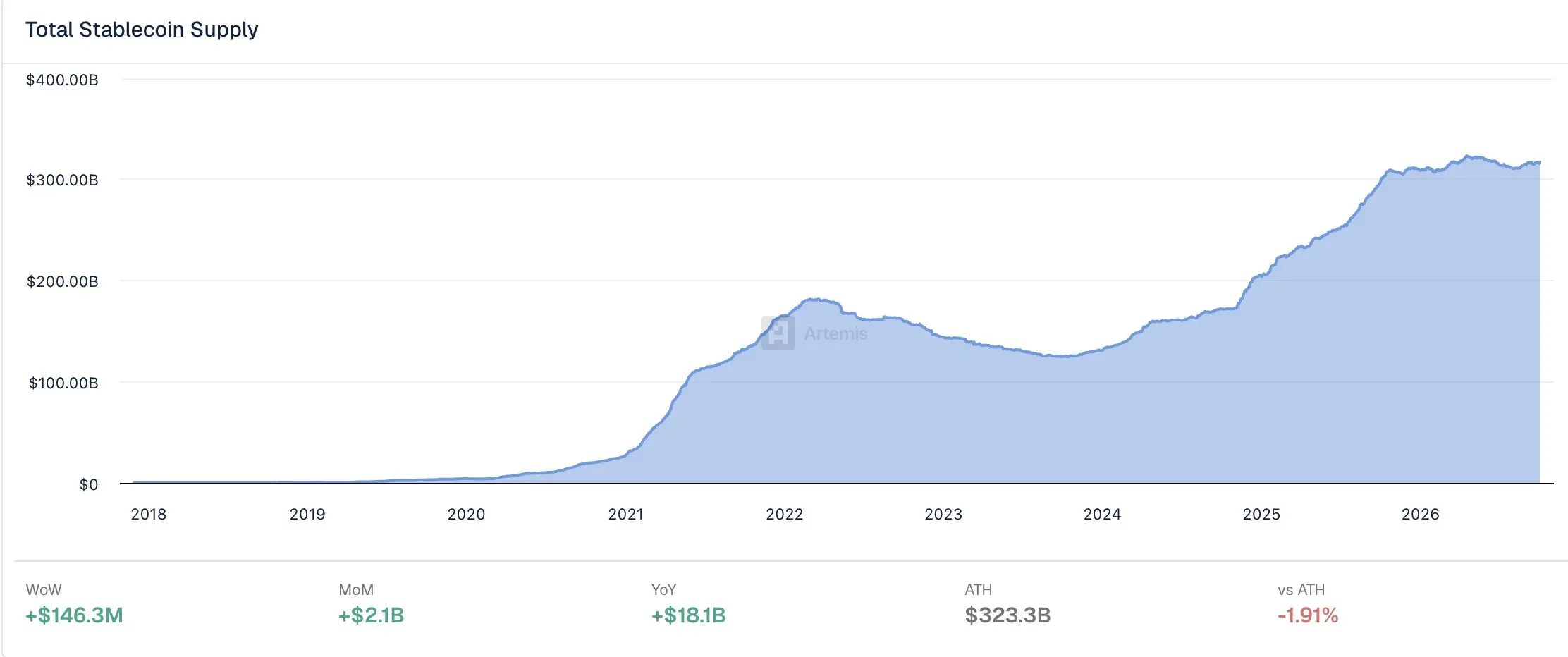
Kyle calls this the biggest opportunity set right now for one simple reason: it is still small. He notes that the United States has extended dollar usage globally through stablecoins, a market that has already reached about $300 billion. Tokenized equities, by contrast, stand at only about $2.5 billion, while the U.S. stock market is worth $69 trillion.
He says regulation is opening the door, large IPOs are coming, and there is substantial demand in countries where access to U.S. equities is difficult. His preferred name in this segment is BP, and he points readers to a report from frictionless.capital.
3. DATs: discounts plus improving fundamentals
On digital asset treasury companies, Kyle quotes Evan directly. He says the best opportunities under this framework share a few traits:
- A steep discount to the value of the underlying assets, with mNAV at roughly 0.15x at the summer low.
- Exposure to sectors such as stablecoins and perpetuals, backed by top-tier teams that kept shipping products even after related tokens fell more than 95% from their highs.
- A path to better fundamentals over the next few years as vesting and unlock periods end, with examples including higher USDe circulation, a recovery in basis-trade revenue, expansion of spot-versus-derivatives hedging and funding-rate capture into stock perpetuals, and more institutional partnerships that lift total value locked and protocol revenue.
On that basis, Kyle says the DAT companies around the Ethena ecosystem fit best. Since then, a new digital banking product has launched and USDe circulation has increased by more than $1 billion. His preferred name here is USDE.
4. Privacy: ZEC is the name he highlights
Kyle is explicit that privacy is not his specialty. He says he does not hold a single ZEC and only includes a few Taiki video links here, borrowing the style of Lee Goon Wang for the section. Even so, the token he singles out in this category is ZEC.
5. Perpetual futures DEXs: strongest product-market fit, but well understood
Kyle says perpetual futures decentralized exchanges are among the clearest examples of product-market fit anywhere in crypto. They have real users, real volume, and real fee revenue.
He places the sector in A rather than S tier for one reason only: the market already knows it. Hyperliquid’s success has already been priced into valuations, and competition is getting tougher. The next phase of growth, he says, will come when perpetuals move into the mainstream through platforms such as Robinhood and Interactive Brokers, expanding the market further.
His preferred names are LIT and HYPE.
6. Stablecoins: obvious growth, limited direct exposure
Kyle describes stablecoins as crypto’s most successful product to date, with further growth ahead. He keeps the category in A tier because the largest winners, Tether and Circle, do not offer onchain tokens that allow buyers to share directly in that business growth. In other words, there are not many clean ways to invest in the trend itself.
Ethena is one of the few exceptions in his view: a stablecoin issuer with a token structure that allows holders to participate in the economics of the business. For that reason, USDE also becomes his top stablecoin-related pick.
His final conclusion is that crypto assets have become investable again. Low-quality projects are gradually being separated from real businesses, and the market is beginning to reward teams that actually build. Older market participants still carry the trauma of prior cycles, he says, but skepticism and anxiety are part of how every real bull market begins.
The strategy he leaves readers with is simple. Extend the horizon. Be ready for larger swings. Screen holdings aggressively. Instead of trying to spot the next overnight lottery ticket in a sub-$10 million token thrown together by AI over a weekend, look for projects with real revenue, reliable teams, and token structures that let holders share in business value. Then keep holding when volatility tied to the latest headline pushes others out of the market.
His closing line is the core of the whole piece: buy good assets, keep holding through the noise, and let time do the work.



