
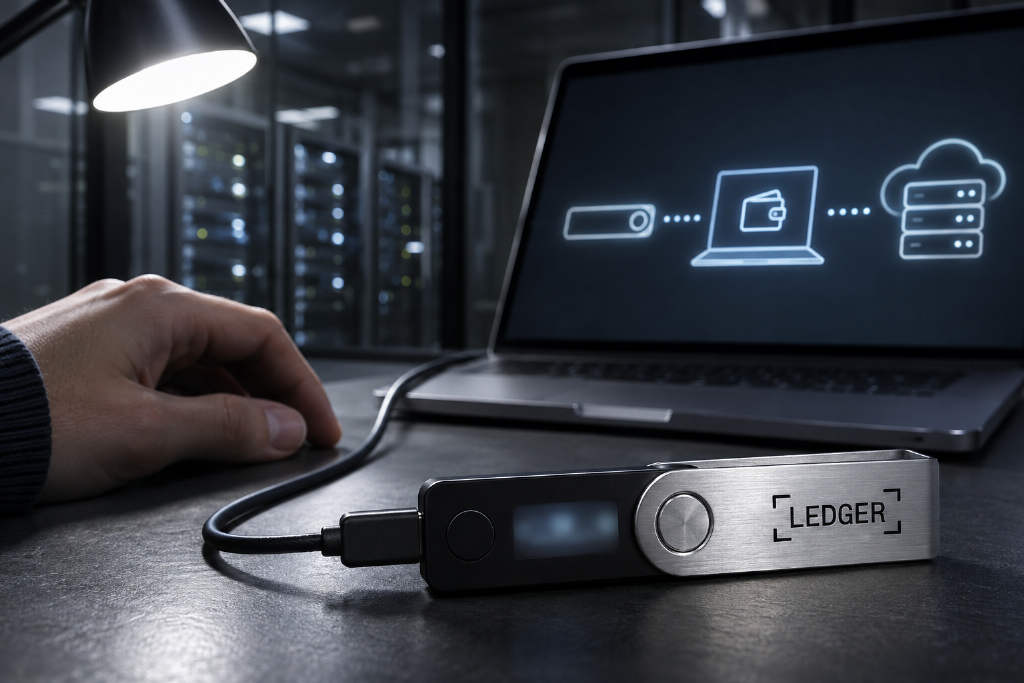
Wallet apps using Ledger’s default software development kit (SDK) send details of crypto transaction signatures to the hardware wallet maker’s servers, Protos reported. Privacy advocates discovered the behavior on Tuesday, raising questions about the default setting and how it was disclosed.
The SDK is used by wallet apps to connect to Ledger hardware devices. According to Protos, the behavior has been the default since version 1.16 of Ledger’s context-module, meaning it dates to May 2026 or earlier. Substantial metadata has been transmitted from Ledger devices to its servers since late May, the report said.
Apps and users must opt out of the information sharing, but the overwhelming majority do not, Protos reported. Some users had mistakenly believed Ledger wallets signed privately and broadcast transactions directly to blockchain networks without sharing those details with the company.
Ambire developer Kaloyan Kosev, also known as superKalo, flagged the issue on November 10. He said Ledger’s servers receive the customer’s Ledger model and software version, along with blockchain addresses the user paid or queried.
Kosev said a wallet running Ledger’s latest signing kit could report every signature back to the company. He noticed the behavior while updating Ledger packages to debug an issue. No affected version reached Ambire’s production environment, he said.
A default endpoint reports signing requests
Protos said the concern extended beyond inadequate disclosure. The SDK’s builder sets non-blind-signing.api.ledger.com as a default endpoint. Despite its name, the Ethereum-based signer sends a report for every transaction and typed-data signing request, regardless of whether the user asks to sign blind.
“I’d argue that privacy should be the default,” Kosev wrote, particularly for a company like Ledger.
Ledger developers committed the original data reporter on March 26. Version 1.16.0 of the context-module added it to the live package in April, and it then reached Ledger users in April and May, Protos reported. That release directed data to a Ledger staging server; version 2.1.0 switched it to production.
Ledger says the data supports clear signing
Ledger Donjon, the company’s in-house security team, responded on Tuesday that the behavior was “part of how clear signing works.” Clear-signing descriptors turn raw transactions into readable text, the team said, but are too large for a device. The SDK therefore looks them up on Ledger’s servers for better performance.
“That requires sending the transaction details needed to find the right descriptor,” Donjon added. Ledger’s security team said the company retains none of the data and that wallets can plug in their own module to avoid the default information sharing.
Ledger co-founder Nicolas Bacca, who left the company in 2023, told Bitcoin enthusiast Mr Hodl that the default might have been “overlooked.” Mr Hodl asked: “Nobody opted in. Why was it opt out?” Bacca said he had no idea why.
Other Ledger app data transfers and past incidents
Ledger’s own wallet app also routes other data through the company. Its Bitcoin module, for example, reads account history and fee rates from a Ledger explorer and broadcasts transactions to it. The app queries the explorer address by address and posts each signed transaction to its send endpoint.
In 2023, Protos reported that Ledger Live sent clicks, account counts, crypto asset names, device type and firmware information to analytics firm Segment. Ledger now says its personalization trackers require opt-in consent.
Separately, a Ledger data breach in 2020 exposed the names, addresses and phone numbers of about 272,000 customers. Last month, spyware in devices sold by an ostensibly official but unreliable Ledger reseller in Malaysia drained more than $86 million from victims.



