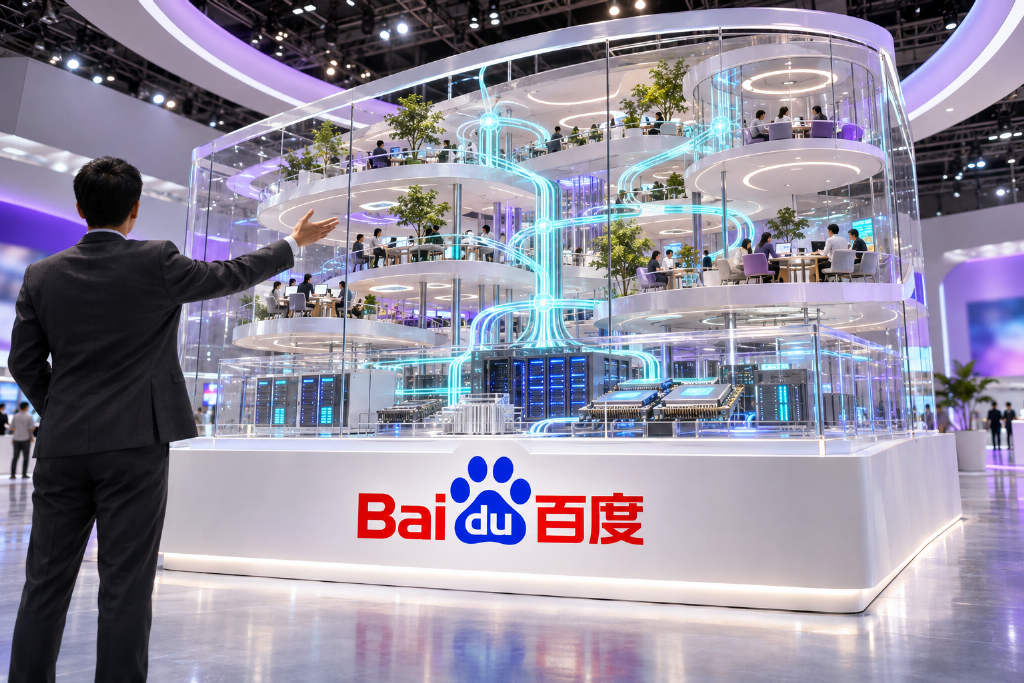
Baidu founder Li Yanhong said the decade from 2016 to 2026 marked the period in which artificial intelligence developed into an independent technology stack, with a four-layer architecture covering chips, cloud, models and applications taking shape during that period. Speaking at the opening ceremony of Baidu World 2026 on Nov. 12, Li said the next phase of AI will be the rise of intelligent organizations built on an AI-native structure rather than the existing hierarchical model. He compared AI to a new form of electricity and said intelligent organizations would be the factories of the AI era, where productivity is created. Li outlined three principles for organizational evolution: removing job boundaries, preserving tacit knowledge and closing process loops. He said future jobs will not disappear but will converge into two broad types: Builders, who create new things, and Sellers, who build interpersonal communication and trust. Inside Baidu, daily active agents rose from 5,000 to 37,000 over the past year. Weekly completed tasks exceeding the company’s effectiveness standard climbed from 84,000 to more than 1 million. Baidu has also built 4,300 Workspaces and accumulated more than 20,000 organizational Skills.
ChainCatcher reported on Nov. 12 that Baidu founder Li Yanhong said the decade from 2016 to 2026 was the period in which artificial intelligence developed into an independent technology stack. A four-layer architecture covering chips, cloud, models and applications gradually took shape during those years.
Speaking at the opening ceremony of Baidu World 2026, Li said the next phase of AI will be the emergence of intelligent organizations. The model, he said, will differ from the hierarchical structures used by organizations today and will instead be built as an AI-native system.
“If artificial intelligence is the new electricity, then intelligent organizations are the new factories of the AI era, where productivity is truly created,” Li said.
Three principles for organizational evolution
Li outlined three principles for organizations adapting to AI: breaking job boundaries to release organizational energy; preserving tacit knowledge to build organizational intelligence; and designing closed-loop processes to drive organizational evolution.
He said jobs will not disappear in the future but will converge into two broad categories. Builders will be responsible for creating new things, while Sellers will focus on interpersonal communication and building trust.
Baidu reports growth in internal AI agents
According to Li, the number of daily active AI agents inside Baidu rose from 5,000 to 37,000 over the past year. The number of effective tasks completed by those agents each week increased from 84,000 to more than 1 million.
Baidu has also built 4,300 Workspaces and accumulated more than 20,000 organizational Skills.
This article was originally published by Bit.Fan. For more cryptocurrency news and market insights, visit www.bit.fan. Disclaimer:
The market information, project data, and third-party content displayed on this platform are for industry information sharing only and do not constitute any form of investment advice or return commitment.
Cryptocurrency trading carries high risks. Users should fully assess their risk tolerance and make independent decisions. All profits, losses, and legal responsibilities are borne by the users themselves.