
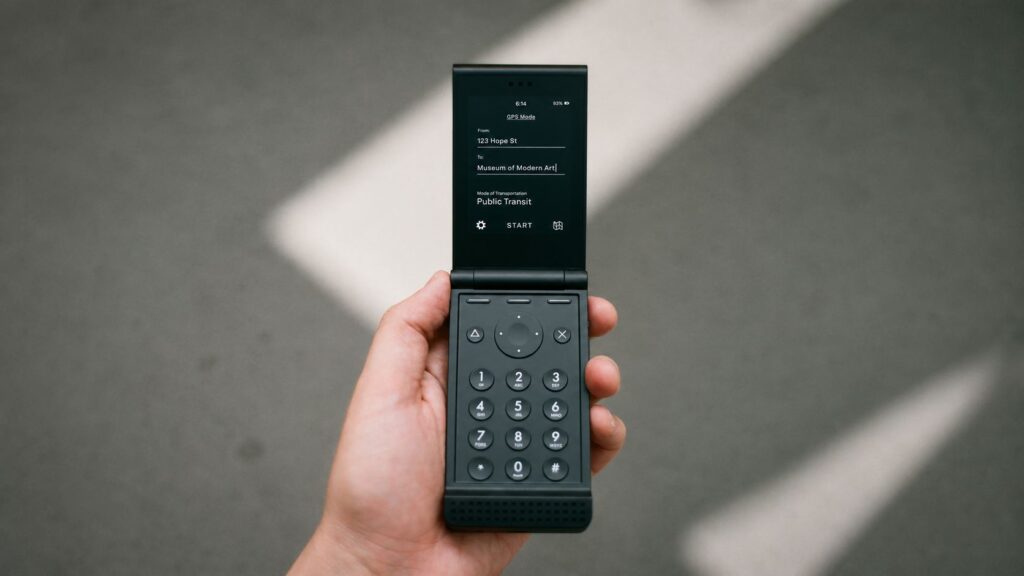
Light, a minimalist phone brand, launched the Light Flip on July 21 with a $299 price tag. The flip phone has a 2.8-inch OLED display, a physical T9 keypad, 5G support and the company’s own LightOS. It does not include a browser, social apps, email or any AI features.
Co-founder Kaiwei Tang said the people who buy it stand "in opposition to all this AI laziness and the smartphones tech companies keep pushing."
A flip phone built around what it cannot do
The device comes from a small New York company with a staff of a little over a dozen people. Its core appeal is that it does very little by current smartphone standards.
Even so, the hardware is not bare-bones. Light Flip uses a 2.8-inch matte OLED screen with 480 x 640 resolution. The body is plastic, and when folded it measures 110 x 58 x 19 mm and weighs 160 grams.
Inside, it runs on a MediaTek MT8873 chip with 6GB RAM and 128GB of storage. It has a 1,800mAh battery that can be replaced by removing four screws. Connectivity includes 5G and 4G LTE, dual SIM support through nano SIM and eSIM, Bluetooth 5.0, GPS and USB-C. It also keeps a 3.5mm headphone jack and carries an IP54 rating for dust and water resistance.
The camera uses a 50-megapixel sensor but outputs 12-megapixel photos. There is no front-facing camera, so selfies are out. The outer shell has no secondary display either. Without opening the phone, users cannot see who sent a message. There is only a star-shaped notification light.
Input is handled through a 12-key physical keypad with T9 predictive text. There is no touchscreen.
LightOS keeps basic tools and cuts out the rest
The phone runs LightOS, which the source describes as a heavily stripped-down version of Android. It includes an alarm, calculator, calendar, navigation, music player, podcast downloads, speech-to-text and voice messaging.
It does not include a web browser. It also leaves out Instagram, TikTok, X, email and any chatbot.
As the source puts it, one of the most honest things about the spec sheet is that half of it is about what the phone cannot do.
A product moving against the AI phone trend
The source frames the launch against the direction the wider tech industry has taken over the past two years, with AI being added to text boxes, photo apps and search buttons, while companies build power-hungry data centers to support those services. Consumer frustration, it argues, has mostly been limited to complaints. Some AI summaries can be turned off in settings, but other parts keep coming back, and smartphones themselves are not designed to encourage less use.
That fatigue is where Light Flip positions itself. It is not a switch and not a focus mode. It is a $299 physical device that only works if the user replaces their original phone with it.
Gizmodo, according to the source, ends its report with a question: is the phone using nostalgia as bait, or presenting itself as a symbol of resistance to tech giants that have gone too far.
Founders, colors and the users they studied
Kaiwei Tang took part in developing the Motorola Razr more than 20 years ago. That period is described as the golden age of flip phones, and one in which a handset’s success had nothing to do with how many apps it could run.
Co-founder Joe Hollier said Light Flip offers "the same Light Phone experience, the same LightOS, and all the tools we already have today." On color choices, he was more blunt: "Just having a yellow phone makes me super excited."
The phone comes in six colors: black, dark blue, red, pink, yellow and light gray.
Tang also said the company has interviewed young people who use flip phones for years. "They describe flip phones in negative terms, but they keep using them," he said, adding that they even feel proud of that choice.
The source treats that as the most interesting part of the story. These users are not sticking with flip phones because they find them convenient. They know the experience is inconvenient, and they choose it anyway.
Tang’s description of that stance is direct: they stand "in opposition to all this AI laziness and the smartphones tech companies keep pushing."