
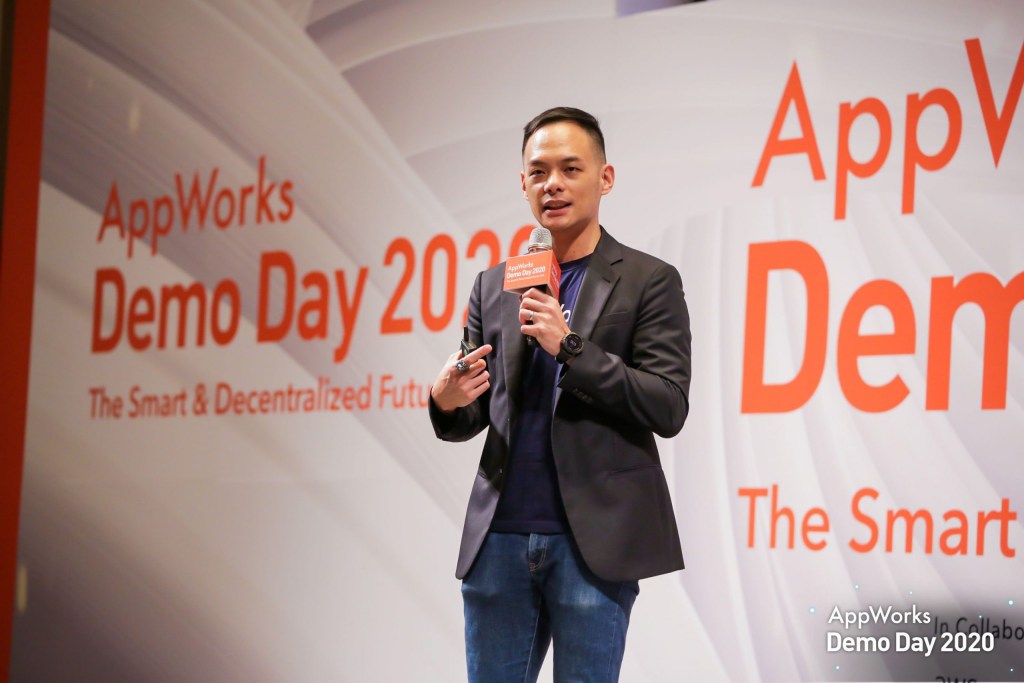
AppWorks founder Lin Chih-chen says the firm’s early institutional backing did not come from his father’s network, despite a long-running public assumption that his family background helped drive the accelerator’s success. In a recent article, Lin wrote that the only real business introduction he received through his father while setting up AppWorks was a meeting with Acer co-founder Stan Shih — and that meeting led to no investment.
Lin comes from a family of physicians. His father, Lin Fang-yu, served as superintendent of National Taiwan University Hospital and later as head of Taiwan’s Department of Health. As AppWorks grew into one of Taiwan’s most recognizable startup accelerators, then raised multiple venture funds with assets under management topping NT$10 billion, the outside narrative often linked that outcome to family connections in politics and business.
Lin’s version is different. He said the four major institutional shareholders in AppWorks Fund I — H&Q, Cathay Life, Phison Electronics, and United Daily News Group — came in through relationships built over time around the MR JAMIE blog, startup events, the accelerator, and a wider founder-investor community, not through direct introductions from his family.
The one meeting arranged through his father ended with a blunt rejection
Lin said that in 2009, as he prepared to move back to Taiwan from the US to launch AppWorks, he believed smartphones would trigger a major industry shift. The iPhone and Android ecosystem were starting to spread, and software, mobile apps, and internet services were becoming more important. Taiwan, though, was still far more established in hardware manufacturing, electronics contract production, and component supply chains than in software entrepreneurship.
His goal was to build an accelerator centered on software and internet founders, and to help create a generation of startups that could work alongside Taiwan’s hardware strength. Before returning, he wanted to explain that idea to Stan Shih.
At the time, Lin Fang-yu was leading National Taiwan University Hospital. According to Lin Chih-chen, Shih had previously undergone coronary stent treatment and continued to receive care from the NTU medical team, which meant the hospital superintendent’s office and Shih’s office remained in contact. Through that connection, Lin’s father arranged a visit.
Lin described it as the only time in the founding process of AppWorks when he truly used his father’s network to secure a meeting with a business leader.
He told Shih that Taiwan could not rely only on hardware, and that once smartphones became mainstream, apps and software services would matter much more. Taiwan needed to cultivate software founders early, he argued, so software could reinforce the island’s existing hardware advantage.
Shih did not offer to invest. Instead, he told Lin that if he really wanted to build that model, he should do it in a bigger market. For Lin, who had hoped for support, the meeting was a hard setback. He wrote that the rejection also hardened his resolve to prove Taiwan could still build a software startup ecosystem.
Years later, the story came full circle. At the 2024 annual meeting of the venture capital association, AppWorks received the “VC Star” award, while Shih received a lifetime achievement award. When Lin went on stage, he retold the story of being told his idea would not work in Taiwan and called Shih an “alternative benefactor.” Shih later joked publicly that he had once told Lin to his face that he would fail, only to see him succeed.
Lin says the common thread behind Fund I was the MR JAMIE blog
AppWorks Fund I was formally established in 2012 as Ben Sun Venture Capital Co., Ltd., with initial capital of NT$300 million. Its main institutional shareholders included H&Q, entities from the Cathay financial group, Phison Electronics, and United Daily News Group.
Lin said those relationships can be traced back to MR JAMIE, the blog he started running in 2009. At a time before the term “influencer” had become common, he was writing almost every day about why Taiwan needed a software startup ecosystem, what AppWorks was building, what progress the accelerator team was making, and what founders and investors needed to understand about the market.
Those posts were republished by technology media in Taiwan and China. Combined with the traffic lift from Facebook’s early algorithm era, MR JAMIE became a well-known Traditional Chinese blog in startup and tech circles. AppWorks’ startup events, Startup Mixer gatherings, and accelerator programs also drew in large numbers of founders and investors. Lin said that at the peak in 2010 and 2011, the Facebook fan page generated as many as 200 million impressions in a year.
H&Q: a feeder fund for software startup deal flow
The first key shareholder was H&Q. Lin described it as one of Taiwan’s earlier and more representative venture firms, with strengths in hardware, semiconductors, and tech supply-chain investing. As smartphones rose, H&Q also recognized mobile internet as a new investment category.
The challenge was sourcing. Hardware companies were easier to find in science parks and supply chains, where investors could ask around upstream and downstream partners and identify targets. Software startups were different. They were often scattered across apartments, coffee shops, and small improvised offices, without a clear industrial cluster.
Lin said a senior manager at H&Q at the time, Andy, who later joined AppWorks as a partner, had been reading MR JAMIE for years and believed in both the AppWorks thesis and the team’s ability to execute. Through the blog, events, and accelerator, AppWorks had built access to software founders that H&Q had trouble reaching on its own.
That led H&Q to invest in AppWorks Fund I and treat it as a feeder fund to its main investment vehicle: AppWorks would identify, cultivate, and invest in teams at an earlier stage, then pass later opportunities into H&Q’s pipeline.
Cathay Life: an exchange student’s interview request turned into a fund investment
The path that brought in Cathay Life was much less direct. It started not with a financial executive, but with an email from a blog reader.
A Singapore exchange student at National Cheng Kung University was preparing to launch an English-language tech website and wanted to interview Lin. The student had no budget and no time to travel to Taipei, so he asked if he could send questions by email and have Lin reply in writing, along with photos.
That kind of interview might have felt rough for an established newsroom, but Lin agreed. He wrote that the student was also in an early startup stage, and he wanted more English-language coverage of Taiwan’s startup scene.
After the article was published, Lin shared it on Facebook and it generated solid traffic. The student then asked whether AppWorks had other founders with strong English skills who might also be interviewed. Lin recommended Alex, founder of first-batch AppWorks startup EZTABLE, which led to EZTABLE’s first English-language media coverage.
That article later became an unexpected lead for international funding. Harvard Business School professor Clayton Christensen, known for the theory of disruptive innovation, had helped establish Rose Park Advisors with alumni backing to look for companies worldwide that fit the disruptive innovation model. The fund had originally been studying Singapore restaurant-booking platform Chope, but during that research it came across Taiwan’s EZTABLE through the English coverage and ended up leading EZTABLE’s Series A round instead.
A separate thread was unfolding in Taiwan. Fubon had launched a dining platform called “Food God Fubon” for credit card users. Cathay, a direct rival, was pressed to come up with its own response quickly. It approached EZTABLE in hopes of connecting with hundreds of restaurants on the platform and rapidly building its own dining service.
Alex wanted EZTABLE to remain an open platform and did not want to favor a single financial institution. Cathay then proposed investing directly in EZTABLE, but there was another obstacle: the startup had just completed a Series A led by Rose Park Advisors, did not need capital urgently, and wanted its next round to bring in international investors who could help it expand across Asia.
Cathay kept pushing for a way to work together. Lin said Alex wanted to repay AppWorks for the accelerator support, mentoring, and customer introductions it had provided early on, and he also knew Lin was having trouble raising the first fund. Alex offered an alternative: rather than invest directly in EZTABLE, Cathay could invest in AppWorks Fund I and become an EZTABLE shareholder indirectly, after which he would be willing to discuss the partnership further.
Cathay’s marketing unit then brought the life insurance investment team to meet Lin, and the proposal moved through internal approval quickly. Lin framed the deal as one that had almost no reason to happen on paper, yet it was stitched together through an exchange student’s interview request, two English-language articles, discovery by an international venture firm, and competition between two of Taiwan’s largest financial groups in dining services.
Phison: from promoting a book to an on-the-spot commitment
Phison’s story also began with an email in the MR JAMIE inbox.
CommonWealth Publishing was preparing to release a new book by Phison founder Pua Khein-Seng and asked Lin to help promote it on the blog. Phison’s headquarters are in Jhunan, where recruiting engineers was relatively difficult, and both the publisher and the company hoped the founder’s story would raise Phison’s visibility in the talent market.
Lin did not know Phison beforehand, but after reading the manuscript he was impressed by Pua’s entrepreneurial path. He agreed to help publicize the book, though he wanted the post to be more than a standard excerpt and requested an interview.
After the interview, Pua assumed Lin’s main job was blogging. Lin explained that writing was only a side activity and that his real work was running AppWorks. He compared AppWorks to an incubation institution focused on the software industry, using Phison’s own history with incubation support from ITRI as an example.
Pua then casually asked whether AppWorks needed any help. Lin answered directly: fundraising for the first fund was not going well. According to Lin, Pua agreed on the spot that Phison would invest, and the capital later arrived as promised.
Phison became an important institutional shareholder in AppWorks Fund I. At the fund’s 2012 launch press conference, Pua attended in person and encouraged younger founders to take on the world.
United Daily News: e-commerce ambitions grew into a long-term advisory relationship
United Daily News Group joined for a different reason. At the time, the media company wanted to expand into e-commerce. Someone active in the startup community and also a reader of MR JAMIE believed the AppWorks ecosystem could help and introduced the two sides.
There were also practical overlaps. AppWorks’ office was then located in the former United Daily News building, and the landlord had ties to the newspaper family. More important, AppWorks Fund I focused on internet, mobile applications, and digital services, closely matching United Daily News’ goals in e-commerce and new media. Through the fund, the group could gain startup deal flow and use the AppWorks network to explore business models beyond traditional media.
The investment partnership was completed, and the relationship continued well after the fund close. Lin later served as an independent director at United Online and also advised the general manager of United Daily News’ “Mai Dongxi” e-commerce business. The cooperation did not stop with the investment itself; the executive who led e-commerce at the time later became chief operating officer of the group.
Lin’s account focuses on how trust was built before the result became obvious
Lin’s retelling does not amount to a claim that family background had no effect at all. His narrower point is that the institutional capital and long-term partnerships that shaped AppWorks in its early years were not secured through direct introductions from his father’s political or business circle. In his account, they came from years of writing, community-building, events, accelerator work, and repeated interactions inside Taiwan’s startup ecosystem.
What the public sees now is an organization with more than NT$10 billion in assets under management. Lin’s version of 2009 through 2012 looks very different: a founder trying to argue that software mattered in a market still dominated by hardware, hearing that the idea would not work in Taiwan, and then assembling a first fund one relationship at a time.