
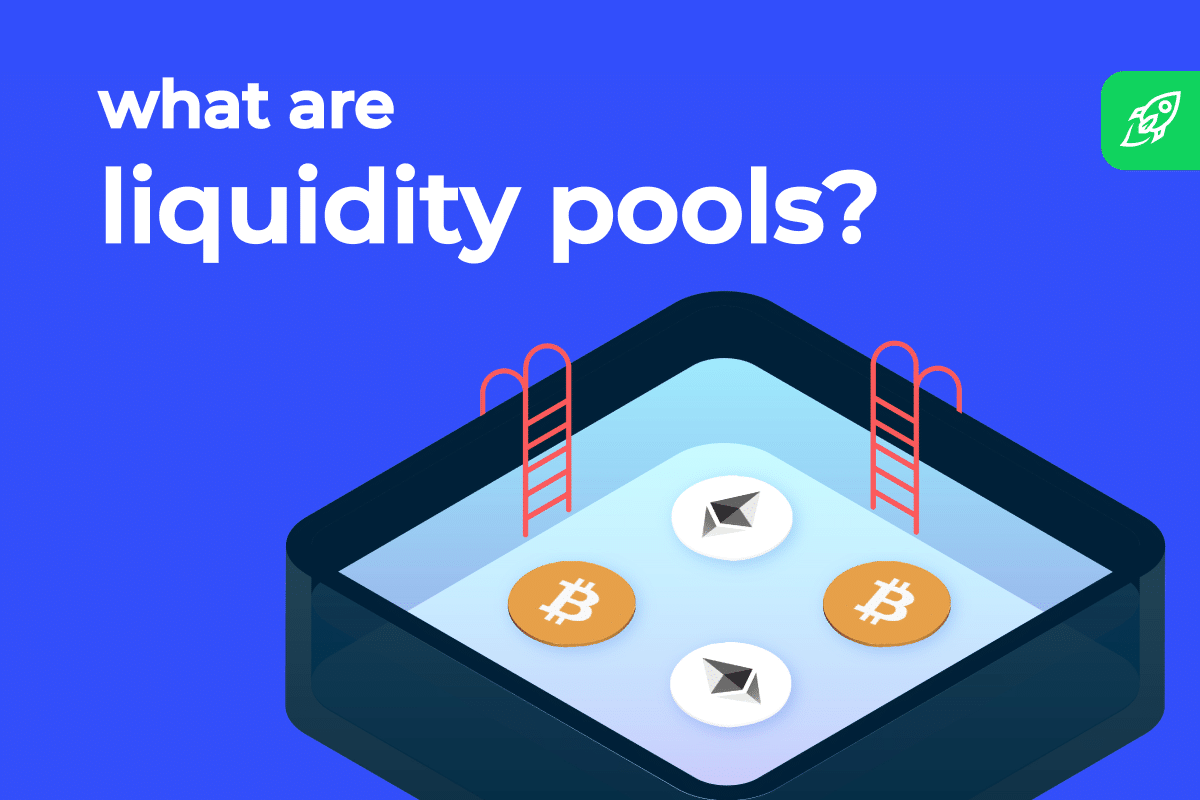
Liquidity pools power decentralized exchanges by replacing order books with token reserves locked in smart contracts. Every day, millions of swaps happen on Uniswap, Curve, and other DEXs — all relying on these pools. Users who deposit tokens become liquidity providers (LPs) and earn fees from each trade.
What Are Liquidity Pools and How Do They Work?
A liquidity pool holds two tokens in a trading pair, like ETH and USDC. LPs deposit equal values of both and receive LP tokens representing their share. When a trader swaps ETH for USDC, the pool executes the trade automatically, charging a fee — typically 0.3%. That fee is split among all LPs proportional to their contribution. Some platforms add extra incentives through liquidity mining, distributing native tokens on top of fees.
Pricing is handled by an Automated Market Maker (AMM). The most common model is the constant product formula: x * y = k. If one token's reserve increases, the other must decrease proportionally, adjusting the price. This algorithm ensures liquidity and real-time price discovery without human market makers.
Types of Liquidity Pools
Product Pools (e.g., ETH/USDC on Uniswap) are standard AMM pools, prone to price volatility and impermanent loss. Stablecoin Pools (USDC/DAI/USDT) use Curve's StableSwap algorithm, offering low slippage and minimal impermanent loss — safer for beginners. Smart Pools on Balancer allow custom weights and dynamic rebalancing. Lending Pools on Aave or Compound let users deposit assets for others to borrow overcollateralized, earning variable interest. Algorithmic Pools like Bancor v3 adjust parameters in real-time to reduce slippage in illiquid markets, but carry higher technical risk.
Earnings and Risks
LPs earn from trading fees and incentives. Returns depend on pool volume. However, risks are real: impermanent loss — the gap between holding tokens in the pool versus holding them outside — can eat into profits when prices swing. Smart contract bugs, rug pulls, and flash loan attacks are also threats, especially in unaudited or low-liquidity pools. High gas fees during network congestion further reduce net returns.
Popular Platforms
Uniswap pioneered the AMM model; Curve optimized stablecoin trading; Balancer introduced multi-token smart pools; SushiSwap added yield farming; Bancor offers single-sided staking with impermanent loss protection. Before depositing, check the platform's audit history, pool depth, and fee structure.