
Litecoin went through a 13-block reorganization on April 25, 2026, reversing roughly 32 minutes of chain history. The team said the incident began with an exploit of a zero-day flaw in MWEB, the network’s Mimblewimble Extension Blocks privacy layer, which was used to launch a denial-of-service attack against major mining pools. Nodes that had not been updated accepted invalid MWEB transactions, allowing attackers to peg out coins to third-party DEX platforms. Mining pools then coordinated a defensive reorg over about three hours to roll those transactions back.
Team says invalid transfers were reversed and the chain is stable
In its public statement, Litecoin said the invalid transactions would not remain on the main chain and that all valid transactions during the affected period were untouched. The bug, according to the project, has been fully patched and the network is operating normally again. NEAR Intents reported exposure of about $600,000, though Litecoin’s version of events suggests the reorg may have limited the final impact. Once miners adopted the patched client, the network stabilized. The chain kept moving, but the episode drew attention to how uneven upgrades can leave openings in a PoW system.
Github history fueled questions about the “zero-day” label
The bigger argument centered on disclosure. Coindesk reporter Shaurya Malwa reviewed the litecoin-project Github repository and found evidence that core developers had privately identified and patched the MWEB consensus flaw between March 19 and March 26, 2026. That put the fix 37 days ahead of the exploit on April 25. The patch was not broadly enforced across miners and node operators, leaving a window in which outdated software could still accept the invalid transactions. Critics argued that this looked less like a surprise zero-day and more like a vulnerability that had not been fully communicated across the network.
X account post became a second controversy
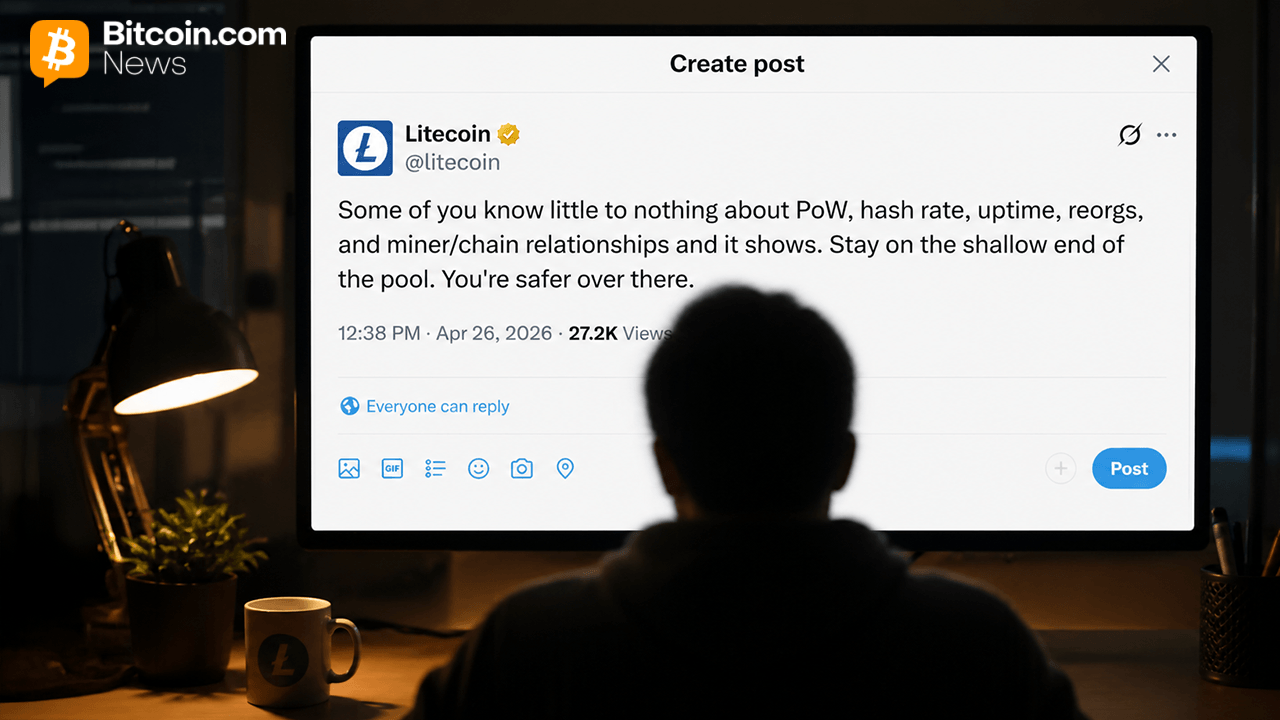
Instead of calming the debate, Litecoin’s official X account intensified it on April 26. The account said some critics knew “little to nothing” about PoW, hash rate, uptime, reorgs, and miner-chain relationships, then told them to “stay on the shallow end of the pool.” The post drew hundreds of hostile replies. Users called it “salty,” “childish,” and “unprofessional,” and some said the project needed a different social media manager. The tone was not new. The report noted that Litecoin’s account has spent years trading jabs with critics, rival chains, and influencers; in September 2025, it even joked that it had fired an “abrasive intern,” though the posting style remained much the same.
Solana’s official account joined the moment as well. Responding to reorg-related discussion on April 25, @solana wrote, “How’s your weekend going little buddy?” Many in the community read it as payback for Litecoin’s earlier mockery of Solana’s outage record. Litecoin, for its part, maintained that its core network remains intact: MWEB is patched, the canonical chain is stable, and no funds were permanently lost on the main chain. Even so, the incident exposed a familiar weakness in PoW networks where software updates are not automatically mandatory for every miner and node operator.