
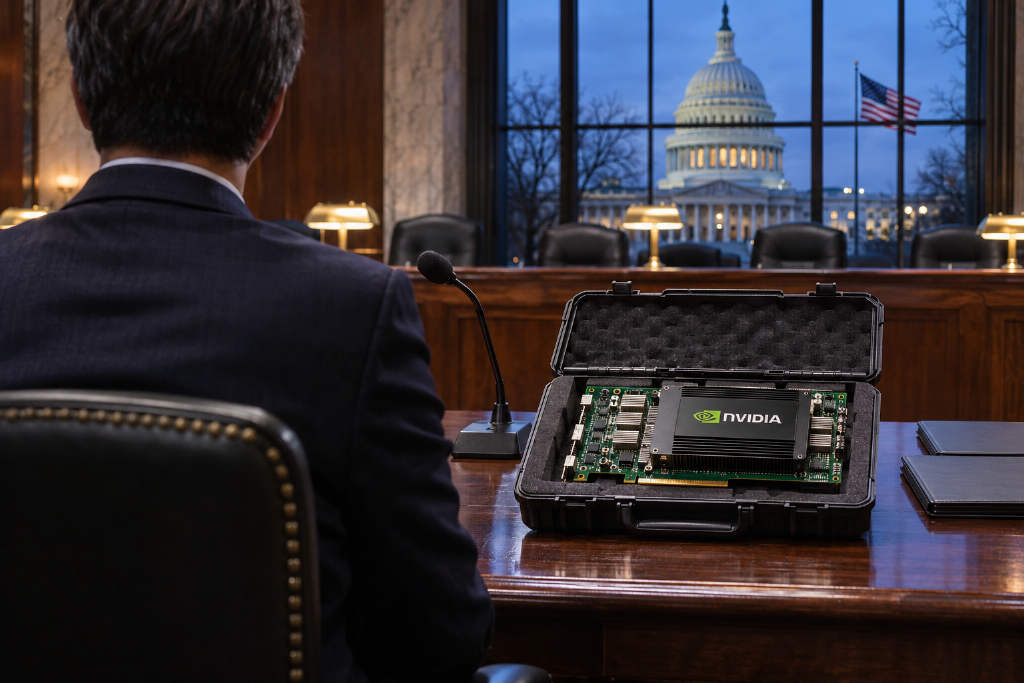
U.S. Commerce Secretary Howard Lutnick agreed on November 12 to testify before the Senate about national security concerns tied to Nvidia, while congressional committees set December appearances and interviews for Nvidia figures. The schedule includes a Senate invitation for Jensen Huang, who has recently resigned as Nvidia’s chief executive, and separate House requests for closed-door interviews with Huang and the company’s chief legal officer.
Commerce Department spokesperson Kristen Eichamer told NBC that Lutnick had voluntarily agreed to appear before the Senate Banking Committee and answer lawmakers’ questions. Committee Chairman Tim Scott wrote separately to Lutnick and Huang on the same day, inviting both to testify voluntarily. Huang was asked to appear on December 3; Lutnick’s date is December 10. The House committees separately requested that Huang sit for a closed-door interview on December 1.
Senate inquiry focuses on export controls
Scott said on X that recent reports had raised serious concerns about national security and protecting sensitive U.S. technology. Reuters reported that he could consider issuing a subpoena if Huang did not agree to appear voluntarily. “The American people deserve answers,” Scott said, according to Reuters.
NBC reported that Scott invited Lutnick to a public hearing titled “Recent reporting raising national security concerns related to Nvidia and the Department of Commerce’s role.” In his letter, Scott wrote that the Commerce Department has a central role in setting and enforcing export controls, and that Lutnick’s testimony was important to the committee’s oversight of that work.
House committees seek interviews with Huang and Nvidia’s legal chief
House Foreign Affairs Committee Chairman Brian Mast, Select Committee on the Chinese Communist Party Chairman John Moolenaar and Intelligence Committee Chairman Rick Crawford jointly issued a second request involving Huang, Nvidia chief legal officer Tim Teter and Commerce Deputy Secretary Jeffrey Kessler.
Reuters reported that the three chairs asked Huang and Teter to take closed-door interviews with transcripts on December 1 and December 2, respectively. They warned that subpoenas would compel their attendance if they did not comply. Kessler was asked to attend a hearing on December 3.
In a statement, the chairmen said that continuing reports involving Huang, Nvidia and Megaspeed raised clear national security concerns that required immediate attention. They also urged Congress to pass four bills immediately as part of the National Defense Authorization Act, including the AI OVERWATCH Act and the Chip Security Act. ChainNews previously reported on Mast’s first request for Huang to respond by a deadline.
Lawmakers from both parties press Lutnick on controls
NBC reported that Democratic Senator Richard Blumenthal said Lutnick should appear voluntarily, or a subpoena “may be necessary.” Blumenthal said he wanted to know whether export controls had been loosened. Republican Senator Jim Banks also said he wanted Lutnick to testify before Congress “as soon as possible.”
Reuters reported growing criticism of Lutnick among lawmakers. Their concerns include the government’s refusal to add dozens of Chinese companies to a trade blacklist and whether officials adequately supervised Nvidia’s exports to China. Two people familiar with the matter told Reuters that senior White House officials were also discussing whether Lutnick should leave his post.
CNBC, citing Axios, reported that Treasury Secretary Scott Bessent questioned Lutnick in the White House Situation Room about why export controls had not been imposed on Megaspeed. A Commerce Department spokesperson told CNBC that “there was no such conversation.” ChainNews has separately summarized the Singapore government’s explanation of the investigation involving Huang and Megaspeed.



