
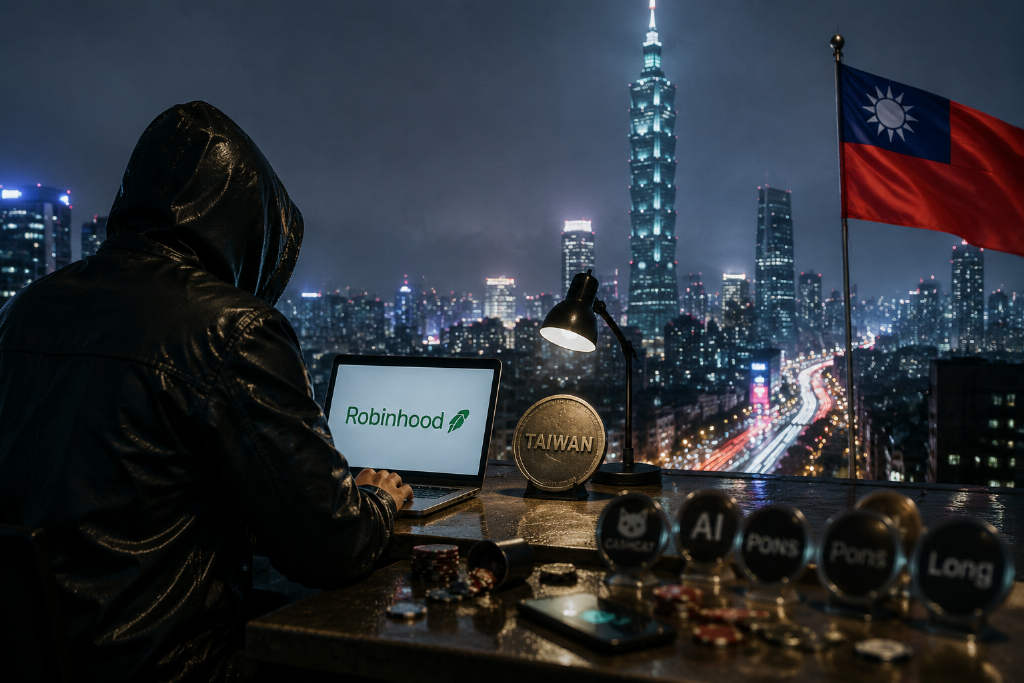
The latest meme-token launch by Maji, a well-known crypto personality, has struggled to gain traction. On Sept. 1, Maji promoted TAIWAN, a Robinhood Chain meme token paired with the stock token TSM, and said he would buy it in the open market rather than hold a private allocation.

The launch came as the on-chain meme market remained active in September. Binance had launched perpetual futures trading for Niulai and Marscoin, while Robinhood Chain had produced three meme tokens with market capitalizations above $100 million: CASHCAT, AI and PONS. Pons and Long were described as the two launchpads driving Robinhood Chain’s meme activity. Other narratives, including stock-token pairings, memes built around short squeezes against Wall Street and leveraged stock memes, were also circulating.
That environment has drawn back several figures who became prominent during the 2023 and 2024 on-chain meme cycles. Maji’s return has been one of the most closely watched, but his latest launch has produced limited results.
TAIWAN Peaks at $1.7 Million
On the evening of Sept. 1, Maji posted a contract address on X. The address led to TAIWAN, a meme token paired with TSM, the tokenized representation of Taiwan Semiconductor Manufacturing Co. Maji later promoted TAIWAN on the fomo platform, writing: 「The strongest-performing stock on Robinhood is AI, followed by $Taiwan.」 He had not said that his X account was hacked by the time of publication, which led the report to conclude that the launch was essentially confirmed as his own.
Before the launch, Maji said he would try a 「zero-inventory」 issuance for the first time. He said he would buy in publicly, like other users. Information disclosed on fomo showed that he purchased $7,636.24 worth of TAIWAN at an average market capitalization of $769,000. He had not sold any of the tokens by publication time. The report noted that it could not rule out the existence of other addresses controlled by Maji that held an undisclosed position.

The approach did not draw a strong response from meme traders. Data from GMGN showed that TAIWAN reached a peak market capitalization of $1.7 million within the first hour after Maji’s post. The token then declined steadily. Its market capitalization stood at about $600,000 at publication time, while the number of holding addresses was only slightly above 1,000.
TAIWAN’s liquidity pool contained about $200,000 before publication, and creator-fee income totaled $4,784.28. Maji had previously raised money through public crypto launches, but the report described this as his worst performance in that market and said it may signal a severe loss of his ability to mobilize buyers.
Mithril, Cream Finance and Boba Oppa
Maji first became known as a rapper. He debuted in 1992 and became popular in Taiwan. In 2017, he entered the blockchain industry and launched Mithril, a project built around the concept of social mining. Drawing on his entertainment-industry following, Mithril raised $51.6 million in its initial coin offering, equal to about 60,000 ETH at the time. The project went to zero in 2022.
During the 2020 DeFi Summer, Maji launched the lending protocol Cream Finance. The protocol was attacked by hackers multiple times, causing heavy losses for users. In 2024, Maji issued a token on Solana for the first time, launching Boba Oppa, named after his dog, with the ticker $BOBAOPPA. Its presale raised more than $40 million worth of SOL within 24 hours. The token price fell by more than 70% that same day.
Maji’s most recent widely discussed move before TAIWAN came on Aug. 27. He posted on fomo that he planned to acquire Friend.tech for $1 million. After the news spread, Friend.tech’s market capitalization rose from less than $300,000 to more than $6 million, an increase of more than 20 times. Maji bought about $70,000 worth at an average market capitalization of $192,000. His reported unrealized profit exceeded $1 million, and he said he would never sell.

The report said market participants no longer trusted such statements. It attributed that loss of confidence to Maji’s repeated reversals and exits across previous token and project-related episodes.
Early Market Leaders Show Mixed Results
Maji is not the only early crypto figure whose promotional reach has weakened. The report said the on-chain personalities returning in this cycle generally no longer command the same call-following and trading influence they had in earlier years.
Him was one of the best-known and most active Solana meme KOLs in 2024, with substantial reach during the AI meme boom. Recently, a trader sent him 40% of the supply of COPPERINU, a Robinhood Chain meme token. Him then publicly bought into the project. COPPERINU reached a peak market capitalization of $30 million before falling quickly. It stood at $8 million at publication time, while Him continued to promote it.
In the Chinese-speaking market, early on-chain figures including 0xSun, Wang Xiaoer and Crypto D also joined Pump.fun. The report linked their arrivals to the current social-trading trend and to earlier competition between Pump.fun and fomo. Odaily said it did not know whether these figures had received signing fees from Pump.fun.

Wang Xiaoer’s ability to attract buyers remained visible. On Aug. 31, he announced that he had bought BONER, a meme token. BONER later reached a peak market capitalization of $90 million. It had pulled back by publication time but still held a market capitalization of about $54 million.
Other returning leaders performed less strongly. On the morning of Sept. 2, 0xSun and Crypto D jointly bought JOHNDOG. The token reached a peak market capitalization of only $2.5 million before publication. Pump.fun data showed that 0xSun had accumulated a net loss of about $16,400 since joining the platform.
Social Trading Changes Who Users Follow
The rise of fomo has been one of the defining features of this meme cycle. The report said fomo had been marketing outward to bring more meme users into the social-trading market. New users may not know the early on-chain personalities. They may instead follow newer meme traders who have recently gained attention and disclose live trading records.
The basic meme-trading model has not changed: users still look to KOLs for trading signals. The figures in the market have changed, with newer participants taking some of the attention once held by the early leaders.