
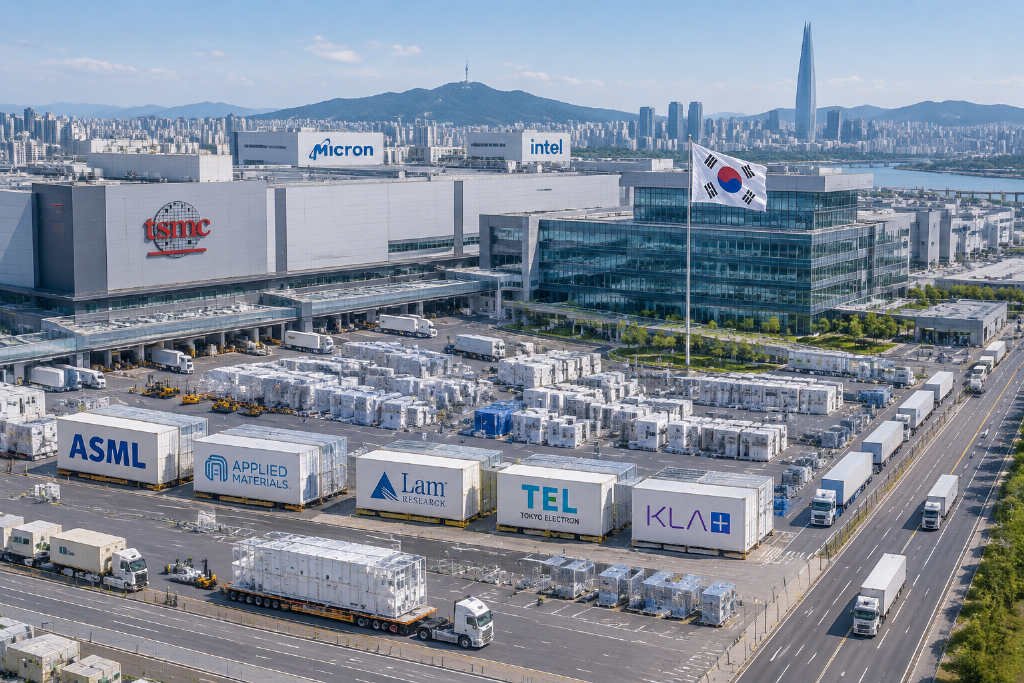
Major semiconductor equipment suppliers including Applied Materials, ASML, Lam Research, Tokyo Electron and KLA have entered the final stage of 2028 equipment supply contracts, and some are already discussing purchase orders for tools that can be delivered in 2029, according to a Nov. 3 report by Korea’s Electronic Times cited by ChainCatcher.
The report, citing industry sources, said demand is rising quickly for front-end process equipment as fabs seek to move tools into plants as soon as possible. Key equipment partners for Taiwan Semiconductor Manufacturing Co. (TSMC), Micron and Intel are drawing up 2029 supply strategies. Some Korean equipment companies that trade directly with those overseas manufacturers are also reviewing supply plans two to three years in advance.
Fab equipment supply contract discussions usually begin six to 12 months before installation, the report said. After a purchase order is placed, delivery typically takes about three to six months. That timeline has shifted as investment in AI infrastructure continues and chipmakers push large-scale equipment spending at the same time. Delivery lead times have stretched to more than double normal levels, with some categories taking more than two years, and related contract negotiations are moving one to two years earlier than usual.
When ASML reported earnings last month, it said it expects no interruption in lithography equipment supply through 2028 and is also studying plans to expand future capacity.
One executive at a global equipment company said it is unusual to be discussing equipment supply three years out at this point in time, and added that, given current fab investment trends, this pattern is expected to continue through 2030. Another industry source said front-end and back-end investment is moving in parallel globally, and that the push to sign equipment introduction contracts ahead of competitors could spread into the back-end segment. Samsung Electronics and SK Hynix need to take steps to lock in core process equipment earlier, the source said. The report added that both Samsung Electronics and SK Hynix are still pressing ahead with fab investment.



