
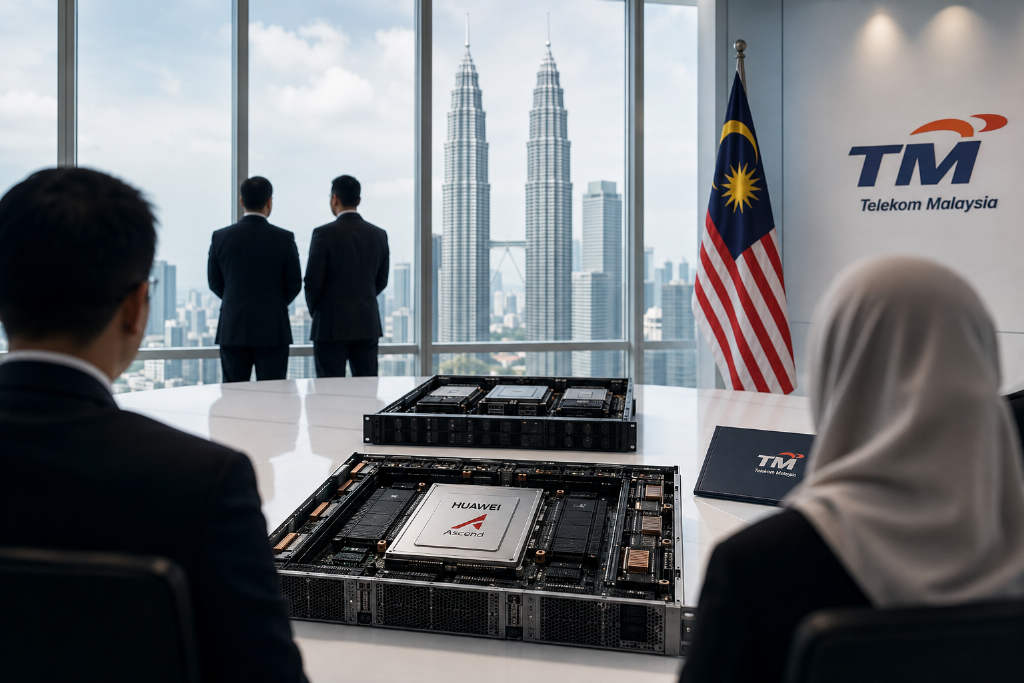
Malaysia is seriously considering using Huawei's Ascend 910C chips to build a 2 billion ringgit ($494 million) sovereign AI infrastructure. The project is designed to keep sensitive government, military, and intelligence data within the country. State-linked Telekom Malaysia has been selected as the primary operator, though the final chip choice has not yet been finalized.
The chip under consideration is the 910C, not the newer Ascend 950, which still has limited production capacity. The US warned last year that using certain Huawei Ascend chips, including the 910C, could violate US export controls. The Malaysian government is also considering reopening the tender to allow US firms such as Nvidia to compete directly.
This is Malaysia's second attempt to engage with Huawei's AI chips. In May last year, the Deputy Minister of Communications announced plans to deploy 3,000 Ascend chips, but retracted the statement within a day. The government later clarified that the project was a private initiative, not a national one. Now, Huawei is back in the running for a government-backed sovereign AI project worth 2 billion ringgit.
If Huawei's chips are ultimately chosen, it would be the first known instance of a foreign government formally selecting a Chinese AI accelerator. Separately, Huawei is also pursuing a government AI data center project in Egypt, signaling that Chinese AI chips are beginning to compete in overseas national-level infrastructure projects.