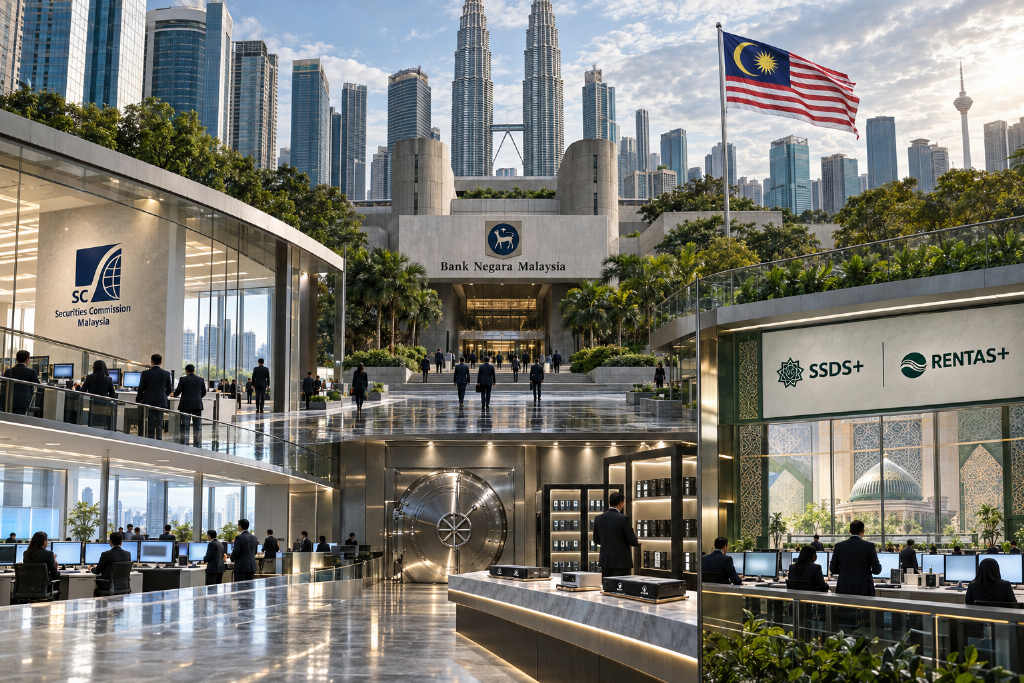
Bank Negara Malaysia on Oct. 20, 2026 launched SSDS+, a platform that supports the issuance, depository and custody of tokenized bonds and sukuk, with RENTAS+ connected to handle the related central bank money payment settlement. Malaysia’s digital-asset market is moving on two tracks at the same time: the public investment market and financial-market infrastructure.

For companies planning to enter the country, the first step is to identify which track their business sits on. Running a digital asset exchange, safeguarding assets for clients, and raising funds through token issuance each trigger different entry and ongoing compliance obligations. Tokenization projects tied to banks or the bond market also need to be assessed against existing financial-sector rules.
This regulatory overview is based on official documents that could be checked as of Oct. 24, 2026. It focuses on the local supervisory structure, exchange, issuance and custody rules, then adds the issues that also need to be reviewed for market entry, including cross-border activity, tax and Islamic finance.
Securities regulation is the main entry point
The Securities Commission Malaysia, or SC, is the main regulator for domestic digital-asset capital-markets activity. The legal framework rests on the Capital Markets and Services Act 2007, or CMSA, and is then refined through securities designation orders and business-specific guidelines.
A starting point is the Capital Markets and Services (Prescription of Securities) (Digital Currency and Digital Token) Order 2019, P.U.(A)12/2019. Digital currencies and digital tokens that meet the conditions in that order fall within securities regulation. The analysis turns on the trading arrangement, expectation of returns, holder rights and project structure. A project is not outside the framework simply because it uses the label “coin” or “token.”
At the business level, digital asset exchanges, usually referred to as DAX, are mainly governed by Chapter 15 of the Recognized Markets Guidelines, with operators applying for registration as recognized market operators under Section 34 of the CMSA. Initial exchange offering platforms, or IEO platforms, and digital asset custodians, or DACs, are covered by the relevant parts of the Guidelines on Digital Assets.
Bank Negara Malaysia, or BNM, oversees currency, banking, payments and foreign exchange within its remit. If a digital-asset business also touches fiat accounts, payment services or regulated financial institutions, those requirements need to be built into the structure as well. Paragraph 3.01 of the Guidelines on Digital Assets expressly says the rules should be read together with the relevant payment and foreign-exchange laws administered by BNM.
Labuan Financial Services Authority, or Labuan FSA, has a separate framework for the international business and financial center. A license obtained in Labuan must be used within the scope of the licensed entity, business line and client restrictions. If a firm wants to serve customers in mainland Malaysia, it still needs to check the domestic rulebook and the exact scope of what is permitted.
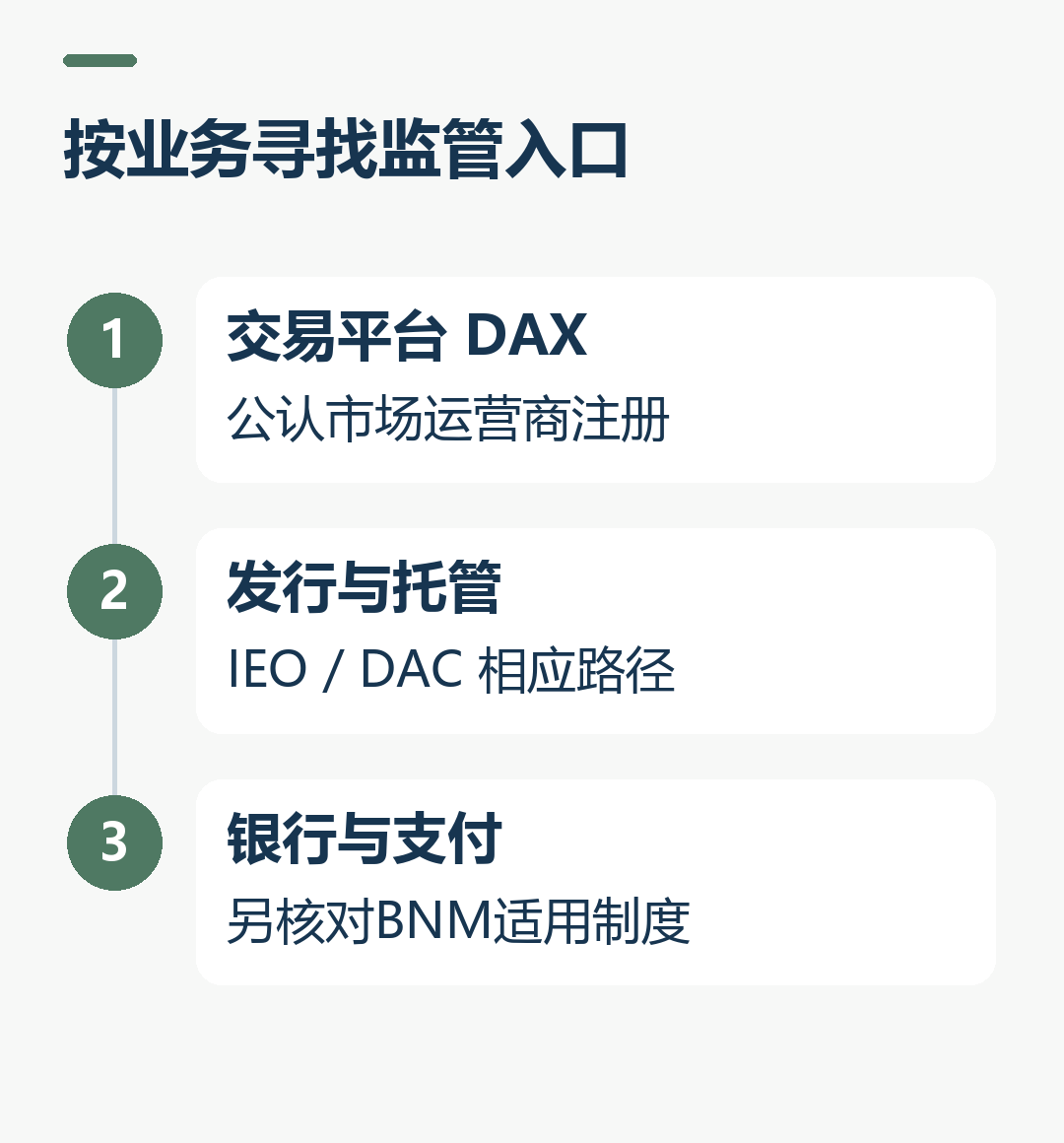
Tax matters are handled by the Inland Revenue Board, or LHDN, and other relevant authorities. Projects that want to use Islamic-finance compliant labeling also need to review the relevant resolutions of the SC’s Shariah Advisory Council. Once the business map is clear, decisions on the licensing vehicle, partner bank, client base and product structure are usually easier and less repetitive.
The overview is focused on Malaysia’s domestic market. Specific products may still be subject to other applicable rules.
Exchange licensing and capital requirements
The SC revised the Recognized Markets Guidelines on May 20, 2026, adding more detailed requirements on DAX financial capacity, asset protection, token assessment and governance. Firms planning a new platform need to model their funding and operating conditions against that version.
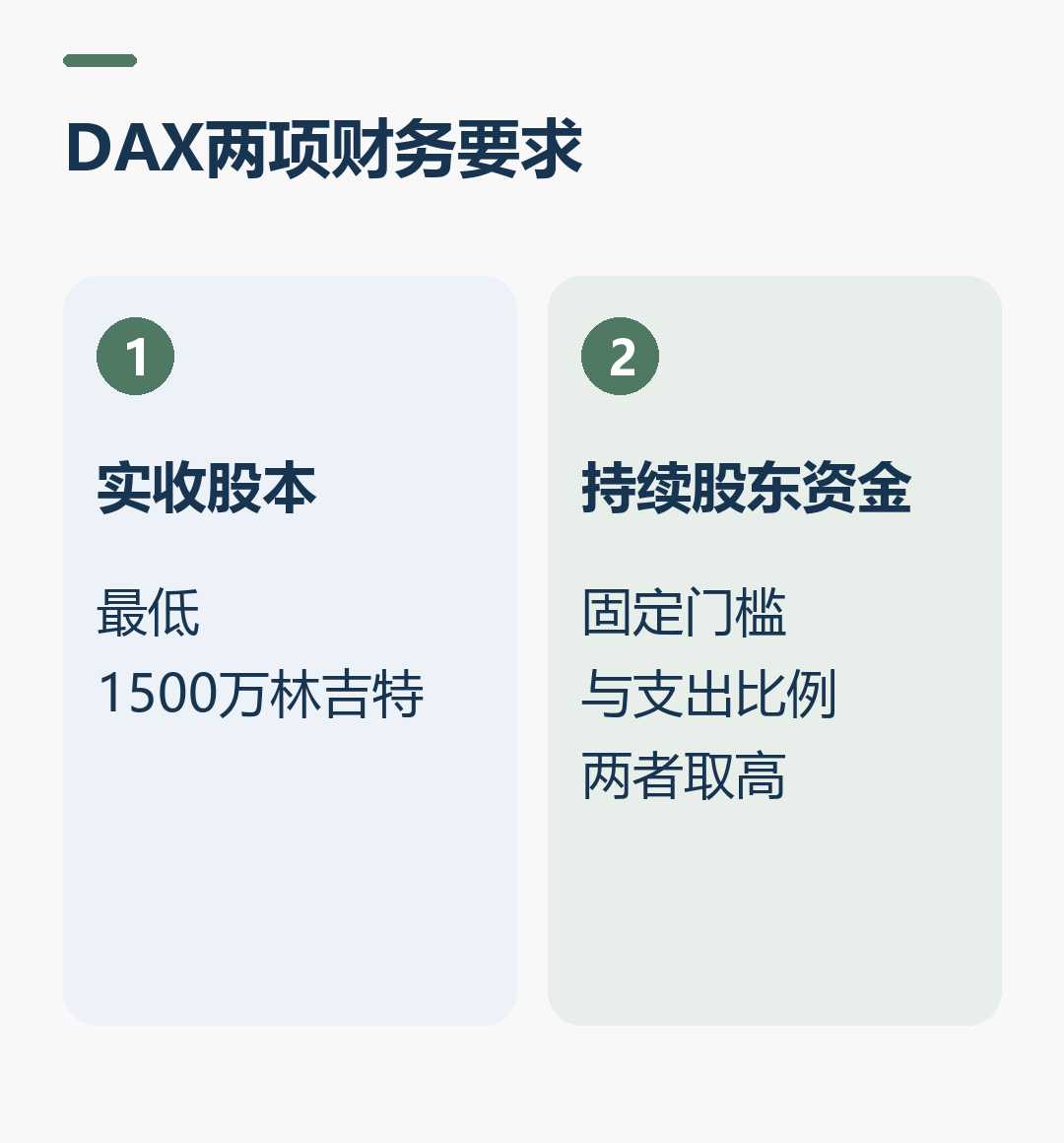
Paragraph 15.03 requires a DAX operator to be locally incorporated and to maintain minimum paid-up capital of MYR 15 million. The operator must also keep a minimum level of shareholders’ funds on an ongoing basis: MYR 5 million for the general model, MYR 7 million for the Direct Trade model, or 25% of annual operating expenditure, whichever is higher.
Annual operating expenditure is measured on a rolling 12-month basis. As a platform grows and adds staff or technology spending, the amount of capital it must continue to maintain can change. Budgeting therefore needs to cover not only the initial injection of funds but also the ability to top up capital as the business expands.
Paragraph 15.04 adds that the minimum shareholders’ funds must be held in cash or liquid assets. Digital assets do not count, and the funds must be segregated from operating accounts. The rule is designed to ensure the platform has resources that can actually be used to support ongoing operations and to make supervisory checks on financial buffers more straightforward.
Existing DAX operators were given a transition period to meet the new financial requirements in Paragraph 15.03, running until May 20, 2028. During that period, they still need to comply with the applicable pre-existing minimum financial requirements. Firms need to check item by item what the transition covers, because other operating obligations continue under their own provisions.

Ownership and governance matter as well. Paragraph 15.06 requires at least one qualifying institutional corporate shareholder to hold no less than 5% and to have representation on the board. Application materials therefore need to explain control, the role of the institutional shareholder, the fitness and propriety of directors and senior management, and how business decisions are separated from risk management.
From a practical standpoint, firms can start with a full business description: who the customers are, what trading model the platform will use, where revenue comes from, who provides technology and custody, and how money moves in and out. That description can then be aligned with capital calculations, organizational charts and compliance policies so the same business is not described differently across filings.
How client assets must be safeguarded
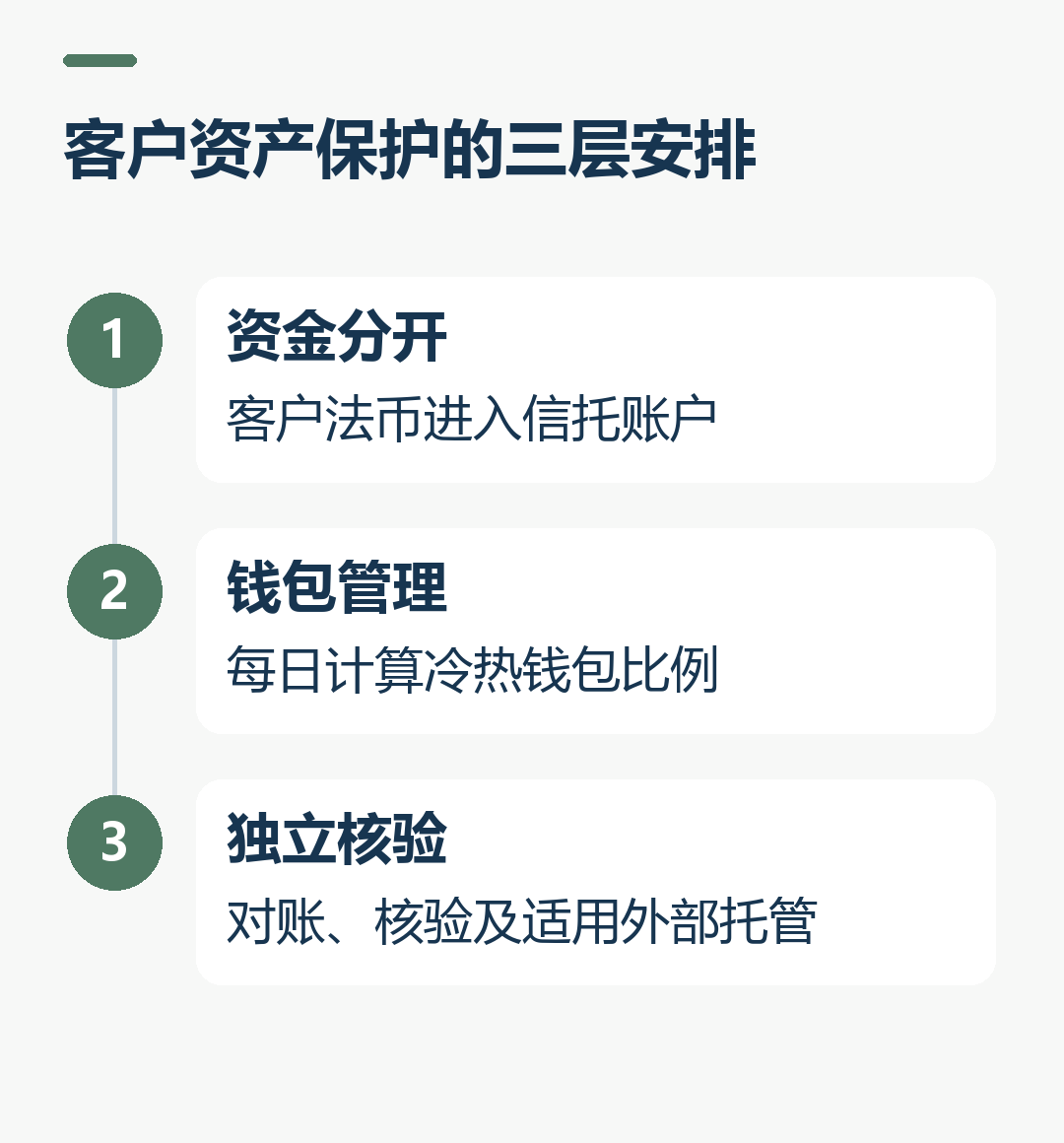
Client-asset protection is a central part of Malaysia’s updated rules. Paragraphs 15.34 to 15.39 of the Recognized Markets Guidelines tie together fiat accounts, hot and cold wallets, independent verification, custody arrangements and day-to-day reconciliation.
Client fiat money must be placed in a dedicated trust account with a licensed financial institution in Malaysia and managed by an independent registered trustee. Client digital assets must also be segregated from the platform’s own inventory, and the records must be accurate, kept up to date and capable of identifying each client’s entitlement.
Paragraph 15.35(g) requires the hot and cold wallet ratio to be calculated daily based on the total value of client digital assets, with an 80:20 offline-to-online storage arrangement. Offline storage reduces exposure from constant connectivity. Online storage is used for routine trading and withdrawals. For online assets, the platform must adopt internal controls, insurance, collateral, bank guarantees or other recognized safeguards that are proportionate to the risk.
Paragraph 15.36 requires the ratio to be rebalanced at the end of each quarter, and an immediate adjustment is required if the deviation exceeds the 10% threshold set out in that paragraph. The example in the guideline is a shift from 80:20 to 69:31. Price moves and client withdrawals can both affect the ratio, so the back end needs daily balances and valuations and a process to act quickly when the trigger is hit.
Where an asset accounts for 10% of the total value of client digital assets, or where total client holdings of that token exceed MYR 10 million, the guideline also requires a dedicated offline wallet. The platform must appoint an independent third party at least once a year to verify holdings in each wallet and disclose the results as required.
Once custody reaches a larger scale, the organizational setup changes. Paragraph 15.37 says that when the total value of client digital assets under custody exceeds MYR 500 million, a DAX must appoint an independent digital asset custodian registered with the SC. The guideline allows a separate entity to perform that role, but it stresses decision-making independence and conflict management.
A DAX that remains within the prescribed range and meets the conditions may provide custody itself, while complying with Chapters 27 and 28 of the Guidelines on Digital Assets. Firms need to assess technical controls, staff permissions, disaster recovery and third-party arrangements before they approach the threshold, not after.
For multinational groups, these provisions also mean the local business needs real operational control. The guideline requires the local DAX to have direct access to the wallets and not to depend on offshore affiliates for critical decisions. If there is a system failure or an internal group dispute, the local mechanism for operating and restoring client assets must still work.
Token listing and market operations
Which digital assets may be traded on a platform is subject to a formal assessment. Paragraphs 15.20 to 15.29 of the Recognized Markets Guidelines set out the review process, record-keeping, restricted assets and ongoing monitoring. Operators need their own review capability and must retain a clear basis for each listing decision.
The assessment needs to cover the asset’s characteristics, project details, technical and security factors, trading history and market risk. Paragraph 15.21 includes specific listing conditions. For assets to which that condition applies, the token must have traded for at least one year on a virtual asset service provider that meets the prescribed conditions, subject to the exceptions in the text. Firms need to check the full wording rather than rely on project visibility alone.
Paragraph 15.24 expressly restricts privacy tokens from trading on the platform. For other restricted digital assets listed separately in the guideline, Paragraphs 15.25 to 15.27 impose higher risk-management and procedural requirements. If a product team wants to broaden the token lineup, compliance, technology and operations need to be involved in the review.
After listing, the platform must continue to watch for security vulnerabilities, material project changes or unusual liquidity conditions. Clients need timely access to important information. The platform also needs arrangements to suspend, restrict or stop trading and to explain how those measures affect withdrawals and open orders.
Market fairness is another continuing obligation. A platform and its affiliates may have proprietary positions, commercial relationships or other interests. Paragraphs 15.10 to 15.12 require those conflicts to be identified and managed. Paragraph 15.13 also prohibits direct or indirect financing support to facilitate investor trading, so product design needs to be checked against the scope of that provision.
On the systems side, Paragraphs 15.14 to 15.19 cover operational risk, business continuity, system testing and internal audit. For a platform that runs around the clock, backup environments, recovery drills and incident communication need to match actual staffing. Responsibility for client complaints, abnormal orders and security alerts should be assigned before launch.
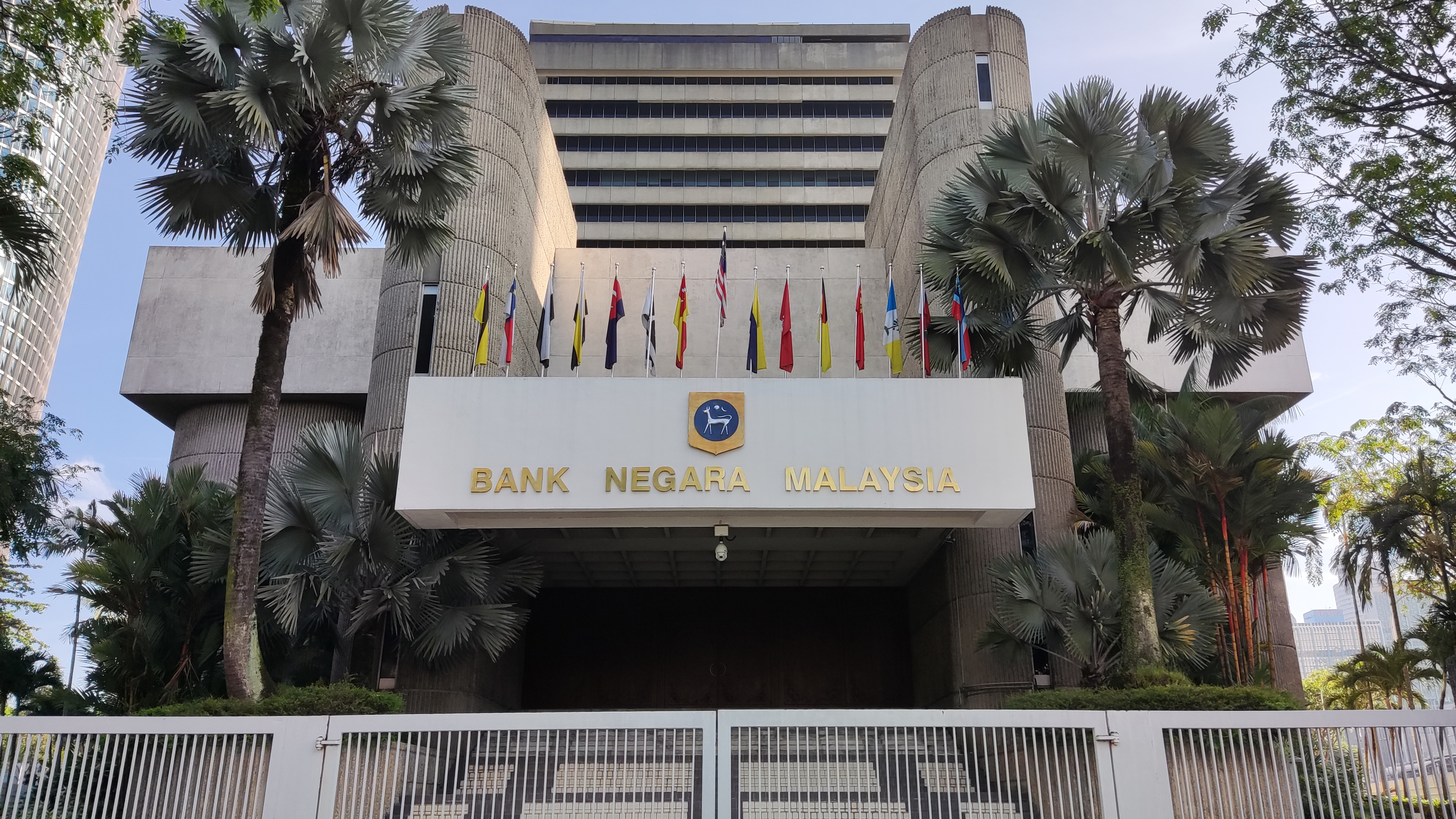
The image credit in the source text states: Wee Hong / CC BY-SA 4.0, original image unmodified. Original image: https://commons.wikimedia.org/wiki/File:Bank_Negara_Malaysia_(230715-0916).jpg ; license: https://creativecommons.org/licenses/by-sa/4.0/ .
Organizing token fundraising under the IEO rules
Companies that want to raise funds through token issuance need to read Parts B and C of the Guidelines on Digital Assets. An IEO is structured around a registered platform that organizes and reviews the token offering, while the issuer and the platform each carry their own responsibilities.
Paragraph 6.02 requires the issuer to be an eligible company or limited liability partnership registered in Malaysia and to conduct its business mainly in the country. Certain entity types are excluded under the text. Paragraph 6.03 sets the minimum paid-up capital and ongoing shareholders’ funds for an eligible corporate issuer at MYR 500,000, while limited liability partnerships are subject to their own minimum capital requirement.
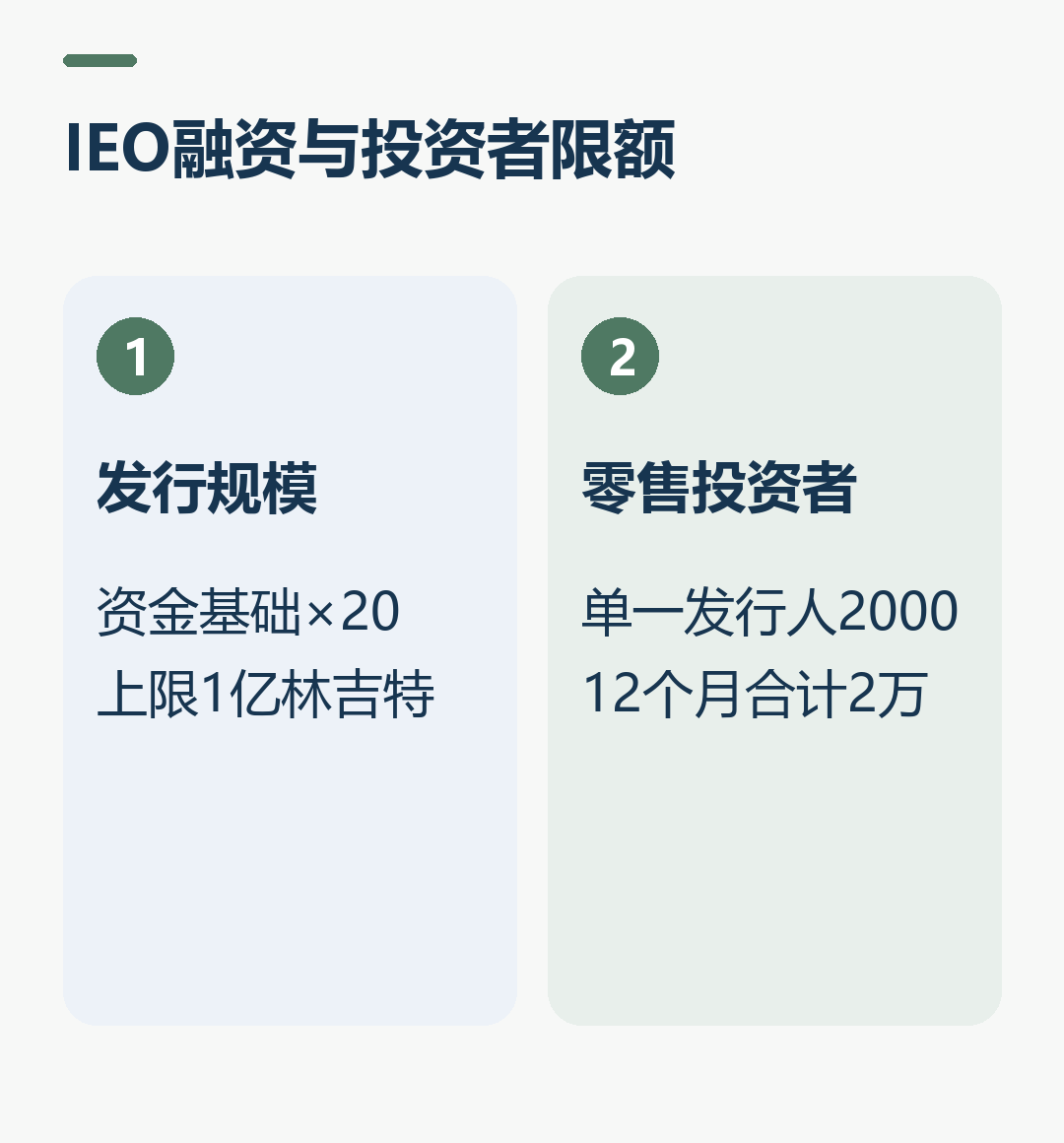
The fundraising cap is tied to the issuer’s capital base. Paragraph 19.01 says the amount that may be raised in any rolling 12-month period is calculated at 20 times shareholders’ funds or partnership capital, subject to a ceiling of MYR 100 million. A company needs to calculate both limits to know how much it can actually raise.
On the investor side, Paragraph 19.05 distinguishes among sophisticated investors, angel investors and retail investors. A retail investor is capped at MYR 2,000 per issuer and no more than MYR 20,000 in aggregate over 12 months. Angel investors are subject to a MYR 500,000 limit over 12 months. Sophisticated investors are handled under the relevant category rules.
The issuance process also includes cooling-off and refund mechanics. Paragraphs 19.06 to 19.09 provide that the cooling-off period for eligible investors runs for at least six working days from the close of the offering, while employees of the issuer do not have that cooling-off right. If an investor withdraws during that period, the IEO operator must return the investment amount and the prescribed fees within six working days after receiving the notice. The fundraising page needs to state the start date, the notice channel and the refund arrangement.
There is a separate path for failed offerings. If the target amount or minimum fundraising amount is not met, refunds must be handled under Paragraphs 19.03 to 19.04. Back-office systems need separate records for the closing of the offering, the withdrawal notice and the date funds are returned, so customer support can explain which rule is being applied to a given payment.
The IEO operator itself must meet entry, governance and review requirements. Paragraph 14.01 sets minimum paid-up capital at MYR 5 million. The platform is responsible for understanding the project, checking the offering materials and managing the issuance process, while the issuer must clearly explain the use of proceeds, project execution, holder rights and key risks.
If the token also has the characteristics of a debenture, fund unit or another existing security, Paragraph 3.02 says the relevant issuance requirements still apply. When designing a token, firms may find it easier to write out in plain language what rights the investor receives and then determine which legal regime applies, rather than start with the technical form and work backward.
Independent custody, AML and cross-border operations
Safeguarding, storing or holding digital assets for others is covered in Part D of the Guidelines on Digital Assets. Paragraph 23.01 designates those services as capital-markets services under Section 76A of the CMSA, with the registration path depending on the entity type and business arrangement.
Paragraph 24.01 sets minimum paid-up capital and ongoing shareholders’ funds for a digital asset custodian at MYR 500,000, while allowing the SC to impose additional requirements based on the nature and risk of the business. Chapters 27 and 28 set out detailed obligations on client assets, operational controls and security arrangements. Application materials need to explain who can initiate, approve, execute and restore asset operations.
Exchange and custody businesses also need to check the applicable anti-money laundering, counter-terrorism financing and sanctions requirements. Customer identity, beneficial ownership, business purpose and suspicious transaction handling all need to be reflected in actual workflows. Where digital assets are transferred between institutions, firms also need to assess any applicable information-sharing requirements and the counterparty’s ability to cooperate.
Offshore platforms serving local customers need to pay close attention to how the SC views market operation and enforcement. The fact that a website is accessible and customers can open accounts on their own only shows that the service is technically reachable. If a firm plans to market, solicit or organize business in Malaysia, it needs to identify the relevant entry path first and check the official register and any restrictions.
Group-level technology outsourcing also needs to be planned in advance. Where customer data is stored, whether offshore staff can access it, whether regulators can obtain records, and how operations recover if a vendor fails can all affect local operations. Putting those points into service contracts and contingency plans can reduce repeated changes during licensing and after launch.
Tax, Islamic finance and the latest tokenization development
Malaysia’s Ministry of Finance has stated that income arising from digital currency trading, mining and exchange should be handled under Section 4 of the Income Tax Act 1967 and the relevant tax guidance. LHDN’s tax guide on digital currency trading looks more closely at the nature of the activity, the facts of trading and record retention, meaning firms need to assess revenue and costs based on their actual business.
That analysis usually looks at trading frequency, holding purpose, organizational setup and profit-seeking activity. Platform service income, ongoing business trading and occasional personal disposals do not share the same factual background, and the tax treatment should be built on those facts. Keeping transaction records, expense data and valuation materials from the incorporation stage makes later filing and review easier.
Islamic finance is another feature of the local market. The SC’s Shariah Advisory Council has issued relevant resolutions on digital assets, and whether a product can use the corresponding compliance language depends on the specific asset and business arrangement. Issuance and marketing materials need to state the basis of the review and should not extend a specific approval to the whole business.
The launch of SSDS+ this week points to progress on the financial-infrastructure side. BNM said the platform uses cloud and distributed ledger technology to handle transfers and ownership records for tokenized securities, while RENTAS+ handles the related payments and supports round-the-clock service. Bonds and sukuk now have a new digital route for issuance and depository arrangements.
For teams preparing to launch in Malaysia, the work can be arranged in three stages: define the business scope and legal path first, prepare capital, staff, technology and partner institutions next, and then test account opening, trading, custody, complaints and exit processes one by one. If regulatory filings, contracts and systems are all built around the same set of business facts, later communication is easier to keep consistent.
Note
The source text states that the article is provided only for legal, policy and industry research exchange, and is intended as an objective analysis of digital finance, stablecoins, digital assets and related regulatory developments. It does not constitute investment advice, legal advice, tax advice or any other professional advice, and it is not a recommendation, promotion or solicitation for any financial product, digital asset or commercial project. It also says the regulatory rules, market data and institutional information cited are mainly drawn from public materials and may change with laws, regulation, market conditions and project developments, and that readers should make their own judgment based on the latest public information and comply with the laws applicable in their jurisdiction. The author and publishing platform disclaim responsibility for investment, trading or other commercial decisions made in reliance on the article.
The source text also includes a disclaimer stating that markets carry risk and the article does not constitute investment advice, and that users should consider whether any opinion, view or conclusion in the text fits their own circumstances and bear responsibility for investment decisions made on that basis.