
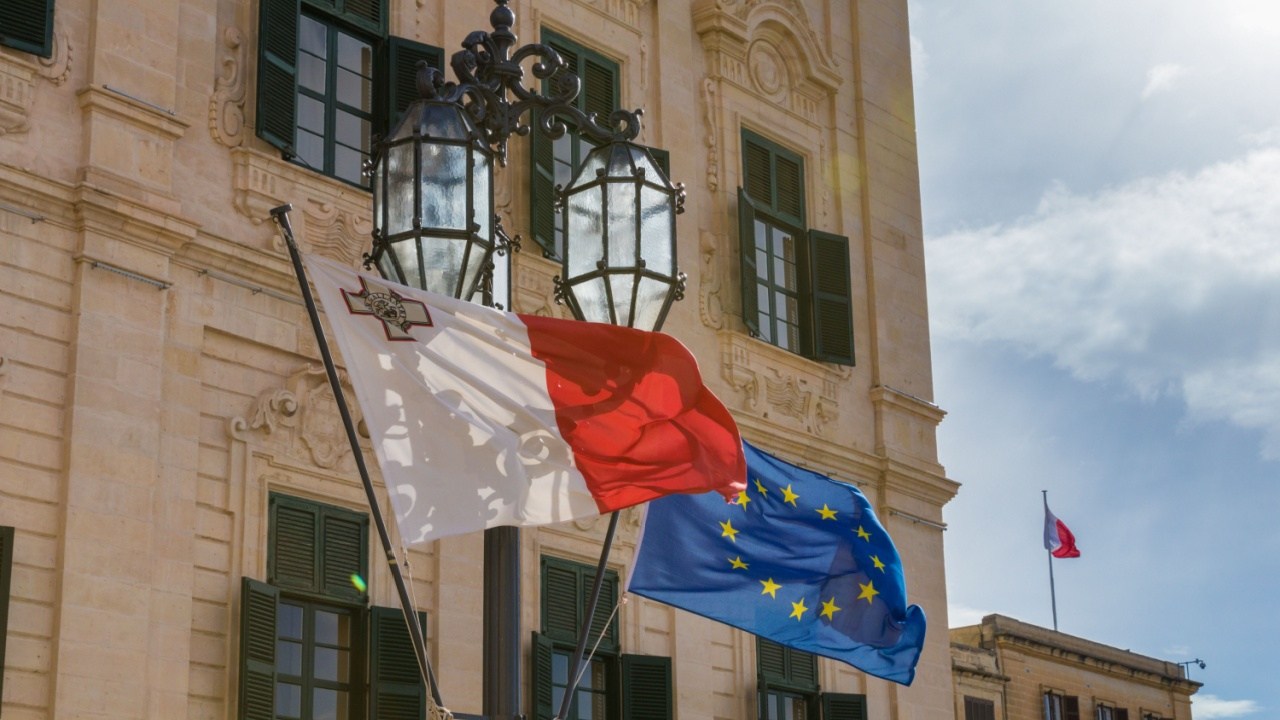
An April 23 opinion from Advocate General Nicholas Emiliou said Malta’s Bill 55 is incompatible with EU law, adding fresh pressure on the country’s legal shield for licensed online gambling operators. The measure, introduced in June 2023 through Article 56A of Malta’s Gaming Act, tells Maltese courts to refuse recognition and enforcement of foreign judgments against Malta-licensed operators when the underlying services were lawful under Maltese law. The opinion marks the second major setback for that framework in a little over a week.
Article 56A collides with Brussels I bis rules
The opinion was issued in Case C-683/24, Spielerschutz Sigma. The dispute itself concerns whether a legal adviser’s assessment of Bill 55’s compatibility with EU law met the standard of diligence required under Austrian national law. That question sits outside the core scope of the CJEU’s preliminary ruling jurisdiction, and much of the opinion deals with admissibility. Even so, Emiliou addressed the substance of Bill 55 on a contingent basis and described the provision as manifestly incompatible with the EU’s Brussels I bis Regulation governing the recognition and enforcement of judgments.
He said Malta cannot use the regulation’s public policy exception to block enforcement of judgments from other member states on the argument that those states allegedly misapplied EU law, including the freedom to provide services. In his view, substantive EU law disputes cannot be reopened at the recognition and enforcement stage under the label of public policy.
Maltese licenses do not carry automatic bloc-wide effect
Emiliou also rejected a central premise behind Malta’s defense of Bill 55: that a Malta Gaming Authority license gives operators the right to offer gambling services freely across the European Union. Under the current state of EU law, he wrote, member states are not required to recognize gambling licenses issued by other member states. The country-of-origin principle does not extend to online gambling, and each member state may apply its own gambling rules to operators licensed elsewhere.
He added that Bill 55 appears primarily designed to protect Malta’s iGaming industry from the financial impact of foreign restitution claims. That observation goes to the policy intent behind the law, not just its drafting.
Second setback in days with large economic stakes
The opinion followed a separate April 16 binding ruling from the CJEU that upheld the right of EU member states to ban online gambling services licensed in other member states and to allow player restitution claims. Taken together, the two outcomes narrow Malta’s legal defense of its cross-border licensing model.
Advocate General opinions are not binding on the court, but the CJEU follows them in roughly two-thirds of cases. A final judgment is expected this year. The economic stakes are significant. According to the MGA’s 2024 annual report, the iGaming sector generated €1.386 billion in gross value added and, including indirect spillover effects, accounted for 10.1% of Malta’s national economy.
The MGA has consistently argued that Article 56A does not create new grounds for rejecting foreign judgments beyond those already available under EU law, and that it simply codifies Malta’s long-standing public policy on gaming matters.