
Former NASA engineer and science YouTuber Mark Rober says creators can stand out on YouTube by making original, real-world videos as artificial intelligence-generated content fills social media and video platforms.
In an interview with Business Insider, Rober said viewers want to see real people on screen and need to know that the material in a video is genuine. For creators facing a growing supply of AI-generated productions, he pointed to real experiments as one way to build a distinct identity.
Real experiments support audience trust
Rober’s background at NASA has given his work professional credibility. As a former NASA engineer, he brings aerospace engineering methods and scientific reasoning into entertainment aimed at a broad audience. That professional history, along with the trust built through his personal brand, gives viewers a basis for accepting his experiments and explanations.
His videos are not structured as conventional academic lessons. Instead, they place scientific ideas inside a narrative built around suspense, challenges and experiments. A typical production begins with a clear hook, keeps viewers engaged through a dramatic test, and reaches an explanation or reflection at the end. The high production investment also sets his science-entertainment format apart from ordinary text-and-image posts and lower-cost AI videos.
Rober’s video “How to Survive a Grenade Explosion” reached 100 million views. “Can You Swim in Jell-O?” reached 224 million views. He said his hands-on experiments and personal style give him an advantage in competition with AI-generated material. His YouTube videos generated about $17 million in revenue last year.
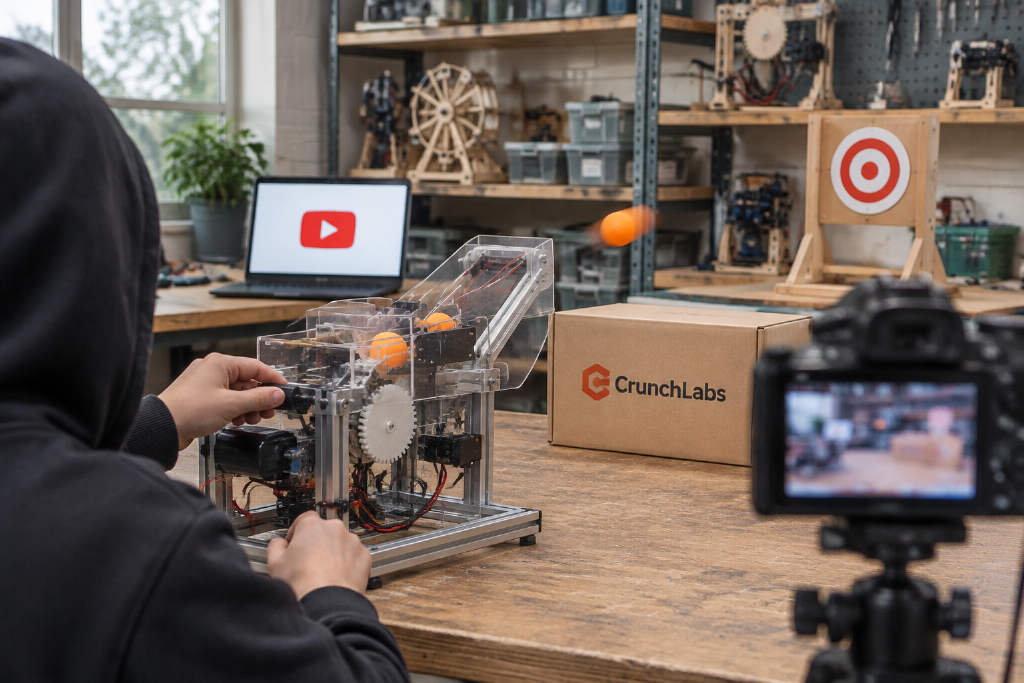
CrunchLabs sells subscription science kits
Rober founded CrunchLabs in 2022. The company operates on a subscription model and sells do-it-yourself science toys designed to promote science education among younger people.
CrunchLabs now has more than 200 employees. Its central mission is to encourage curiosity and enthusiasm for learning about science among the younger generation. Rober said curiosity creates opportunities for lifelong learning in the age of AI. By combining physical products with the development of the digital era, CrunchLabs has built its own business model and brand influence.



