

At Le Freeport near Singapore Changi Airport, moving a gold bar is tightly controlled. Entry requires identity checks, and touching or photographing the bars is only allowed in a designated display area under staff supervision. Any movement beyond the permitted range can trigger security alerts. On-chain, though, a token backed by physical gold can move between addresses and be used in trading, collateral and lending without the metal itself leaving the vault.
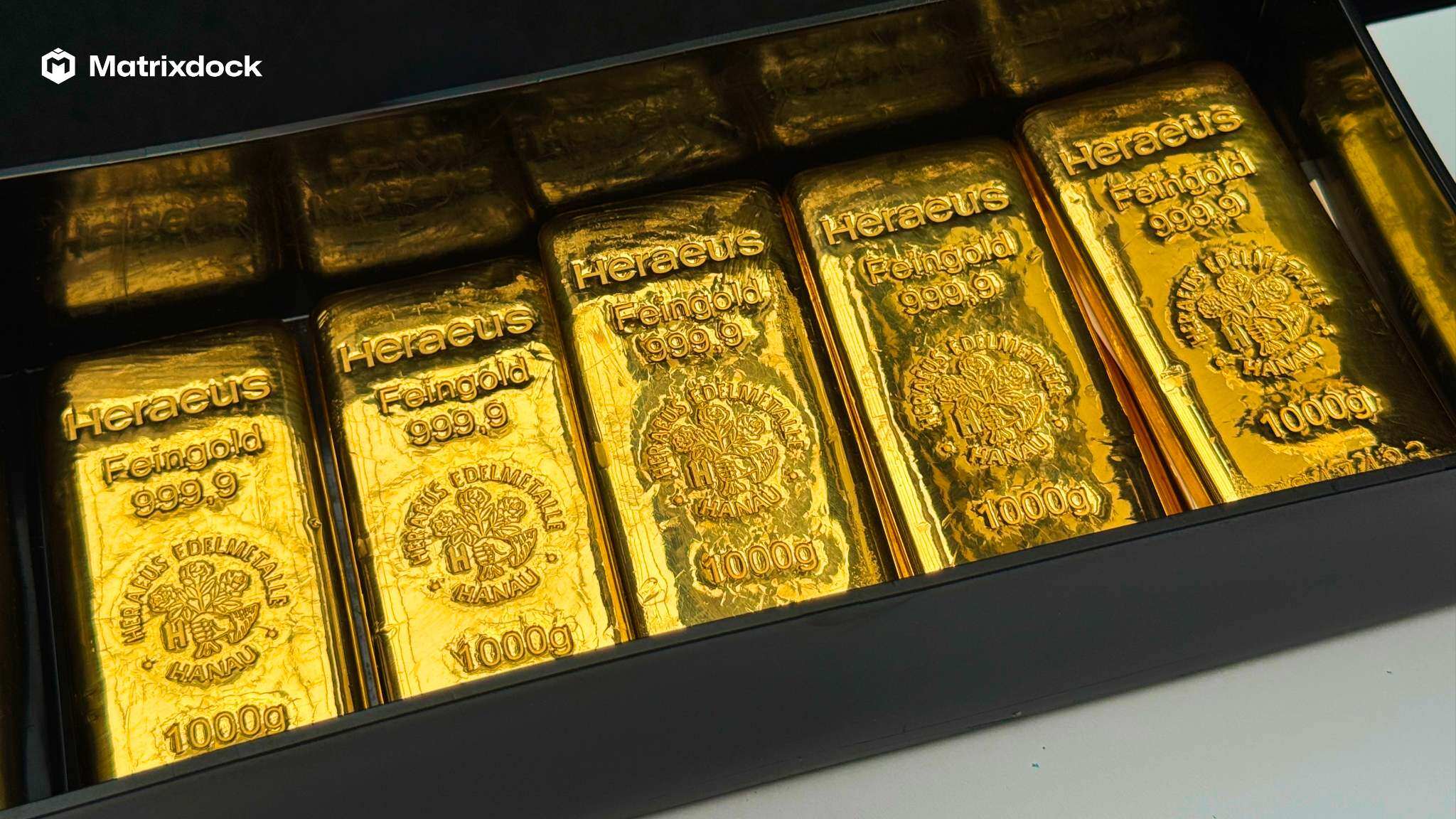
That contrast sits at the center of Matrixdock’s XAUm product. On Oct. 9, BIT, formerly Matrixport, held its "Inside the Vault" event at Le Freeport in Singapore, giving guests a close look at how physical gold is stored. For Matrixdock, BIT’s RWA tokenization platform, the vault is not only a custody site. It is also where XAUm’s path from an on-chain asset to physical delivery has already been tested in practice.
Gold stays in custody while the token moves on-chain
In traditional gold investing, storage, transport and settlement are core parts of the process. RWA tokenization introduces a different structure: the bullion remains with a professional custodian, while the corresponding token can be transferred and traded on blockchain networks without requiring the underlying gold to move every time the token changes hands.
XAUm is built on that model. Each token is backed 1:1 by one troy ounce of 99.99% pure physical gold, with the underlying metal sourced from refiners that meet the London Bullion Market Association, or LBMA, Good Delivery standard. Matrixdock says it uses independent audits and on-chain proof-of-reserves to support a verifiable link between the token on-chain and the physical gold held off-chain.
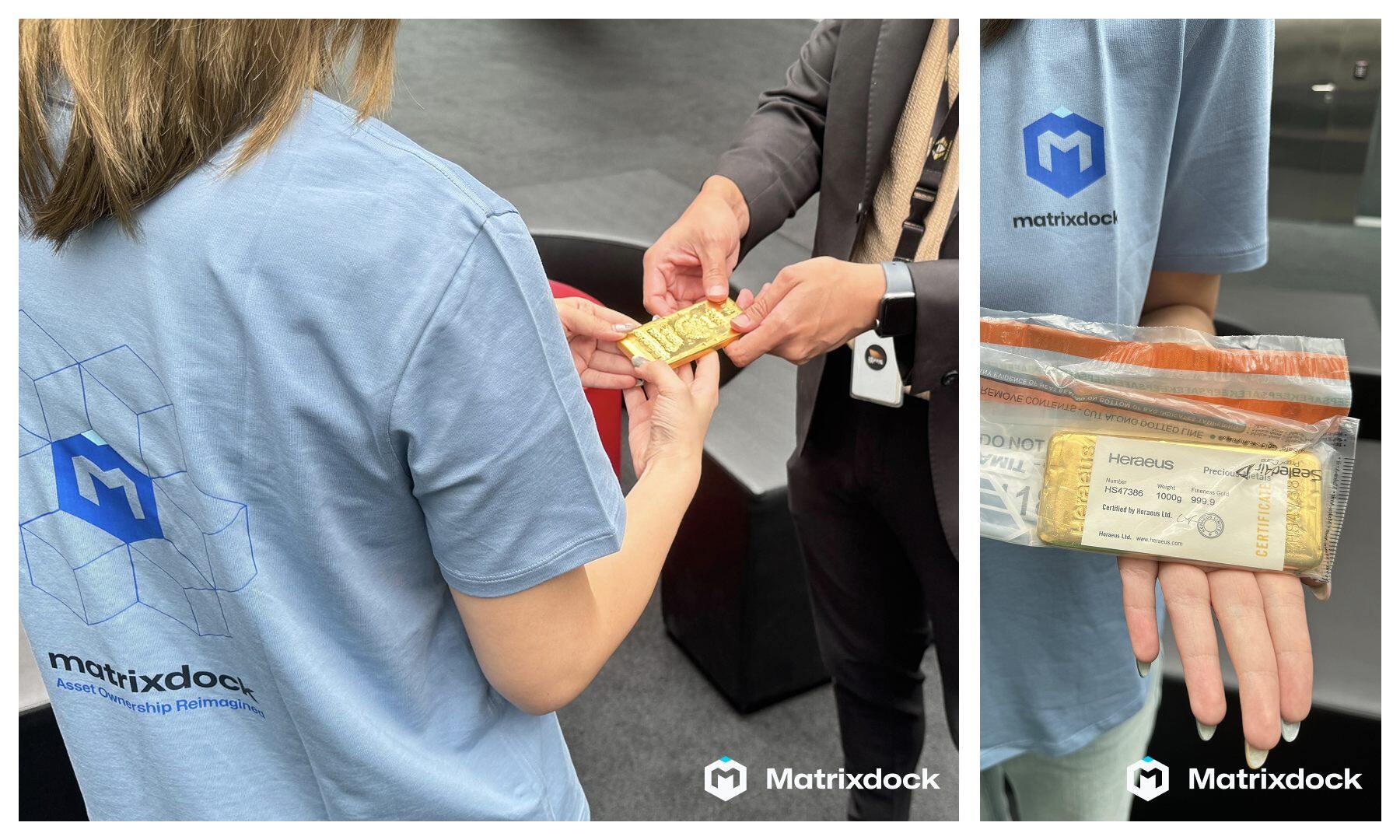
On April 22, 2025, Matrixdock completed the first physical gold bar redemption of XAUm at Le Freeport in Singapore. After 32.148 XAUm were burned on-chain, one 1-kilogram physical gold bar was delivered. The related token transfer and burn records are publicly available on Etherscan, providing a transparent and traceable record of the on-chain steps involved in the redemption and showing how the tokenized asset connects to physical delivery.
The case shows what tokenized gold is meant to do in practice. The bullion remains under professional custody, while eligible holders can own and transfer exposure to gold through on-chain tokens and redeem for physical metal under the relevant process. Because the bar does not need to move with every blockchain transaction, the token can be used in a wider set of financial settings, including trading, liquidity and collateral.
Expansion across Stellar, Venus and Arc
That model has since been extended into more blockchain ecosystems. In June 2026, XAUm launched natively on Stellar, broadening its base for use in the network’s RWA ecosystem. In the same month, XAUm became the first RWA collateral asset accepted by the Fixed-Term Vault on Venus Protocol on BNB Chain, bringing a physically backed gold token into on-chain collateral and financing use cases.
In September, Matrixdock said it had introduced XAUm to Arc, the Layer-1 blockchain built by Circle, making it the first tokenized gold asset on that network. The XAUm/USDC trading pair has also gone live on Uniswap.
Each of those steps points to a different application path for tokenized gold. Stellar adds a new native issuance network. Venus allows XAUm to be posted as collateral in fixed-term on-chain financial products. Arc connects the gold token to USDC liquidity markets.
According to Matrixdock’s published product arrangement, eligible XAUm redemptions can receive USDC on the same day after the required transaction proof is submitted and the relevant terms and requirements are met. That creates another route between gold exposure and stablecoin liquidity.
Beyond gold holding toward a reserve layer for on-chain finance
From Stellar to Venus to Arc, XAUm’s use is moving beyond simple on-chain holding of gold and into trading, liquidity, collateral and redemption settlement. The broader point in the article is that RWA tokenization is not only about bringing real-world assets onto blockchain rails. It also depends on whether the underlying assets can be verified and whether they can be put to work in on-chain finance.
Matrixdock’s product lineup extends beyond XAUm. The article points to tokenized short-term U.S. Treasury product STBT, gold token XAUm and silver token XAGm as part of a broader RWA buildout, with the company aiming to create a Reserve Layer for on-chain finance. Different asset classes come with different structures and operating requirements, but professional custody, transparent verification and on-chain usability are presented as the common pieces linking traditional financial assets with blockchain-based markets.
The Le Freeport visit offered a direct view of that structure. Gold bars remain under strict control inside a professional vault, while the corresponding tokens can already move across different blockchain ecosystems and take part in trading, liquidity and collateral activity. In Matrixdock’s framing, the metal does not need to leave the vault for each on-chain transaction, but the ways gold can be used in digital finance are continuing to expand.



