
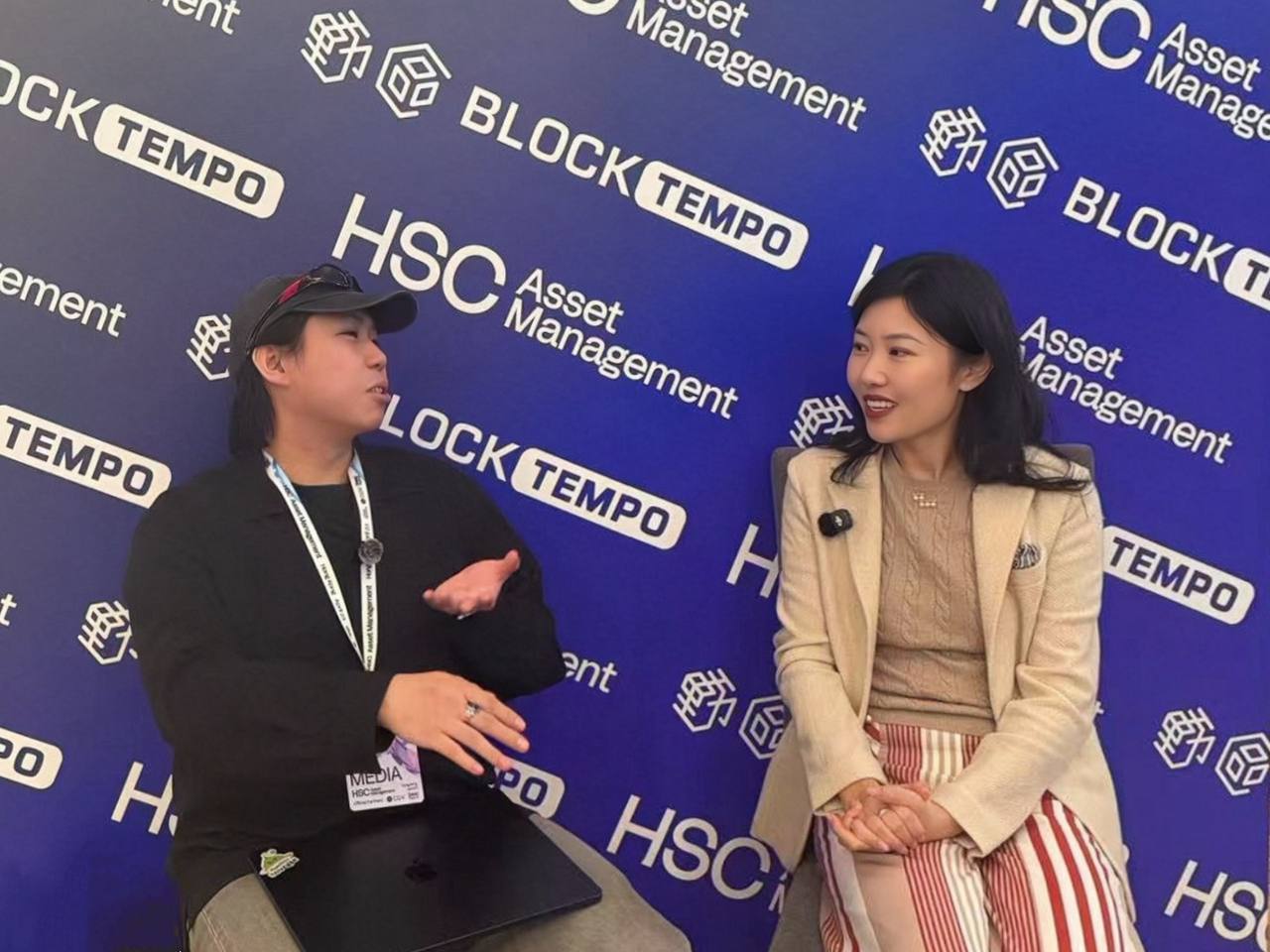
Matrixport has rebranded as BIT, a move that BIT Group co-founder and Chief Commercial Officer Cynthia Wu said reflects more than a cosmetic name change. In an interview, Wu described the rebrand as a marker of the group’s next phase, one built around a broader multi-asset financial services model. She also gave a simple reason for the switch: Matrixport was harder to remember, while BIT is faster for users to recognize.
Wu’s path from traditional finance to digital assets
Wu’s background spans both traditional finance and crypto. She worked as a commodities floor trader in Hong Kong, then joined HKEX, where she handled product design and institutional sales for commodity derivatives. In 2018, she moved into Bitmain’s investment division. A year later, she co-founded Matrixport with Jihan Wu.
She said her view of finance began to change after encountering digital assets in 2017. In her telling, digital assets were not only a new asset class. The blockchain-based structure behind them also pointed to possible changes in financial infrastructure and market operations. That view shaped the early thinking behind Matrixport.
Why the company chose not to build an exchange
Wu said the founding team made one decision from day one: they would not build an exchange. At the time, several Chinese-language exchanges were already established. The team saw an opening elsewhere, in a platform where users could meet most financial needs through a single app and interface.
She framed that model in terms familiar to traditional finance: custody, trading access, wealth products, liquidity, OTC services, and possibly payments later on. Wu also said the team saw tokenization as a long-term direction from the start, with the potential for off-chain assets to move on-chain. That meant the platform would not necessarily stay limited to crypto-native assets.
The target market goes beyond existing crypto users
Wu said the population that is fully served by traditional finance may account for only 20% to 30% of the world, leaving a much larger group without access to basic banking or brokerage services. In her view, blockchain-based applications make it possible to serve those users at far lower cost while offering financial products of a similar standard.
That idea sits behind the broader BIT positioning. The company is not only trying to capture demand for crypto trading or crypto yield products. Wu said the longer-term goal is to become more than a customer’s main wallet for crypto and instead develop into a main wallet for important assets, or even primary assets.
Why the rebrand happened now
Wu tied the timing of the rebrand to the company’s product expansion. After launching U.S. equities services, the group concluded that it had moved beyond a single-asset financial services label. At that point, she said, Matrixport no longer fully matched the company’s direction as a multi-category financial services brand.
She also laid out several meanings attached to the BIT name, including Bridge into Tomorrow, Built It Together, Build on Integrity and Trust, and Better tool, built for modern investors. Wu described BIT as an open-ended brand identity that can be shaped with users, partners, and the wider community.
Licensing strategy centers on Singapore, Hong Kong, and Switzerland
Compliance is central to that plan. Wu said BIT’s licensing work is focused on Singapore, Hong Kong, and Switzerland.
In Singapore, Fly Wing Technologies Pte Ltd obtained a Major Payment Institution license under the MAS Payment Services Act in 2025, allowing it to offer digital asset OTC services in the city-state. Subject to MAS approval, Fly Wing plans to expand that license scope in 2027 to support custody and payment-related functions. In Hong Kong, the company is evaluating and planning license applications. In Switzerland, the group fully acquired Crypto Finance Asset Management about a year and a half ago, renamed it Matrixport Asset Management, and placed it under FINMA oversight. Wu added that BIT plans to build Cactus Custody’s institutional custody capabilities in Switzerland this year through another SRO license.
Institutional demand is widening
Wu pointed to two recent institutional client categories. One is DAT companies, or listed firms using digital asset treasury strategies similar to MicroStrategy. She said BIT served more than 20 DAT companies last year across the U.S., Asia, and Hong Kong.
Those firms typically come with three needs: custody, algorithmic execution, and structured products. For execution, Wu said large clients placing orders worth hundreds of millions of dollars do not want to move the market against themselves. BIT addresses that by slicing orders into very small pieces, such as $50 increments, placing and canceling them continuously in order to keep total price impact within one-thousandth.
The second category is stablecoin payment companies. Wu said BIT has served around 30 to 40 payment companies this year, most of them from traditional finance. For those clients, BIT’s services cover fiat-to-stablecoin on-ramp, custody wallets, stablecoin-to-onshore-fiat off-ramp through OTC channels, and treasury-style wealth management once funds sit on platform.
Wu scored the Matrixport phase an 8 out of 10
Looking back on Matrixport, Wu gave the company an 8 out of 10. She said the business largely achieved its original goal of becoming an entry point into digital assets for many users in Asia, while building a relatively complete product matrix and staying operational across multiple market cycles.
She drew a hard line between that phase and what comes next. In the BIT stage, clients will expect the company to explain opportunities not just in crypto, but also in assets such as the U.S. dollar, gold, and other precious metals. Wu said that raises the bar for research, and not only for research. Client managers, sales teams, customer support, and marketing staff will all need broader capabilities over the next five to ten years.
Her target for this year was concise: if the market recognizes BIT as a new version of the company, sees that Matrixport has upgraded, and is willing to try its wider range of products and services, that would count as success.