
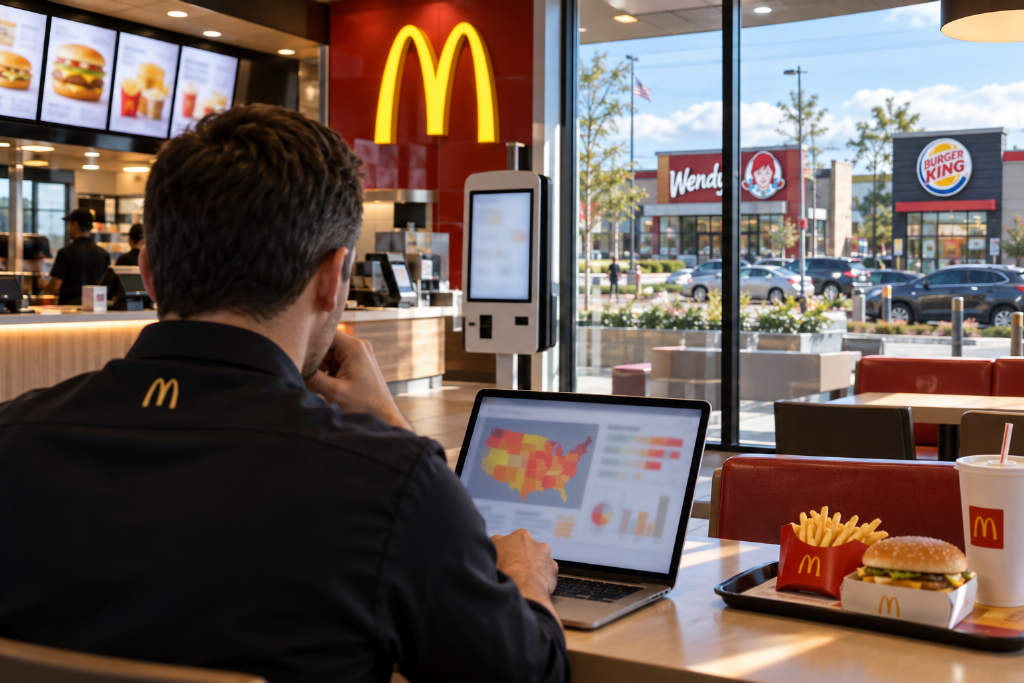
McDonald's is using machine-learning models to guide menu pricing, with one input being an estimate of how much customers at each restaurant will tolerate paying, Reuters reported.
The system analyzes millions of daily transactions across nearly 14,000 restaurants and produces what the company calls an "optimal price" for every menu item at every location. Screenshots of the interface used by franchisees, reviewed by Reuters, included messages telling an owner that their restaurant showed "MEDIUM SENSITIVITY to price," based in part on "customer willingness to pay in your area."
The platform also tracks nearby competitors' listed prices
Reuters said the platform ingests competitors' published menu prices from online listings of nearby outlets, including Wendy's and Burger King. Both chains told Reuters they do not use AI in pricing decisions.
Franchisees said the engine widened price gaps between stores
Three franchisees said the pricing engine has widened price differences between restaurants selling the same product, including stores in different neighborhoods within the same area.
In a September check of the McDonald's app, Reuters found that a company-run store in Fresno, California, sold a Big Mac for $5.69, while another company-run restaurant two miles away charged $6.89, a 21% premium. Reuters said it could not confirm whether the engine caused that difference.
Former employees said Tiger Analytics runs the AI platform
According to two former Tiger Analytics employees, the platform is run by Tiger Analytics, while McDonald's supplies rules and corporate targets. Those parameters have included focusing price increases on items that have not risen in price in two years, while keeping ice cream and soft drinks out of increases during the summer. Tiger declined to comment to Reuters.
McDonald's says franchisees set prices, but owners described pressure
Officially, franchisees set their own prices. Still, five owners told Reuters that the company pressures them to follow the recommendations, and a June document showed McDonald's records deviations in detail.
From January, franchisees have been required to engage "constructively" with the company's approved pricing consultant and tools. Reuters also reported that Chief Executive Chris Kempczinski told investors in August that "pricing non-compliance in certain cases" forms part of franchisee business reviews.
Portal terms warn that owners may compete with one another
The legal terms of the pricing portal warn owners that they "may be competitors" of one another and should comply with antitrust law.
Similar pricing systems have triggered backlash before
Reuters noted that similar systems have drawn consumer backlash in the past. Wendy's faced criticism in 2024 over reports that it planned to charge more during busy periods. The company said those reports had misconstrued an earnings update about digital menu boards, which it said would make it easier to vary menu displays and offer discounts, and added that it "would not raise prices when our customers are visiting us most."
Instacart ended a limited test in December of AI tools that showed different grocery prices to different shoppers.
McDonald's called the portal a tool, not a mandate
McDonald's described the portal as "a tool, not a mandate," saying it is designed to provide restaurant-specific recommendations. The company also said costs vary between stores that can sit in distinct markets even when they are only a few miles apart.
McDonald's called Reuters' reporting "speculative and uninformed" and said it takes antitrust compliance seriously.