
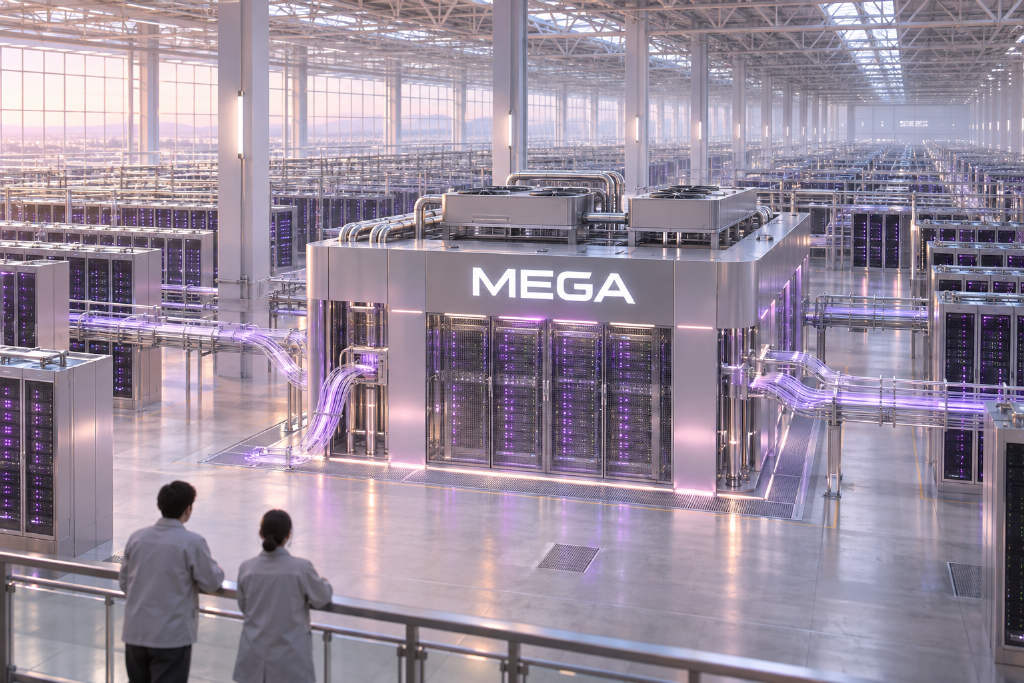
The MegaETH Foundation has rebranded as MEGA and said it will commit $30 million to products built on MegaETH. The first product area is AI inference, the computing work required to run trained models and answer requests. The team said a public marketplace for inference will open on the MegaETH blockchain in December.
MegaETH co-founder Shuyao Kong wrote on X that remaining a chain-only company felt wrong because it would have meant ignoring the biggest opportunity in front of the team. Kong also said MEGA is not becoming an AI company. In his description, it is a crypto-native company.
One entity, one token
In a separate thread, Kong said the new MEGA entity has no equity and one token: $MEGA. He said the board will be responsible for decisions including working with the community to update tokenomics, carrying out programmatic token buybacks and putting more capital into product lines.
MegaETH will remain a general-purpose, permissionless blockchain, according to the project. Teams building on the network will continue to receive technical support. Kong said the team is putting resources into four upgrades and hopes to complete the network’s decentralization by the end of the first quarter of 2027.
- Fast finality, which reduces the time before a transaction is treated as settled.
- Sequencer rotation. The sequencer orders transactions, and rotating it would prevent a single team from producing blocks.
- A market in which operators compete on the speed of their connection to the sequencer.
- Real-time censorship resistance.
The proposed inference market
Because the new entity will have no equity, the MEGA token will be the single asset tied to MEGA’s products. The way its board handles buybacks and tokenomics will determine what token holders receive from the inference initiative. The plan also links MegaETH’s decentralization roadmap to the product deadline: the project said the December launch requires the chain to be pushed further.
A whitepaper by Yilong Li and Lei Yang sets out the reasoning behind the product. It argues that buyers may stay with a familiar but more expensive inference provider because they cannot verify whether a cheaper provider is serving the model it advertises or handling their data safely.
The paper proposes tools that would make providers interchangeable on model authenticity, privacy and security. It also raises the idea of tradable forward contracts for inference capacity, citing Osaka’s 18th-century Dojima Rice Exchange as a precedent. A blockchain, the paper says, can maintain shared records and process payments, but it cannot prove on its own that inference was delivered.
MegaETH said in a teaser post that its strongest engineers were moved to a special project in early summer, after its accelerator program ended. MEGA has not said which models or providers the marketplace will carry. It has also not disclosed what role the MEGA token will play in the market.



