
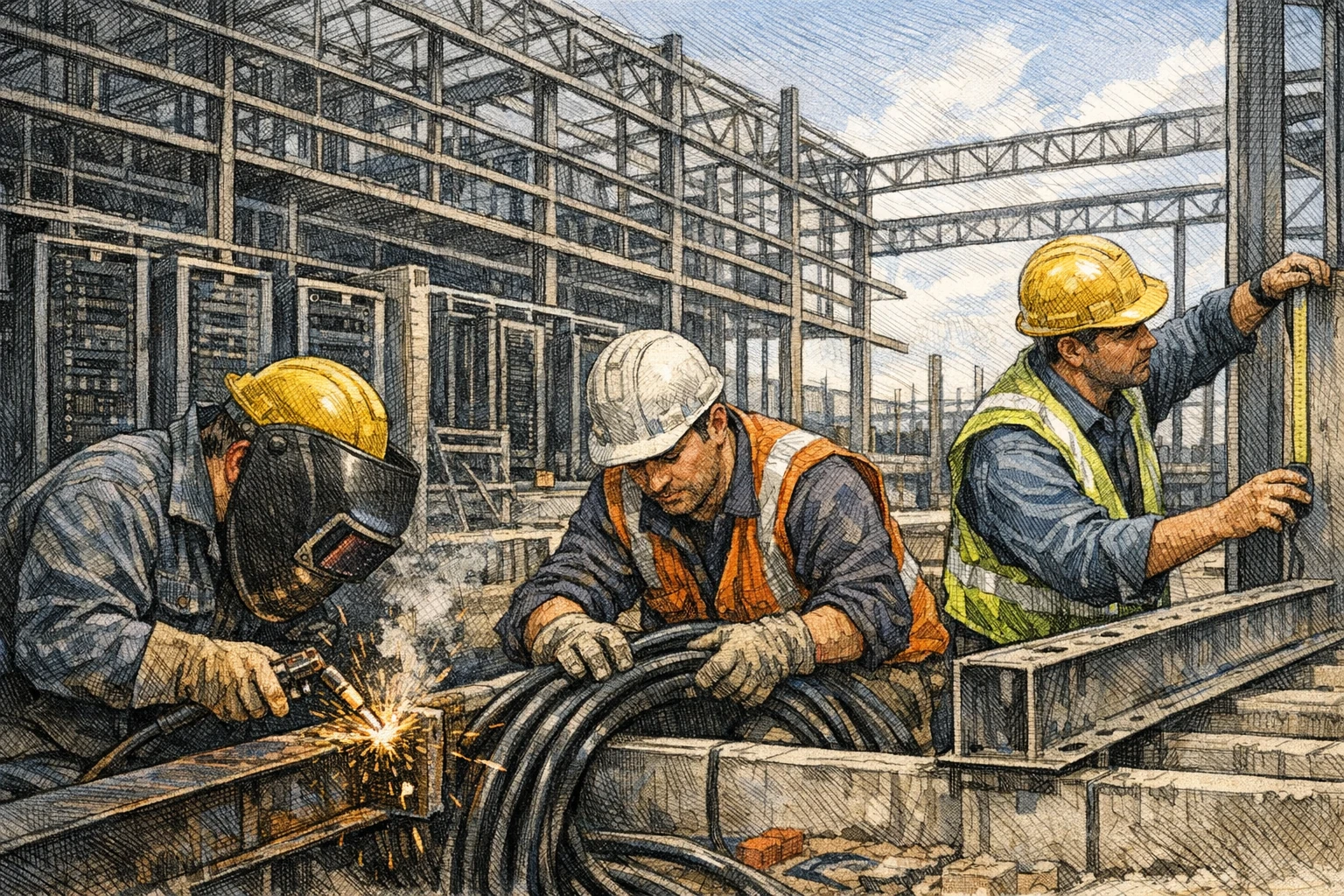
While the tech world rushes to earn AI certifications, Meta is spending $115 million on a different bet: free training for electricians, welders, and pipefitters. This isn't corporate fluff — it's a hard engineering problem. Mark Zuckerberg has capital, models, and compute planning, but data centers aren't being built fast enough because there aren't enough workers pulling cables or welding steel pipes on-site.
Five Weeks, No Prerequisites, Guaranteed Job
Meta and the Associated Builders and Contractors (ABC) launched the "America's Workforce Academy" with initial sites in Louisiana, Ohio, Indiana, and Texas. The roughly five-week curriculum covers electrical, welding, piping, mechanical systems, and fiber optic installation — the core hands-on skills needed to turn vacant land into a running server hall.
No prior experience or degree is required. The program targets qualified veterans, career changers, and anyone looking to enter the trades. Participants receive full subsidies including scholarships and stipends for travel, housing, and living expenses — removing the "I want to learn but can't afford to support myself" barrier.
Graduates earn portable, industry-recognized credentials valid across employers and industries. Meta promises a direct path to employment at its data center construction sites. In April, Meta tested a similar program for fiber technicians called "Level-Up", which received roughly 35,000 applications in its first week — a sign of overwhelming demand for hands-on trade skills.
176 Permits, 349,000 Workers Short
The numbers tell the story: The U.S. issued 176 new data center building permits in 2025, the highest single-year count since records began in 1976. ABC estimates the construction industry needs roughly 349,000 more qualified workers just to meet existing demand. Chips and algorithms are useless when the wires and welds can't keep up.
Yet a paradox lurks. Studies show that once a data center is completed and stable, on-site staffing needs drop by about 78%. Build phase requires swarms of welders, electricians, and pipe fitters; after equipment is racked and cooled, daily maintenance teams shrink dramatically, and most worker contracts end. Where do the $115 million trained workers go after their projects finish? Meta has not provided an answer.