
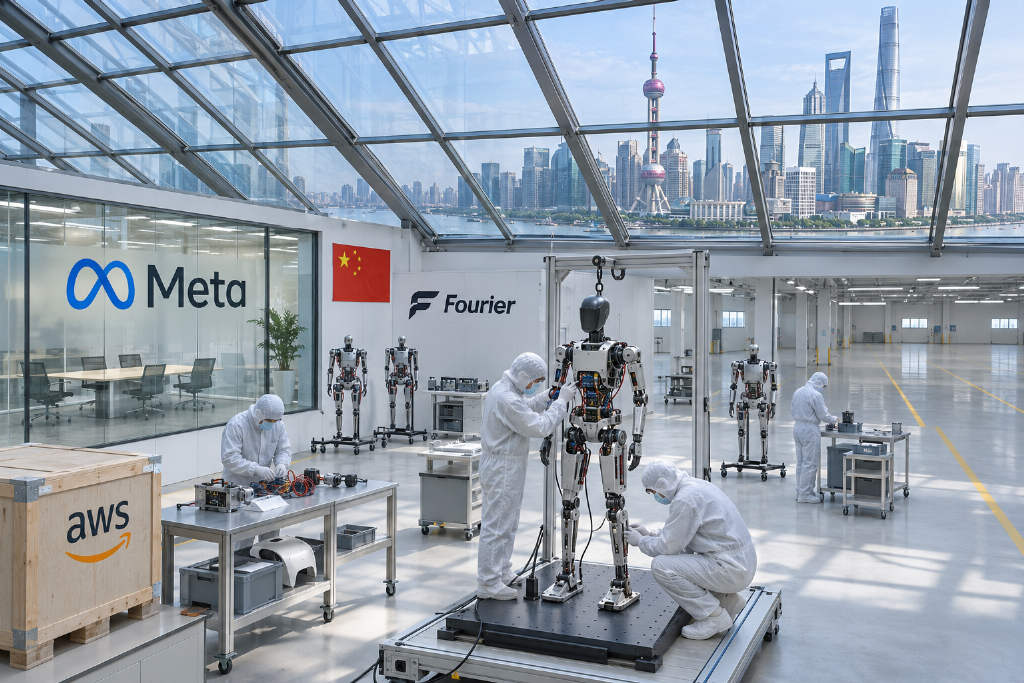
On Nov. 1, The Information said Meta had teamed up with Chinese robotics company Fourier on a humanoid robot prototype named Max, and finished development in three months. The report also said a second-generation version, Max 2, has already been launched.
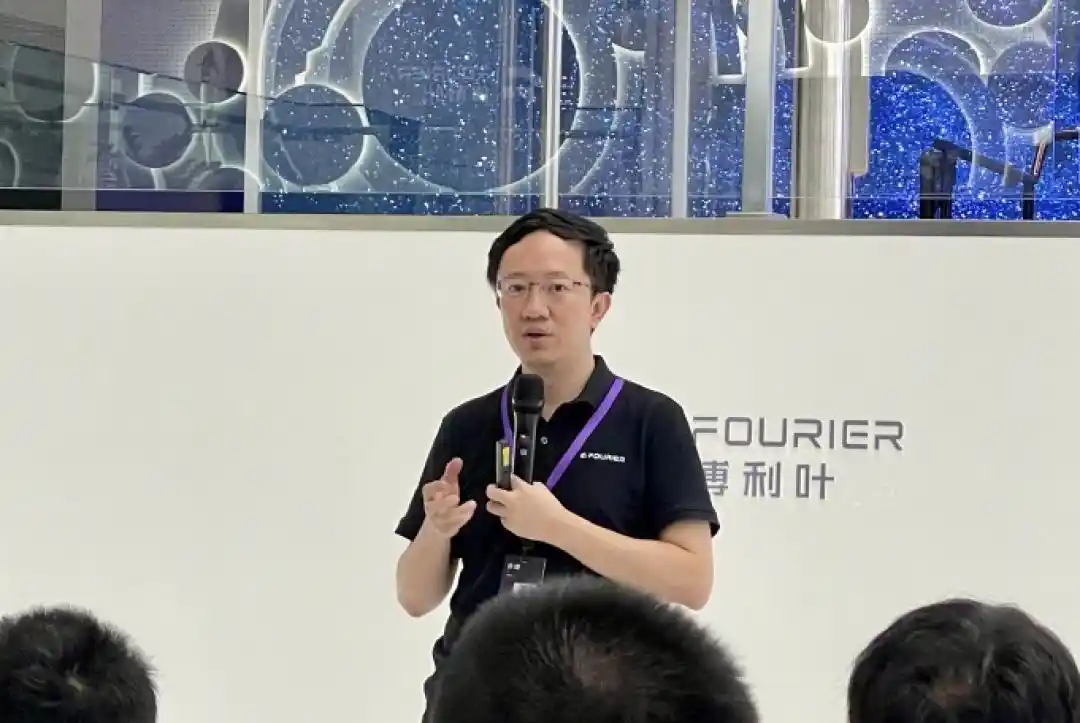
Plenty of people in the market took that as one more signal: after Tesla’s Optimus and Nvidia’s GR00T, another big tech company appears to be moving into humanoid robot hardware.
Phoenix Technology cites a different version of the partnership
Phoenix Technology, citing several industry insiders, painted a much tighter picture of the so-called joint development. In its telling, Fourier was the ODM partner and took care of design and manufacturing. The report added that Fourier has worked with Amazon Web Services, or AWS, in the same way, and that both arrangements involved only a handful of prototype units.
One industry source quoted by Phoenix Technology said: "This was not a large commercial order or a long-term joint development project. It was only a small batch of prototypes delivered to Meta and AWS. Fourier was essentially putting in its own costs to win big-name clients, and it is hard to turn that into stable, recurring commercial revenue." That is the meaning given in the report.
Max is said to be for internal testing only
According to the report, the Max prototype is about 1.5 meters tall and weighs 48 kilograms. It runs on Nvidia’s Jetson Thor chip and includes an expression display plus a five-finger dexterous hand. For now, that is it. Internal experiments only. No mass-production timetable has been set.
When media asked about it, Fourier said it was "not convenient to comment for now," and beyond that, the company said nothing.
Meta’s own positioning points the same way: its robotics push still looks like early-stage research. Phoenix Technology said Max is being treated as an internal experimental prototype, with no defined schedule for a consumer-facing production model. On the hardware front, Meta does not plan to set up its own production line. The report said the cheapest way to validate prototypes quickly is to use the existing supply chain and robot-body design strengths of Chinese robotics companies.
So in that arrangement, Fourier appears less like a long-term co-developer and more like a hardware solutions vendor willing to swap engineering effort for a Silicon Valley customer logo.
Funding pressure claims emerge despite prior fundraising
Public information cited by the report shows Fourier was founded in 2015 and began in medical rehabilitation robotics. It entered general-purpose humanoid robots in 2019, released GR-1 in 2023, and later followed with GR-2 and GR-3.
During the two years when embodied intelligence became one of the most crowded tracks in the primary market, Fourier was at times viewed as one of China’s representative humanoid robot body makers, thanks to its early hardware buildup and its base in rehabilitation deployment. In early 2025, the company completed an E-round financing of nearly RMB 800 million. Investors included Pudong Venture Capital and Zhangjiang Sci-Tech Investment, both tied to Shanghai state-backed capital.
One investment-industry source told Phoenix Technology that Fourier’s original plan was to finish its shareholding reform before an IPO exit channel appeared. A person close to Fourier said institutions and early shareholders were waiting for an IPO path to open so they could cash out.
The same source also said the company is facing heavy funding pressure and has reduced some R&D staff.
Primary-market appetite for embodied intelligence is said to be cooling
At the industry level, Phoenix Technology cited several embodied-intelligence practitioners who said primary-market investment in the sector has recently been put on hold, especially for projects without major technological breakthroughs. The report said investment firms have turned more cautious internally when judging whether these deals are still worth backing.
Fourier is different from some other embodied-intelligence projects in one basic way: it was founded in 2015. Phoenix Technology said that means its investors already have clearer expectations about exit timing. The report listed peer robotics companies from a similar era, including UBTECH, Unitree Robotics, DEEP Robotics and Leju Robot.
Of those, Unitree Robotics and UBTECH have both completed listings. DEEP Robotics had its STAR Market IPO application accepted by the Shanghai Stock Exchange on May 18, 2026, with China Securities Co., Ltd. as sponsor, and it planned to raise about RMB 2.503 billion. Public information from early October 2026 showed its review status had been updated to "inquiry received." Leju Intelligent had its ChiNext IPO application accepted by the Shenzhen Stock Exchange on May 19, 2026, with planned fundraising of RMB 2.6 billion.
Public information shows Fourier has completed its shareholding reform, but it has not formally filed a prospectus and has not entered the tutoring record stage. Phoenix Technology said that compared with Unitree, DEEP Robotics and Leju, all of which have already reached exchange acceptance or inquiry stages, Fourier is plainly behind in IPO progress.
The article was first published by the WeChat public account Phoenix Technology and credited to Phoenix Technology.



