

Meta is developing an agent platform called Hatch, according to The Information, and the product is centered on a direct pitch: give it a goal, and it will break the job into steps and return the result.

By function, the report says Hatch looks similar to Manus, though Meta is describing it with a different label, calling it a consumer version of OpenClaw. Pricing is set to go as high as $199.99 per month, nearly identical to Manus’ $200 top-tier monthly plan.
Claude in development, Muse Spark at launch
The report says Hatch is being built on Claude during the development phase. Meta plans to switch the product to its in-house Muse Spark model when Hatch formally launches, and a new model named Watermelon is scheduled for release in October.
That model transition is expected to happen in stages. Claude is being used during research and internal testing as an interim setup. The first productized version is planned to move to the Muse Spark family, with later expansion handed off to next-generation models such as Watermelon. The report notes that it has not been confirmed whether Watermelon belongs to the Muse series or whether it will directly become Hatch’s core model.
Built for consumer digital life rather than developer workflows
The Information contrasts Hatch with tools such as Codex and Claude Code. Those products are fundamentally aimed at coding, debugging, and software construction. Hatch, by comparison, is focused more heavily on consumer digital life.
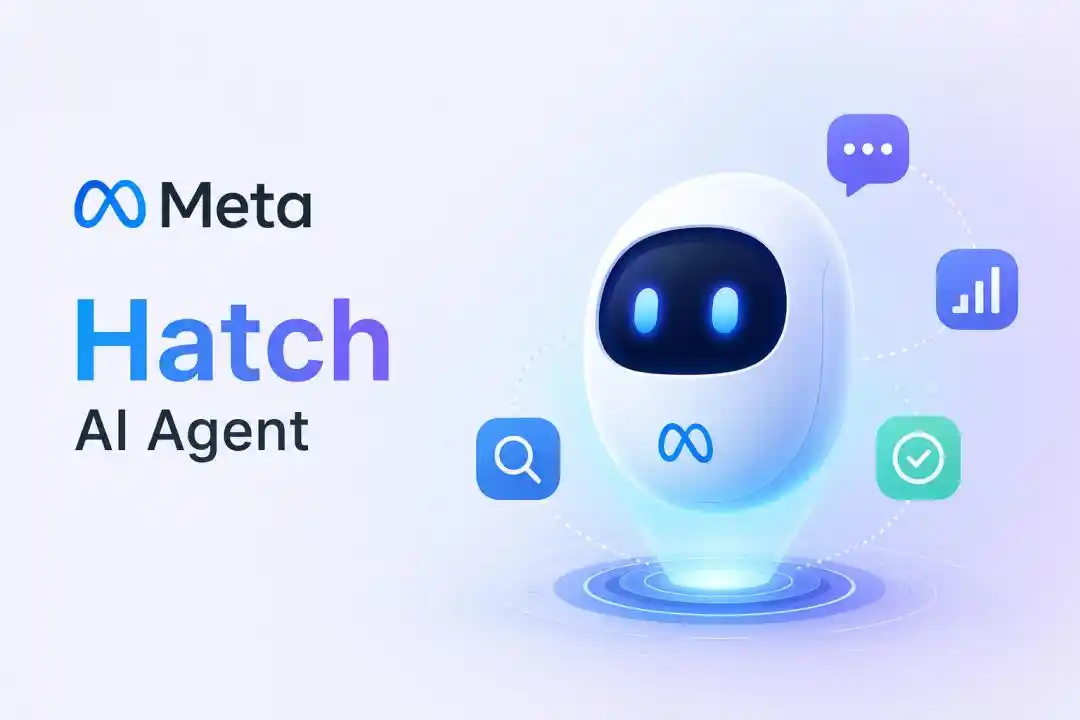
Meta’s early training setup for Hatch reportedly included simulated versions of DoorDash, Etsy, Reddit, Yelp, and Outlook. Together, those environments cover local services and delivery, commerce, community information search, and personal productivity management. Combined with Meta’s own platforms including Instagram, Facebook, and WhatsApp, Hatch is meant to connect a full path from discovery to comparison, communication, scheduling, and purchase.
The report gives a simple example. If a user sees a pair of shoes in Instagram Reels, Hatch could in theory identify the product clues, search for similar items, compare prices and delivery times, factor in the user’s budget and historical preferences, and then ask for confirmation before payment.
Where Hatch differs from Manus
The report says Hatch is not the same kind of product as Manus. Manus is described as an independent general execution environment aimed at research, web automation, coding, and content production. Hatch puts more weight on long-term memory, personalized context, cross-service actions, and deep integration with Meta’s social ecosystem, which the article describes as reaching billions of users.
One recurring weakness of general-purpose agents is limited user understanding. Meta’s goal with Hatch, as described in the report, is to turn scattered signals across its products into an ability to understand user intent, something the article says pure chat-based AI products do not have.
Distribution advantage and pressure to monetize AI directly
The report says Meta’s advertising business has long supplied strong cash flow, but rapidly rising costs tied to AI infrastructure, model training, and inference are pushing the company to build a more direct AI monetization path outside advertising.
That is where Hatch’s high-end subscription pricing connects with distribution. Users already familiar with Meta’s ecosystem would not need to download a separate unfamiliar tool. The report says Hatch could be used directly through Instagram, Facebook, WhatsApp, Messenger, the Meta AI app, and even smart glasses.
The real internet is the harder test
A monthly price close to $200 sets a high bar. The report says users will judge whether the product can reliably save several hours, or even dozens of hours, of human work.
That means Hatch has to hold up in real operating conditions: complex websites, incomplete information, changing login states, payment confirmation, and exception handling. The article stresses that the live internet is far messier than a simulated training environment. Website structures change often, and pop-ups, CAPTCHAs, anti-bot systems, regional differences, and inventory swings can all cause tasks to fail.
The article was originally published by the WeChat account Quantum Position, and the author is Meng Chen.