
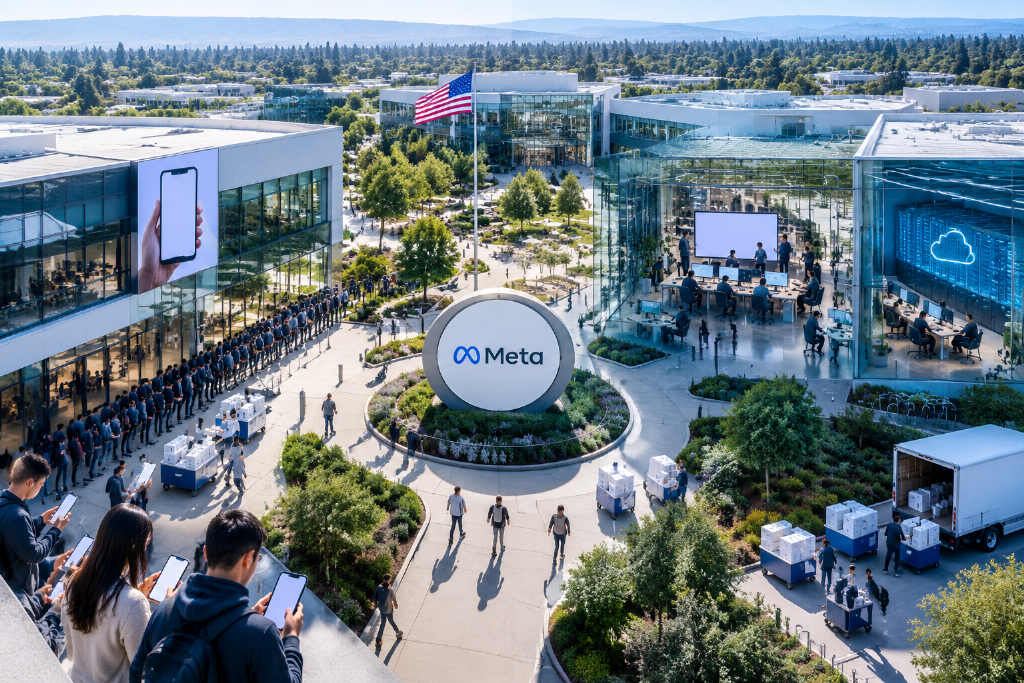
Meta’s Muse has pushed the idea of a Personal Agent into the center of the tech conversation in a matter of weeks.
The product passed 2.8 million downloads in its first two weeks after launch. By Sept. 24, that figure had climbed above 3.4 million, taking the top spot on the free charts of both the U.S. App Store and Google Play. Investor reaction moved even faster. The source article says Muse’s Personal Agent vision at one point helped add nearly $200 billion to Meta’s market value.
In the article, written by Huahua for Bianmianzhiwai, that response is presented as part of a pattern the tech industry knows well: one breakout product appears, and a much larger story about a new track or a new gateway quickly forms around it. Over the past year, AI has repeated that pattern again and again. Products emerge, habits are still unformed, and capital gets ahead of actual usage.
Muse has energized the Personal Agent story, but control of the entry point is still contested
The article argues that AI companies are highly skilled at repositioning products. If an AI assistant sounds too limited, the framing shifts to Agent. If AI office tools become crowded, Personal Agent gets elevated instead.
Muse stands out because it shows capabilities that earlier AI assistants did not. It can open webpages, fill out forms, send emails, book services and complete sequences of real tasks in an isolated virtual environment. To support that, Meta designed Secure VM, giving the agent its own browser and runtime environment.
At nearly the same time, Manus, which the article says had not been acquired by Meta, returned to the spotlight with Cue. According to the source text, Cue gained its own email account, phone number and digital wallet so it could handle more concrete real-world tasks on behalf of users. OpenAI then released a similar AI assistant product called Dots, adding to the momentum.
Still, the article says the claim that Personal Agents will become the next super app or even replace smartphones skips over a deeper power struggle in the underlying ecosystem.
One issue is platform control. Apple and Google, as operating-system gatekeepers, are building system-level loops around on-device large models and are unlikely to let third-party agents take over core interactions beyond what they permit. Another issue is cost. Every complex, cross-software task performed by a Personal Agent consumes cloud inference resources and carries network latency. If expensive API calls are used to complete low-ticket actions like food orders or ticket bookings, the business model runs into what the article calls a structural cost paradox.
In that sense, the jump from “AI handling personal errands” to “Personal Agent replacing the phone as the next gateway” is not a new story in tech history.
From railway mania to the internet bubble, markets often rush ahead of outcomes
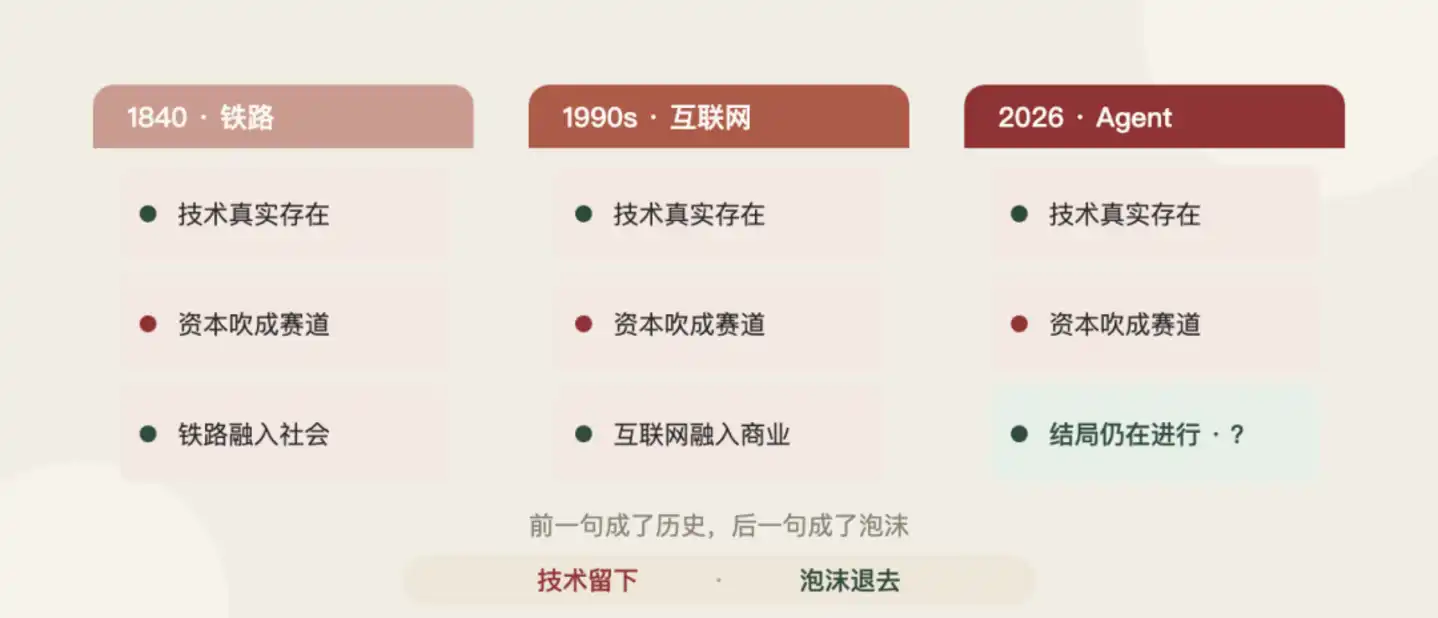
The piece compares the current reaction to Muse with Britain’s railway mania in the 1840s.
After the Liverpool and Manchester Railway opened in 1830, transport efficiency changed in a visible way. Capital then poured into railway projects, and railway shares surged. Railways did go on to reshape the world, but the investors who rushed into railway stocks did not all receive returns on the same scale. The article puts it simply: one part became history, the other became a bubble.
The same script appeared again around the turn of the century. In the late 1990s, the Nasdaq jumped 170% in 18 months before collapsing, wiping out countless concept-driven companies. Yet the internet did not disappear. It became deeply embedded in business and society only after the bubble had burst.
The article’s point is that the real commercial value of railways or the internet was never built on vague personal narratives. It rested on practical corporate economics. The same question now faces AI agents. While Muse has sparked consumer-side excitement, companies are already doing the harder math.
AI office tools are moving ahead, and enterprises care about workflows, permissions and isolation
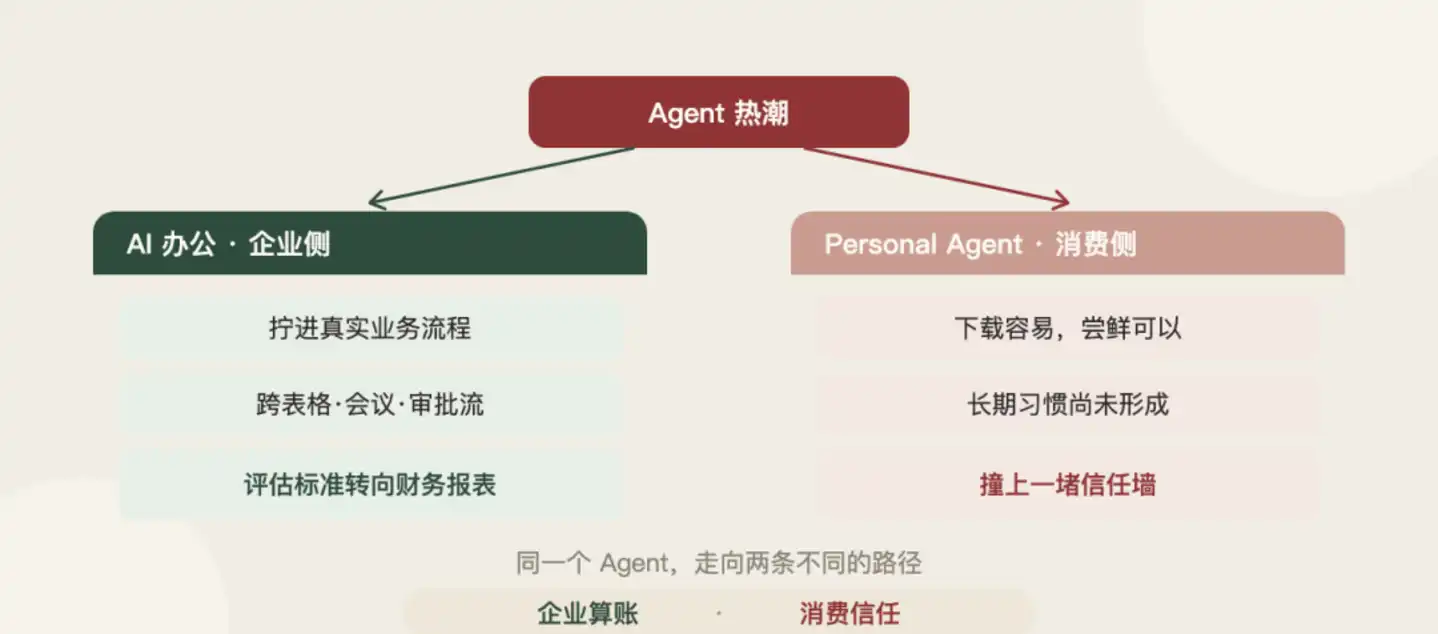
According to the article, AI office software and Personal Agents are starting to split into two very different paths.
This year, products such as WorkBuddy, Doubao Work and Qianwen Office have emerged one after another, while major tech companies have shifted their focus toward AI for office use. The source text also cites investor Zhu Xiaohu as saying the future of AI office software belongs to large platforms.
The article says big companies see AI office software as a decisive battleground because the fight is not just about a feature. It is about product form, organizational structure and ecosystem defenses. On the product side, offerings have moved beyond generating a single document and into connecting spreadsheets, meetings and approval flows. On the organizational side, companies are breaking internal barriers and integrating AI teams more tightly with collaboration products such as DingTalk, Feishu and WeCom in an effort to push AI Native changes into workplace efficiency.
A McKinsey survey this year found that 40% of enterprises with annual revenue above $1 billion are already using AI Agents at scale, up from 27% last year. Yet another set of figures from Deloitte points to a much tougher reality: only 5% of enterprises believe they are truly ready for Agentic Workflow, and only 15% can complete cross-department, multi-agent collaboration.
That leaves enterprises with plain operational questions. Which workflows can an agent enter? How many permissions are required? How should data assets be isolated? The article treats those questions as the real determinants of adoption speed.
Downloads are easier than trust, especially in consumer software
While AI office software is being tested inside business processes, the Personal Agent wave around Muse faces a different barrier: consumer trust.
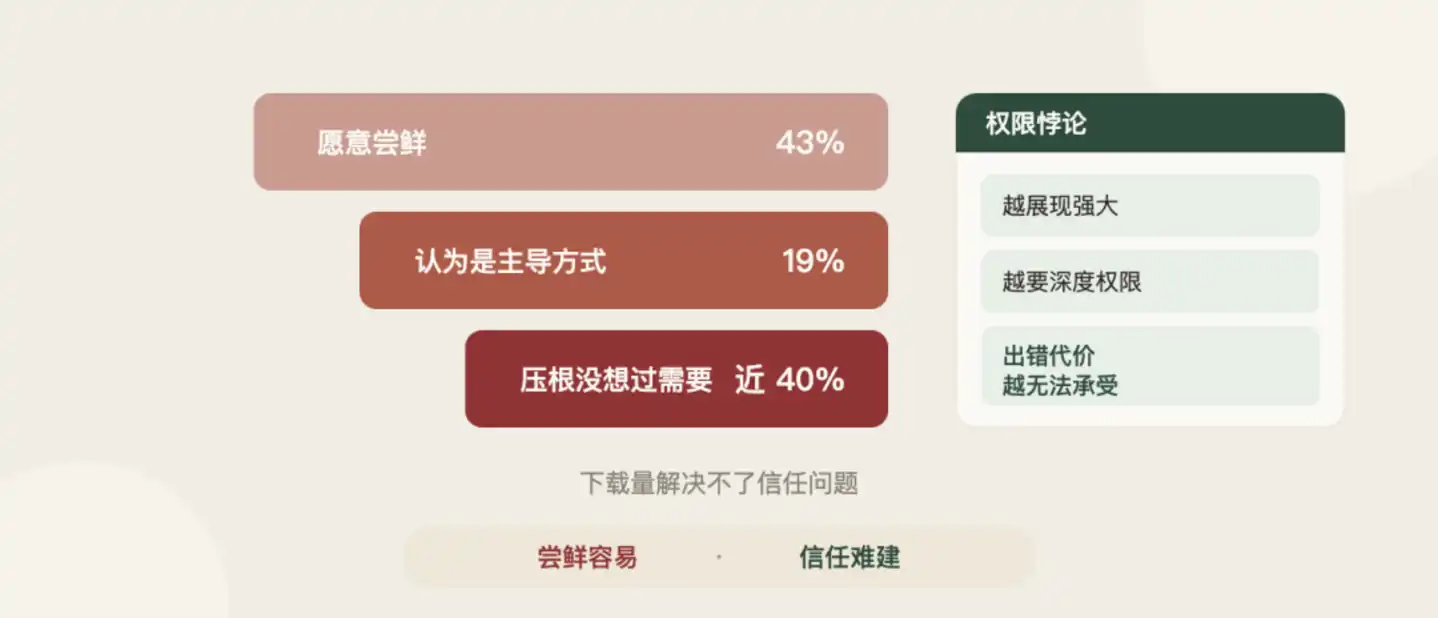
The article cites Adobe consumer research showing that 43% of respondents are willing to try a Personal Agent, but only 19% believe it will become the main way they interact with brands. Nearly 40% have not even considered needing one.
The harder problem appears when money and transactions are involved. Users may welcome help with research or product comparisons, but when automatic payments, outbound emails or purchase orders enter the picture, the threshold for giving up control becomes much higher.
That is where Muse sits now, according to the article. The more it tries to demonstrate the full power of an agent, the more access it must request from users. The deeper those permissions go, the greater the cost when the system makes a mistake. A chatbot can give a wrong answer and the user can ask again. A Personal Agent can send the wrong formal email or buy the wrong asset, and the consequences move into the real world immediately.
Meta is telling a consumer story while building an enterprise platform
As Muse drew public attention, the article says Meta was also laying out a second commercial line in the background.
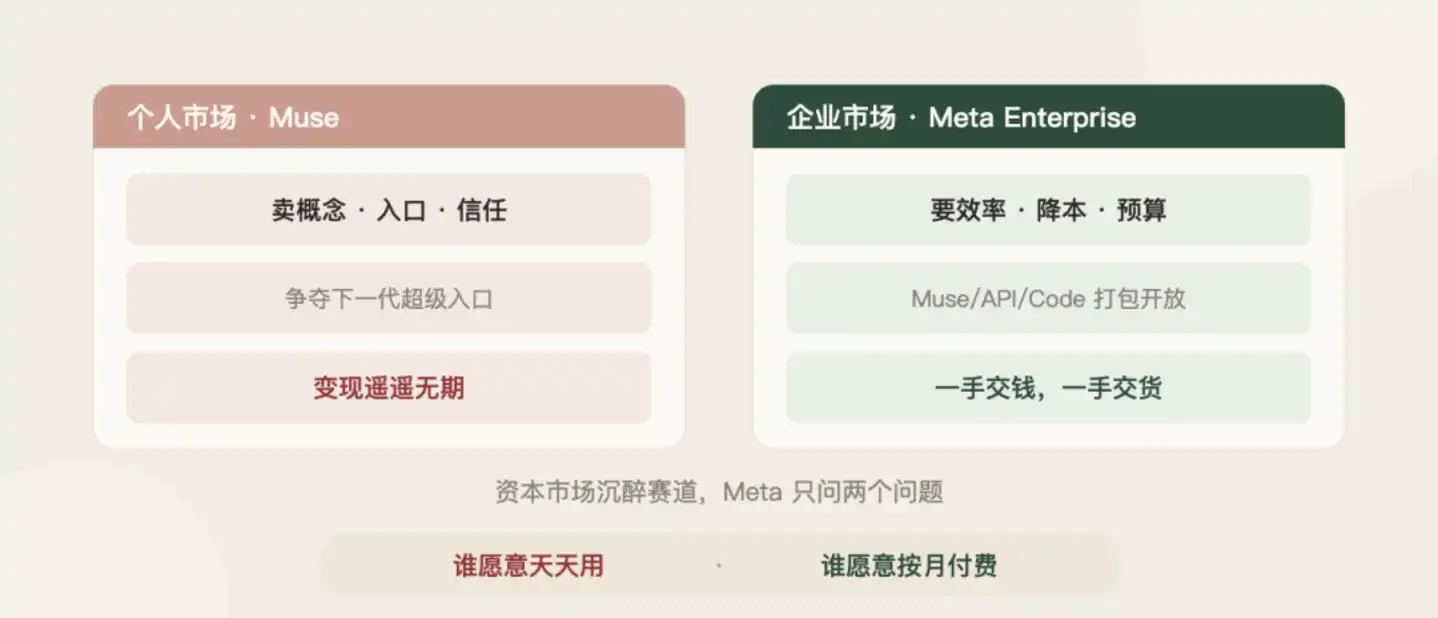
On Sept. 28, Meta announced Meta Enterprise Platform, led by former MongoDB CEO Chirantan Desai. The company said it would package Muse, Meta Business Agent, Muse API and Muse Code together and make them available to enterprises and developers.
That stands in sharp contrast to the earlier, highly visible story around Muse as a personal agent for consumers. The article suggests Meta is not choosing one side over the other. Muse now looks like both a bid for a personal AI entry point and a bridge into the enterprise AI market.
In the end, the article brings the debate back to two grounded questions: whether users will stay, and whether enterprises will keep paying. Those, rather than download totals alone, are presented as the tests that matter for Muse.
Major technologies eventually disappear into infrastructure
The closing section argues that once railway mania faded, railways were no longer treated as a new track. After the internet bubble burst, internet companies gradually lost the halo that had surrounded them. Both became infrastructure.
The article places steam power, electricity and the internet in the same pattern. They stopped being praised indefinitely as disruptive sectors and instead spread through factories, cities and homes until they became default capabilities. If AI follows that path, the article says, agents will do the same.
At that point, users will not care much whether what they use is called a Personal Agent, and companies will no longer keep debating whether agents are still a hot trend. The technology will be reduced, in the most practical sense, to a basic software interaction model and a normal way of working.
The piece ends with this line from Bianmianzhiwai: “People always overestimate the speed at which technology changes the world and underestimate the depth of that change. The best ending for a new technology is not to remain a hot trend, but to reach a day when people no longer find it new.”