



Meta released its third-quarter results alongside a board-approved plan to create non-voting Class C shares and distribute them to existing shareholders based on current holdings. The company also disclosed a founder agreement tied to Mark Zuckerberg’s sale of newly issued shares, his continued service, and a residency commitment.
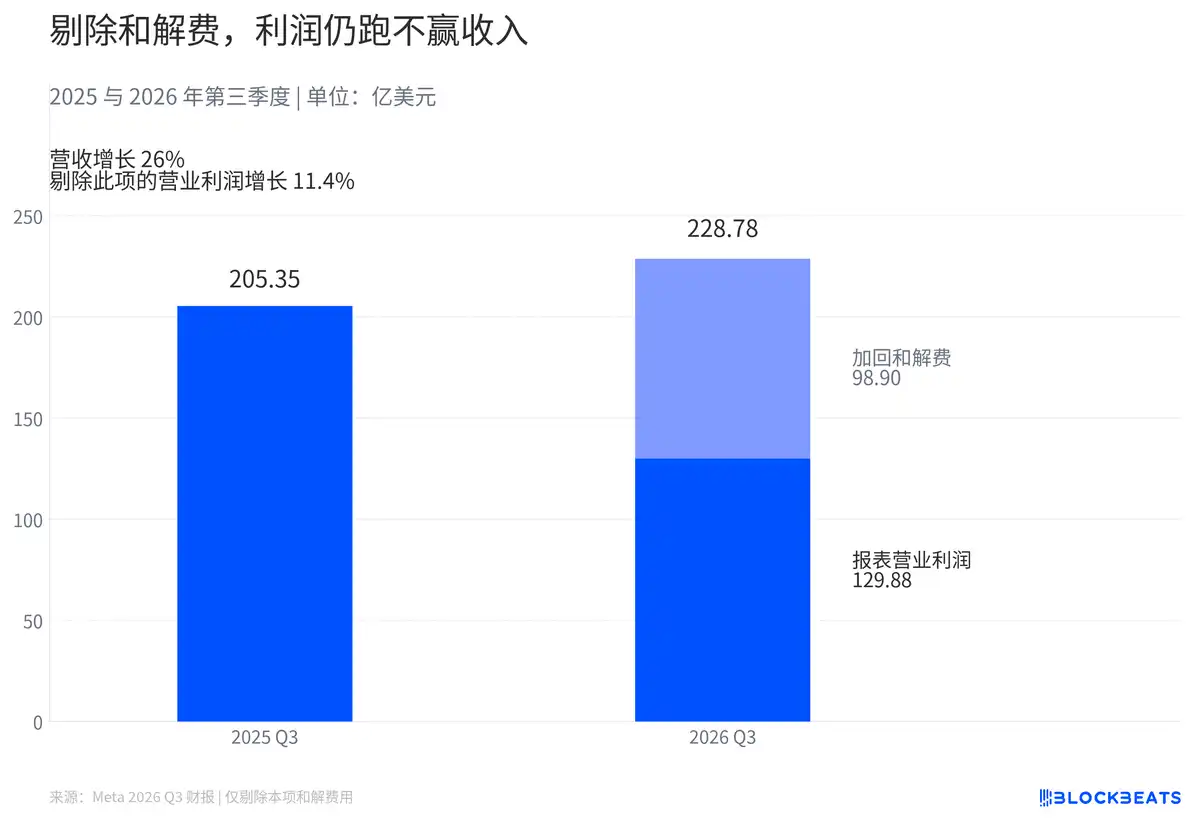
According to Meta’s earnings report, quarterly revenue reached $64.6 billion, up 26% from a year earlier. The revenue growth, though, sat next to weaker signals in profit conversion and cash generation. Meta said it recorded $9.89 billion in charges related to settlements in youth-related litigation during the quarter, a hit that made the growth in its advertising business less visible in the reported figures.
Settlement charge weighed on operating performance
Adding back that charge, operating profit rose about 11.4% year over year based on the figures in the filing. That was still well below the pace of revenue growth. Revenue increased, but costs rose as well, and a smaller share of each additional dollar of sales flowed through to operating profit.
On the same basis, operating margin was about 35.4%, down from roughly 40.1% in the prior-year period on a reported basis. In practical terms, Meta’s revenue base got larger, but the operating profit retained from each unit of revenue became thinner. The adjustment here removes only the current settlement charge and does not represent a broad normalization for all special items.
Net income needs a separate frame. Meta reported quarterly net income of about $9.86 billion, which increased from a year earlier. But the prior-year quarter was affected by a one-time tax item, leaving a low comparison base. Looking only at year-over-year net income growth could overstate the degree of operating improvement. Operating profit offers a cleaner view of how the litigation charge affected the core business this quarter.
Capital spending exceeded operating cash flow
Recognizing an expense does not mean the same amount of cash left the business in the same quarter. The income statement shows how much cost the company took on. The cash flow statement shows when money actually moved. That distinction is central to understanding why Meta paired its earnings release with a financing-related equity structure.
Meta’s operations were still generating cash. The company said operating cash flow was nearly $32.8 billion in the quarter, above the year-earlier level. The pressure came in the next step. Purchases of property and equipment, together with principal payments on finance leases, totaled about $34.9 billion, more than the cash generated from operations.
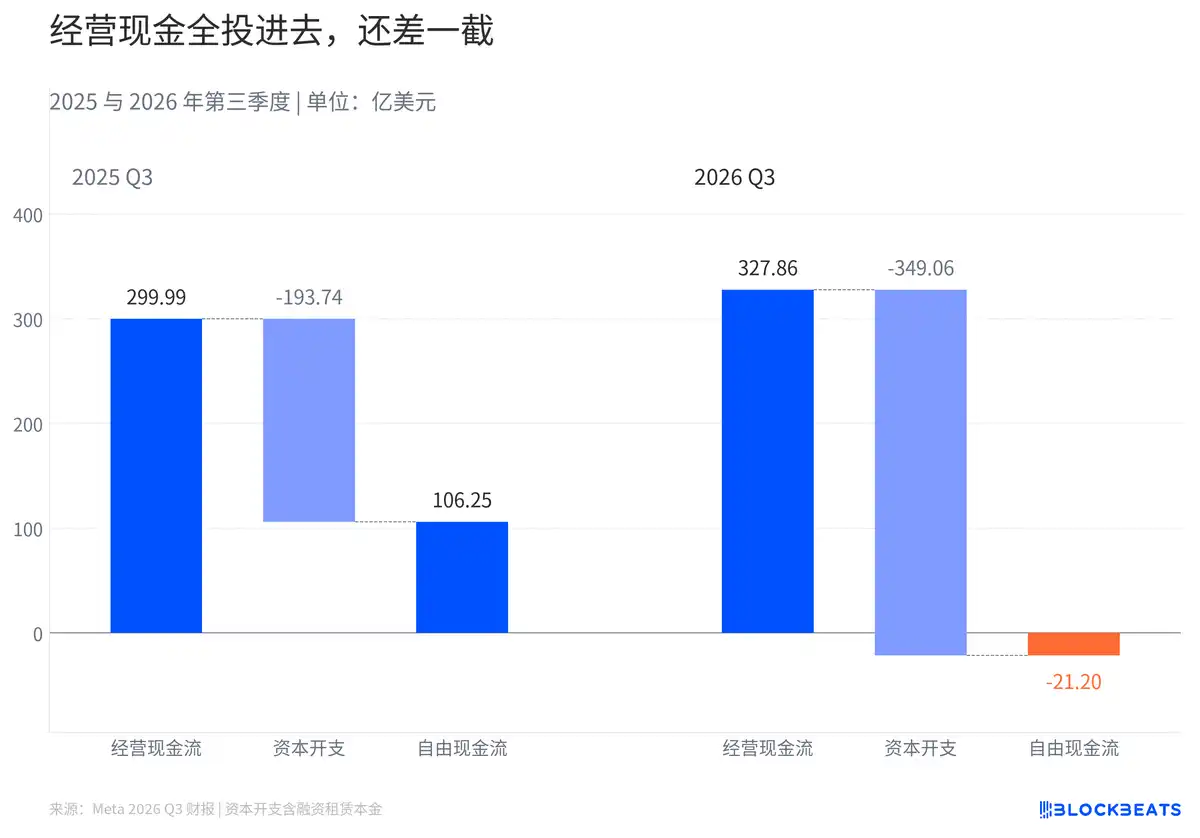
The shortfall appeared before dividends were paid. Based on the company’s figures, Meta last year spent about $65 on capital expenditures for every roughly $100 of operating cash flow and still had room left over. This quarter, for every roughly $100 of operating cash flow, capital spending consumed about $106. That is why free cash flow turned negative even as revenue kept rising.
Full-year capex range tightened, low end raised
Meta also updated its full-year capital expenditure outlook. The company narrowed the range to $135 billion to $145 billion for the year, lifting the low end while leaving the high end unchanged. The revision points to a higher minimum spending level than previously expected.
At that scale of investment, the board was looking beyond quarterly earnings and toward future access to outside capital. The new Class C shares give Meta another equity instrument that can be used with investors, employees, or acquisition targets. Those shares carry economic rights but no regular voting power.
Stock distribution does not itself bring cash into Meta
Under the company’s announcement, each holder of one Class A or Class B share will receive one Class C share. The number of shares outstanding will rise, but shareholders’ proportional economic interest and existing voting power will not increase as a result of the distribution itself. Meta also does not receive investor cash at the moment of that distribution.
The transaction that could bring money into the company would come later, through the issuance of new shares to investors. Because Class C shares do not add regular votes, Meta can bring in new holders of economic interests while preserving the existing voting structure. Even so, any new issuance can still dilute existing shareholders’ economic ownership. Preserving control is not the same as preserving economic interest.
Zuckerberg’s sale of his own Class C shares is a separate transaction. The buyer’s money goes to the selling shareholder, not to Meta, so the company would not receive cash for data center construction from that sale. Corporate financing and founder liquidity may use the same class of stock, but the cash flows land in different accounts.

Founder sale limits and residency pledge were negotiated separately
The filing says 20% of the new shares Zuckerberg first receives are not subject to the agreement’s tied sale restrictions. The remaining portion is restricted, and any sale remains subject to insider trading policy.
The agreement also sets a quarterly release schedule tied to continued full-time service. For each full qualifying quarter, restrictions are released on an amount equal to 2.5% of the total number of newly received shares from the initial grant. Reaching full release would require 32 qualifying quarters. Early sales of restricted shares would involve the sale of corresponding Class A or Class B shares, conversion of Class B into Class A, or the use of pre-existing capacity specified in the agreement.
The same document includes an eight-year residency commitment. As long as he continues to satisfy the leadership-role conditions, Zuckerberg agreed to remain in California or in the jurisdiction where the company’s headquarters is located, subject to exceptions for major unforeseen circumstances. That clause and the service-based release schedule are separate and cannot be reduced to a simple reading that living in California allows unrestricted stock sales.
Capital structure talks extended to control and liquidity
The negotiation background described in the filing also involved a proposed wealth tax and considerations around Zuckerberg potentially relocating. Meta wanted a financing tool. Zuckerberg wanted liquidity while keeping control. A special committee folded continued service and sale restrictions into the arrangement. In that way, personal tax planning became part of a broader discussion over the company’s capital structure.
Once the stock distribution is completed, the amount of economic interest Zuckerberg can sell and the amount of voting power he continues to hold will be less directly tied to the same pool of shares.