

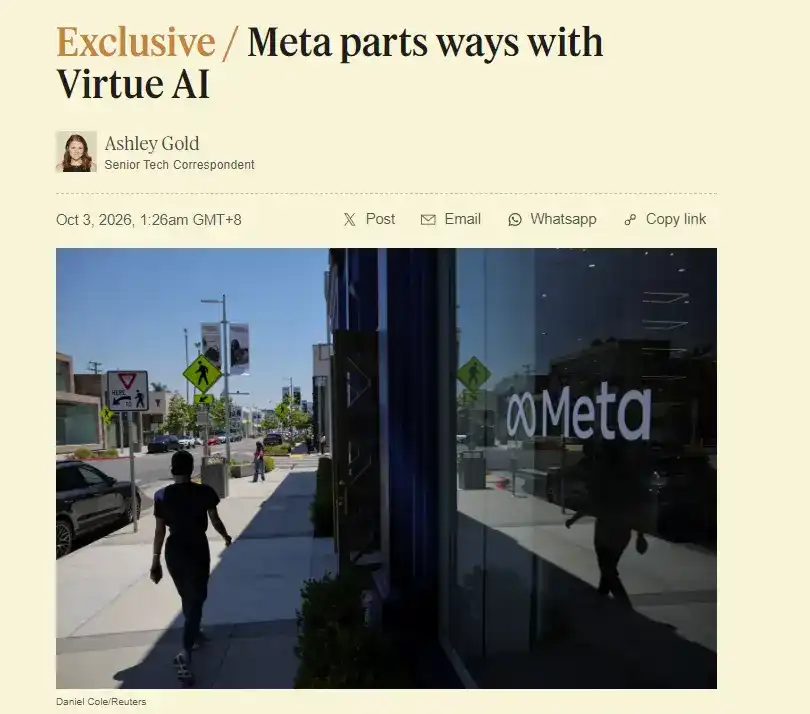
Meta’s relationship with the Virtue AI team linked to UC Berkeley computer science professor Dawn Song has reportedly run into trouble. In a recent report, Semafor said Meta spokesperson Andy Stone told the publication that the company is cutting a group of employees hired from AI safety startup Virtue AI in June, only about four months after they joined.
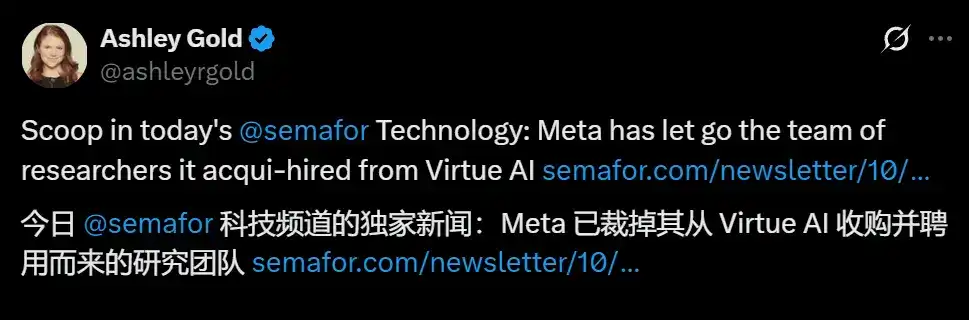
The arrangement changed roughly four months after the hires
Song said on social media in June that she was joining Meta Superintelligence Labs. Media reports at the time said the move also included two other Virtue AI co-founders, Bo Li and Sanmi Koyejo, along with additional team members.
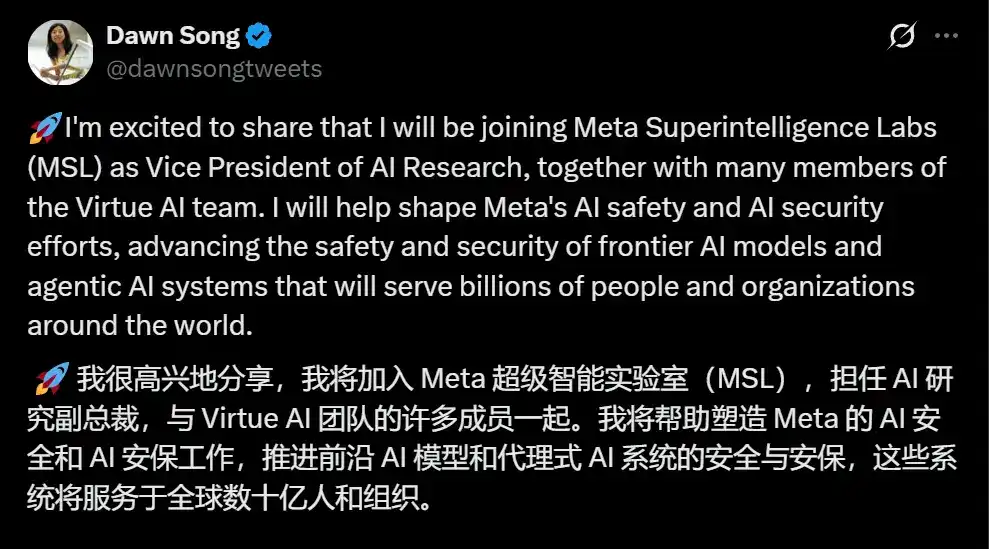
The article described the move as Meta bringing in an independent team rather than acquiring the entire company.
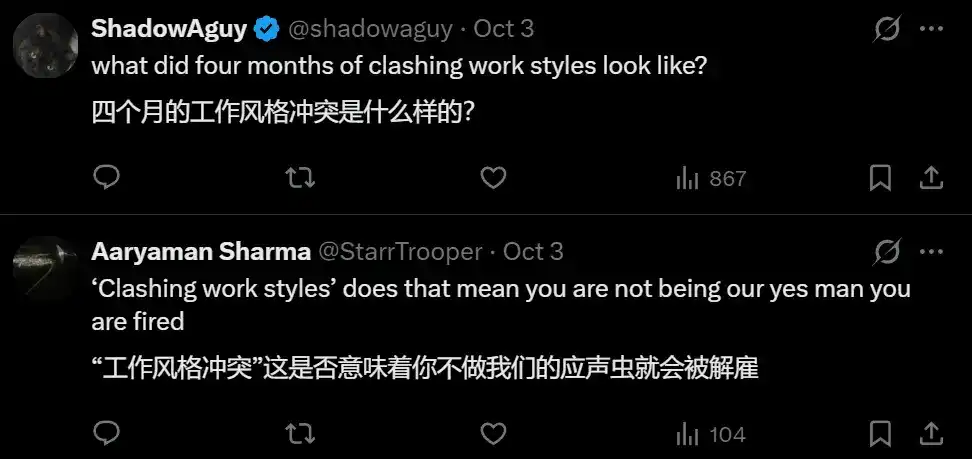
Semafor reported that Meta attributed the breakdown to "clashing work styles," saying the collaboration did not unfold as expected. Meta also said its superintelligence lab will remain focused on AI safety, alignment, and frontier risks.
Dawn Song and Virtue AI
Song has a prominent profile in both computer security and AI safety. The source article noted that her 2005 paper on Dynamic Taint Analysis is regarded as a classic in computer security. It also said that, in AMiner rankings, she is listed as the world’s most-cited scholar in computer security.
Beyond her academic role, Song is also a founder of Oasis Labs and Virtue AI. According to Virtue AI’s website, the company’s work includes simulating attacks, identifying weaknesses in AI systems, and providing runtime protections and enforcement of safety and governance rules.
Why the partnership originally made sense
As outlined in the source article, the Virtue AI team had been working on AI security testing, red teaming, and post-deployment protection for clients. Inside Meta, those capabilities were expected to be applied across products used by billions of people, shifting from a standalone security toolset to platform-level security infrastructure.
Meta, for its part, has been pushing into AI agents and superintelligence. That created a need for a team with both research depth and real-world security deployment experience to support work on AI safety, reliability, and governance.

The specific disagreements remain undisclosed
Publicly available information still does not show where the two sides diverged in practice. The report also did not confirm whether Song and the rest of the core group had all left Meta. At the time the article was published, the Virtue AI team had not responded.
For now, the clearest point on the record is Meta’s explanation that the issue came down to incompatible working styles.
The source article also pointed to organizational mismatch
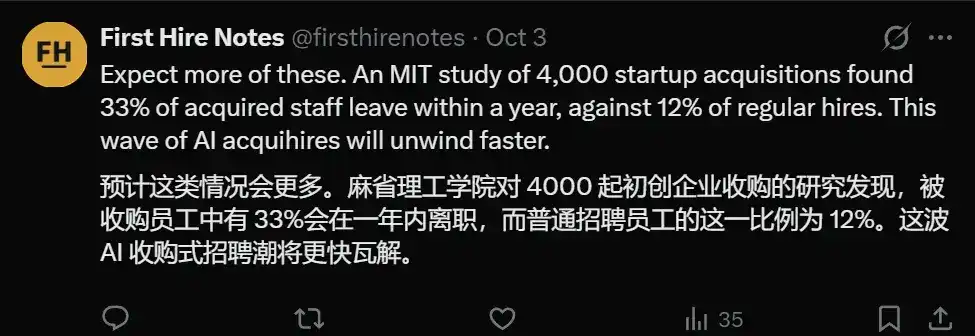
The original piece cited a 2019 study from MIT Sloan. It found that 33% of acquired employees left within the first year after an acquisition, compared with 12% for conventionally hired employees with similar skills and work experience.
Over the three-year window examined by the study, acquired employees were 15% more likely to leave than new hires. The article tied that pattern to "organizational mismatch": people who joined startups for autonomy, flexibility, and a greater appetite for risk often find themselves at odds with the more formal processes and corporate culture of larger companies.

The source article argued that calling the Meta-Virtue AI shift a matter of work-style differences leaves many questions unanswered. Any deeper dispute between the two sides will likely depend on whether Virtue AI offers its own account later.