
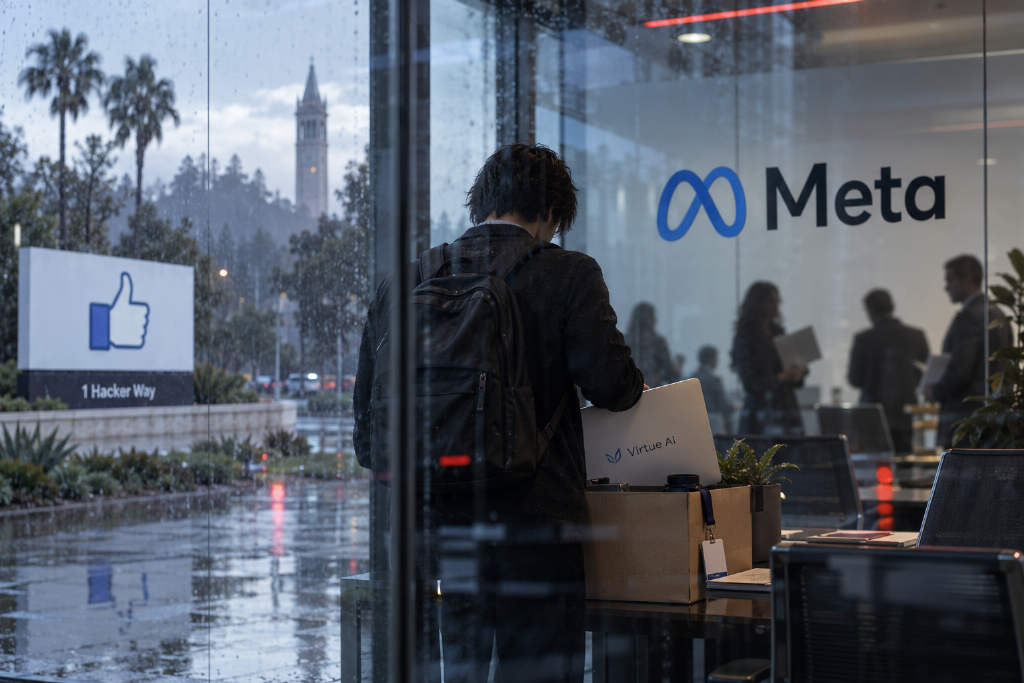
Meta’s collaboration with the Virtue AI team is reportedly running into trouble just four months after the group joined the company.
In a recent report, Semafor said Meta is cutting a group of employees hired in June from AI safety startup Virtue AI. Meta spokesperson Andy Stone told the outlet that the move followed “clashing work styles,” and that the partnership had not developed as expected.
Who is behind Virtue AI
Virtue AI was founded by Dawn Song, a computer science professor at the University of California, Berkeley. Song is also a founder of Oasis Labs and Virtue AI, and the source describes her as one of the most influential scholars in computer security and AI safety. It also notes that her 2005 paper on Dynamic Taint Analysis is widely regarded as a classic in computer security research.
According to Virtue AI’s website, the company’s work includes simulated attacks, identifying weaknesses in AI systems, and providing runtime protections while enforcing safety and governance rules. In practical terms, that means testing AI systems for security issues and putting guardrails around them once they are deployed.
Joined in June, disruption reported in October
Song said on social media in June that she had joined Meta Superintelligence Labs. Media reports at the time said two other Virtue AI co-founders, Bo Li and Sanmi Koyejo, joined as well, along with additional team members. The setup was described as Meta bringing in an independent team rather than acquiring the entire company.
On paper, the match made sense. Virtue AI had already been doing AI security testing, red teaming, and post-deployment protection work for clients. Inside Meta, those capabilities could have been applied across products used by billions of people. Meta, for its part, has been pushing AI agents and superintelligence work, which raises the need for stronger safety, reliability, and governance capabilities from teams with both research depth and operational experience.
What Meta said, and what remains unclear
Still, the relationship appears to have shifted quickly. Semafor reported that Meta’s explanation was straightforward: the two sides had different working styles, and the collaboration did not unfold as planned. Meta also said its Superintelligence Labs will continue to focus on AI safety, alignment, and frontier risks.
The report did not confirm whether Song and the rest of the group have fully left Meta. At the time the story was published, the team had not responded.
A familiar integration problem
The development also brings back a broader issue: what happens after a large company hires elite researchers and startup operators, and whether the organization can give them room to do their best work.
The source cites a 2019 MIT Sloan study that found 33% of acquired employees leave within the first year, compared with 12% of regular hires with similar skills and work experience. Over time, those percentages move closer together. Even so, across the three-year window studied, acquired employees were still 15% more likely to leave than newly hired workers.
That study attributed the gap to organizational mismatch. People who join startups often want autonomy, flexibility, and a higher tolerance for risk. Once they move into a large company, they may face more process, more structure, and a more formal culture. The article also notes that acquired employees usually do not get to choose the buyer and have little say in post-deal organizational design, which can make the adjustment harder. Many of them are also more inclined to build from scratch, making departure more likely.
In Meta’s case, the “clashing work styles” explanation has not settled the questions around what went wrong. A fuller picture may depend on whether Virtue AI offers its own account later.