
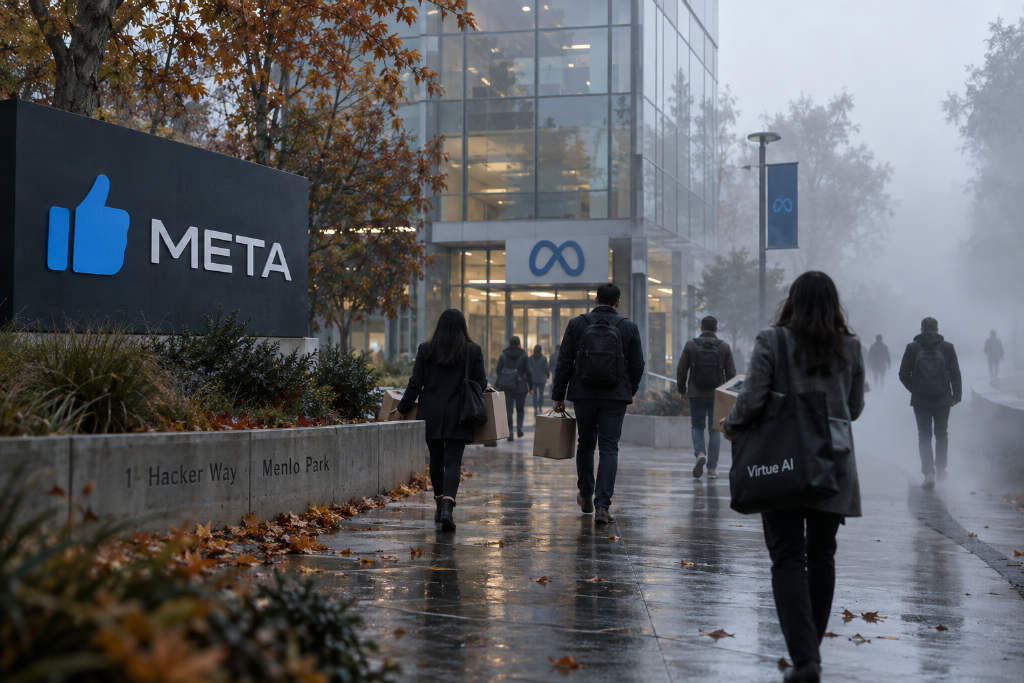
Meta’s relationship with the Virtue AI team led by UC Berkeley computer science professor Dawn Song has reportedly run into trouble.
According to a recent Semafor report, Meta spokesperson Andy Stone said the company is cutting a group of employees hired from AI safety startup Virtue AI. Those employees joined in June, only four months before the reported change. Meta said the partnership failed to develop as expected because of "clashing work styles."
Song and the Virtue AI team joined Meta in June
Dawn Song is widely known in both academia and industry. She is described in the source article as one of the most influential scholars in computer security and AI safety. Her 2005 paper on Dynamic Taint Analysis is regarded as a classic in computer security.
The article says AMiner ranks her as the most-cited scholar globally in computer security. In addition to her academic role, Song is also a founder of Oasis Labs and Virtue AI, and her Berkeley lab has been described as a training ground for top talent in computer security.
According to Virtue AI’s website, the company works on simulated attacks, identifying weaknesses in AI systems, and providing runtime protections and governance enforcement. In plain terms, the article says, the company both stress-tests AI systems and adds guardrails while they are operating.
In June, Song announced on social media that she had joined Meta’s Superintelligence Labs. Media reports at the time said the move also included Virtue AI co-founders Bo Li and Sanmi Koyejo, along with additional team members. That suggests Meta brought in an independent team rather than acquiring the entire company.
Both sides appeared to have clear reasons to work together
The source article says the move made sense for Virtue AI’s talent team. The group had already been providing AI security testing, red teaming, and post-deployment protection for clients, but a startup has limited reach and resources. Inside Meta, those capabilities could be deployed directly across products used by billions of people, shifting from a security toolset to platform-scale security infrastructure.
Meta also had an obvious need for that expertise. As the company pushes AI agents and superintelligence, concerns around model misbehavior, data leakage, and malicious prompt manipulation make AI safety, reliability, and governance more urgent. Bringing in a team with both research depth and real-world security deployment experience looked like a practical fit.
Meta says the collaboration did not unfold as planned
Semafor’s report indicates the arrangement began to break down quickly. Meta said the collaboration did not progress as expected and attributed that outcome to differences in work style. The company also said its Superintelligence Labs will continue to focus on AI safety, alignment, and frontier risks.
At the time the report was published, it was still unclear whether Song and the rest of the senior team had all departed. The Virtue AI team had not responded, and no additional details about the disagreement were disclosed.
The case also raises an older integration problem
Beyond this specific episode, the article points to a broader question: once elite researchers are brought into a large organization, how can the company make sure they are able to do their best work?
A 2019 study from MIT Sloan, cited in the article, found that 33% of acquired employees leave within the first year, compared with 12% of regular hires with similar skills and work experience. While those percentages move closer over time, acquired employees were still 15% more likely to leave over the three-year period covered by the study.
The study argued that the main driver is organizational mismatch. Many people join startups because they want autonomy, flexibility, and a culture that tolerates risk. After an acquisition, they often face more bureaucracy and a more formal corporate environment, which can conflict directly with those preferences.
It also noted that ordinary acquired employees usually do not get to choose the buyer and have little say in post-deal organizational changes. That lack of choice can deepen the sense of mismatch. Because these employees are often inclined to build from scratch, they may be more likely to leave and even start competing companies.
"Clashing work styles" leaves key questions unanswered
In Meta’s case, the explanation of "clashing work styles" does not settle the main question raised by the report: what deeper disagreements actually emerged between the two sides.
Until Virtue AI gives its own account, that question remains open.