

Metaplanet’s transfer of 5,014 BTC over 24 hours briefly fueled market speculation that the company was about to sell part of its Bitcoin holdings. Chief executive Simon Gerovich later pushed back on X, saying the movement was a routine custody operation and that no Bitcoin had been sold. He said the company still holds 43,000 BTC.
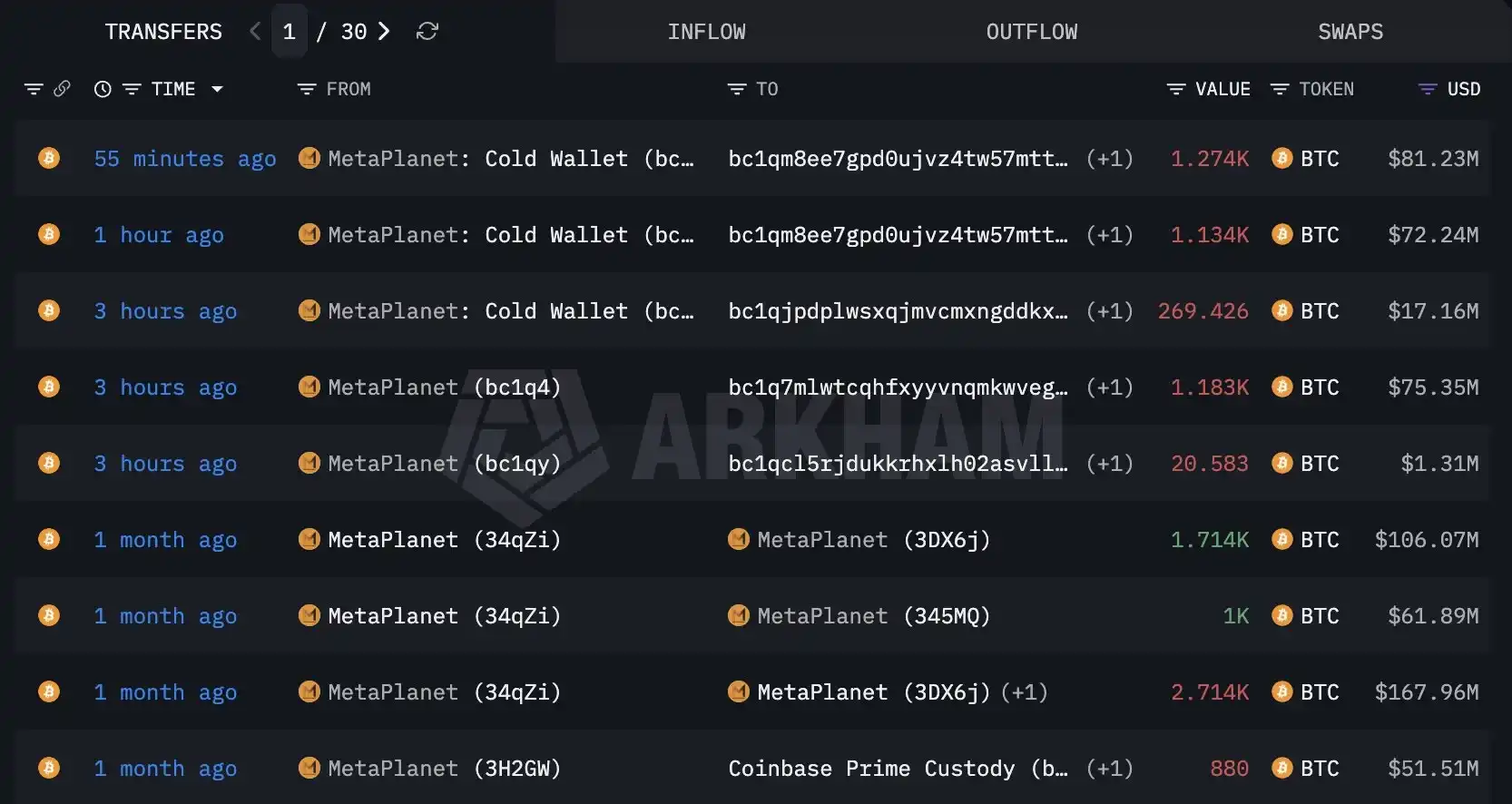
The concern started on Wednesday, when on-chain analytics account Lookonchain flagged that a Metaplanet wallet had sent out 3,881 BTC within three hours, worth about $247 million by the figures cited in the report. The Block then followed with its own report, and the idea that Metaplanet might be preparing to sell quickly spread across the market.
Gerovich says no Bitcoin was sold
According to Cointelegraph, Metaplanet moved a total of 5,014 BTC starting Wednesday and over the following 24 hours, worth about $322 million. Gerovich said the transfers went only to the company’s own custody addresses, with total network fees of roughly $8.
He also said all of the company’s addresses are public and that the transfers can be monitored on-chain in real time. His statement, as cited in the report, was: 「This was a routine custody operation. No Bitcoin has been sold, and our holdings remain at 43,000 BTC.」
The on-chain routing described in the report did not point to an exchange deposit. Instead, the Bitcoin moved between custody addresses controlled by the company. The report added that the sending wallet still held 36,000 BTC out of Metaplanet’s total 43,000-BTC position, a pattern it said was more consistent with a custody rearrangement than a sale.
Why the market reacted so quickly
The sharp reaction did not come from this transfer alone. The report tied it to a broader loss of confidence around listed Bitcoin treasury companies this year. It said Strategy has sold Bitcoin multiple times during the year after previously presenting itself as a holder that would not sell, shifting instead to what the report described as dynamic treasury management. It also said the company sold below cost in some cases to raise cash.
MARA Digital was said to have sold a total of 23,093 BTC in the first half of the year, reversing its earlier hold-only stance. Hut8, the report added, moved 493 BTC out of treasury reserves and has not clarified whether that was an internal transfer or a pre-sale move.
Against that backdrop, a large on-chain transfer by Metaplanet, described in the report as the world’s third-largest listed Bitcoin treasury company, was quickly read by the market as a possible sign of selling.
Metaplanet still faces balance-sheet pressure
The sale rumor may have been denied, but the report said Metaplanet is still under financial pressure. The company holds 43,000 BTC with an average acquisition cost of about $96,000, while Bitcoin’s current price was cited at around $64,000. That implies an unrealized loss of roughly $1.4 billion, or more than 30%.
The report also said Metaplanet’s stock has fallen more than 43% this year and is trading around JPY 221, near a historical low.
Its pace of accumulation has also slowed. The article said the company has not added to its Bitcoin position since buying 2,823 BTC in early July. After issuing $50 million in bonds to major investor EVO Fund in April, it has not announced any new financing.
Based on the figures in the report, Metaplanet has about $280 million in cash and roughly $400 million in liabilities. It also said the company’s goal of reaching 100,000 BTC by year-end now looks difficult to achieve. The gap stands at 57,000 BTC, which would require about $3.6 billion in fresh capital at the price level cited in the article.
A simple framework for reading big transfers
The report also laid out a basic way to distinguish an internal move from a sale signal. First, check the destination. Transfers between self-custodied addresses usually point to internal management, while transfers into exchange addresses are closer to a sale indicator.
Second, look at disclosure. In Metaplanet’s case, the company’s addresses are public and the CEO responded the same day with on-chain data, making the claim easier to verify. The report said a lack of response or disclosure deserves more scrutiny.
Third, track what happens next. It pointed to platforms such as Arkham, where investors can monitor entity-level holding snapshots. If a sale does occur, the position size should typically change in a visible way.
For this episode, the company’s management used on-chain data to calm the market after the transfer drew attention. Even so, the reaction showed how quickly traders now interpret large Bitcoin treasury movements through the lens of potential selling.