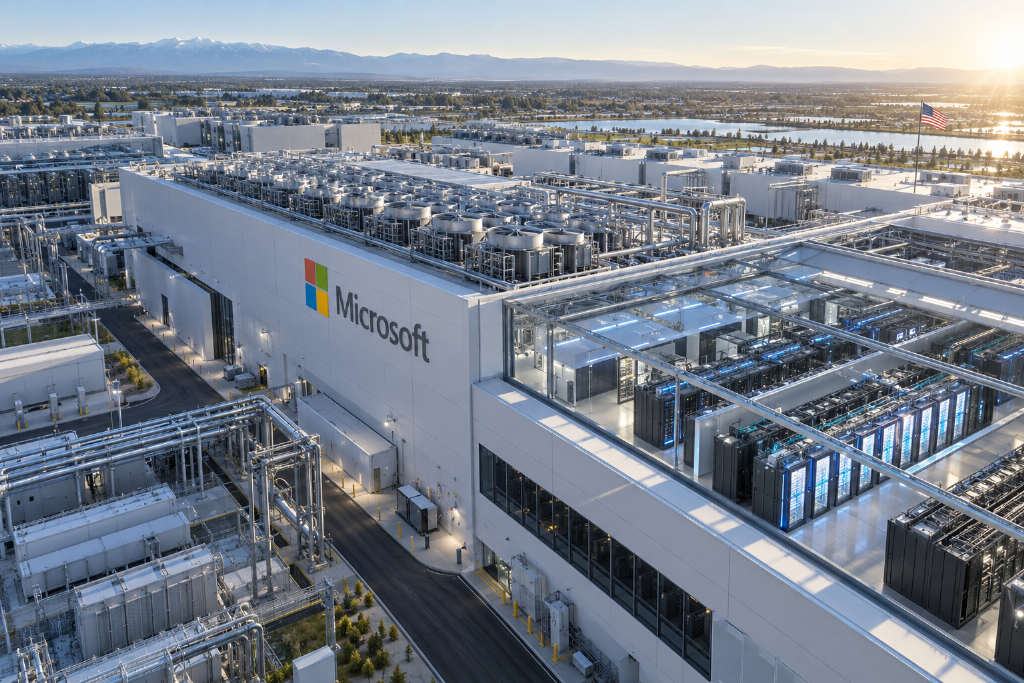
Microsoft plans to steadily raise the share of internally developed AI chips used in its data centers as it looks to reduce reliance on Nvidia GPUs. The company said future AI model request processing will mainly run on its Maia chip architecture, and it aims to deploy gigawatts of computing capacity across the Maia family. On Monday, Microsoft unveiled its third-generation AI accelerator, Maia 300, which is expected to enter production in 2027. Each data center rack can hold 96 Maia 300 chips, double the count of the previous Maia 200 generation. Microsoft said the chip can deliver up to 7 times the AI token throughput per rack compared with GPUs, while tokens processed per megawatt improve by about 40%. The company added that Maia 300 is expected to improve AI service performance and lower data center operating costs. Evercore ISI analysts estimate that Maia chips will account for about 10% of Microsoft’s AI chip spending by the first quarter of 2027. Even so, Nvidia will remain a key supplier for Microsoft’s AI infrastructure, and the company said model training will still rely on Nvidia and AMD chips. Unlike Google’s TPU and Amazon’s Trainium, Microsoft’s in-house accelerator is not yet available for rental by other enterprises.
Microsoft plans to gradually increase the use of its in-house AI chips in data centers to reduce its dependence on Nvidia GPUs, according to BlockBeats on Oct. 12.
The company said it expects its self-developed Maia chip architecture to handle most AI model requests in the future, and it plans to deploy gigawatts of computing capacity across the Maia chip family.
Maia 300 set for production in 2027
Microsoft on Monday introduced Maia 300, its third-generation AI accelerator chip, with production expected in 2027. A single data center rack can carry 96 Maia 300 chips, twice the number supported by the previous-generation Maia 200.
Microsoft said that, compared with GPUs, Maia 300 can deliver up to 7x AI token throughput per rack, while the number of tokens processed per megawatt rises by about 40%. The company said the chip is expected to improve AI service performance and reduce data center operating costs.
Nvidia remains a core supplier
Evercore ISI analysts estimate that Maia chips will make up about 10% of Microsoft’s AI chip spending by the first quarter of 2027. Even so, Nvidia will remain an important supplier for Microsoft’s AI infrastructure.
Microsoft said model training will still use chips from Nvidia and AMD. Unlike products such as Google TPU and Amazon Trainium, Microsoft’s in-house accelerator chips are not currently open for rental by other enterprises.
This article was originally published by Bit.Fan. For more cryptocurrency news and market insights, visit www.bit.fan. Disclaimer:
The market information, project data, and third-party content displayed on this platform are for industry information sharing only and do not constitute any form of investment advice or return commitment.
Cryptocurrency trading carries high risks. Users should fully assess their risk tolerance and make independent decisions. All profits, losses, and legal responsibilities are borne by the users themselves.