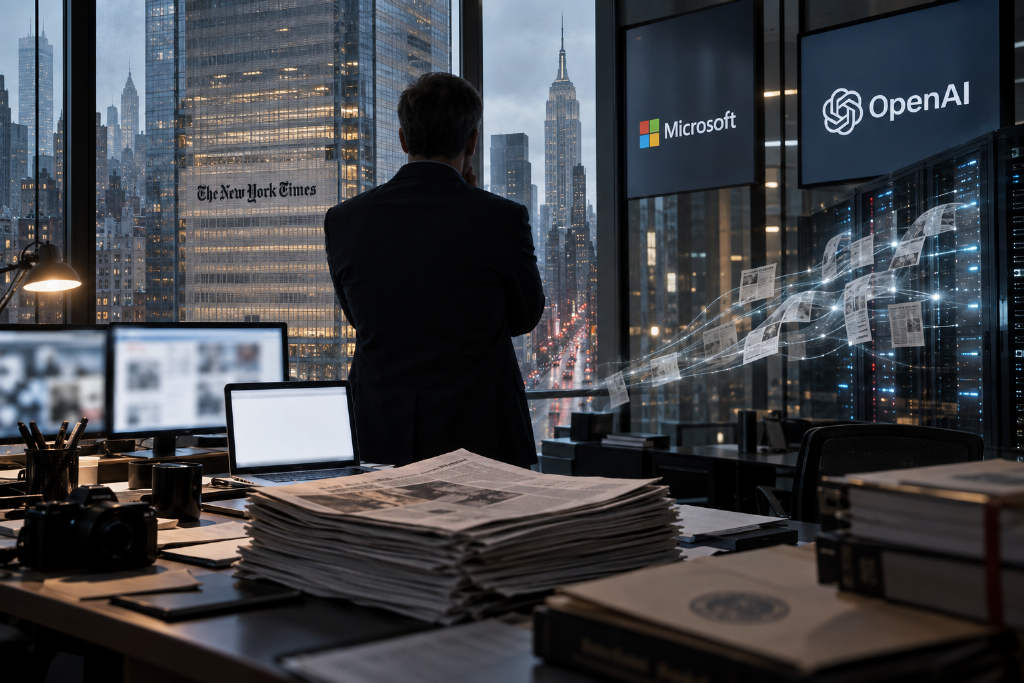
Internal materials unsealed in The New York Times copyright lawsuit against OpenAI and Microsoft revealed blunt assessments from executives about how AI systems are trained and how they affect publishers. According to the disclosed records, Microsoft Director of Applied Science Brent Hecht described large-scale scraping of web content for AI training as an "astonishing theft" and said it could amount to "the largest theft of labor in human history." Nick Turley, then head of ChatGPT, also said AI products posed an "existential threat" to publishers because they function as substitutes for content, with stronger models replacing more of it. Microsoft CEO Satya Nadella, in testimony, acknowledged that chatbots let users get answers directly, reducing visits to original sources. Another internal Microsoft document reportedly labeled the model a "death spiral," in which AI cuts into content producers’ revenue, reduces the supply of high-quality content, and eventually harms AI training itself. Plaintiffs also cited Microsoft internal data claiming that, compared with traditional Bing search, Copilot delivered 83% to 93% fewer click-throughs to news sites including The New York Times. OpenAI and Microsoft continue to argue that training on copyrighted material qualifies as fair use. Microsoft said Hecht’s remarks reflected his personal view and did not represent the company’s position or a legal conclusion on copyright.
Internal materials unsealed in The New York Times copyright case against OpenAI and Microsoft have revealed how executives inside the companies described AI training and content substitution.
According to the case materials cited by BlockBeats, Microsoft Director of Applied Science Brent Hecht described large-scale scraping of web content for AI training as an "astonishing theft unlike anything that has happened before," adding that it could be "the largest theft of labor in human history."
Nick Turley, who was leading ChatGPT at the time, also said AI products posed an "existential threat" to publishers. In his view, the products were fundamentally substitutes for content, and the better they became, the more substitution they would create.
Testimony and internal Microsoft documents
Microsoft CEO Satya Nadella acknowledged in testimony that chatbots can give users answers directly, reducing traffic to original sources.
Another internal Microsoft document described that model as a "death spiral": AI takes revenue away from content producers, the supply of high-quality content falls, and that eventually hurts AI training itself.
Plaintiffs cite internal click-through data
The plaintiffs also cited Microsoft internal data claiming that, compared with traditional Bing search, Copilot generated 83% to 93% lower click-through rates for news websites including The New York Times.
OpenAI and Microsoft still argue that using copyrighted material to train AI qualifies as fair use. Microsoft said Hecht’s remarks were his personal opinion, did not represent the company’s position, and were not a legal conclusion on copyright.
This article was originally published by Bit.Fan. For more cryptocurrency news and market insights, visit www.bit.fan. Disclaimer:
The market information, project data, and third-party content displayed on this platform are for industry information sharing only and do not constitute any form of investment advice or return commitment.
Cryptocurrency trading carries high risks. Users should fully assess their risk tolerance and make independent decisions. All profits, losses, and legal responsibilities are borne by the users themselves.