
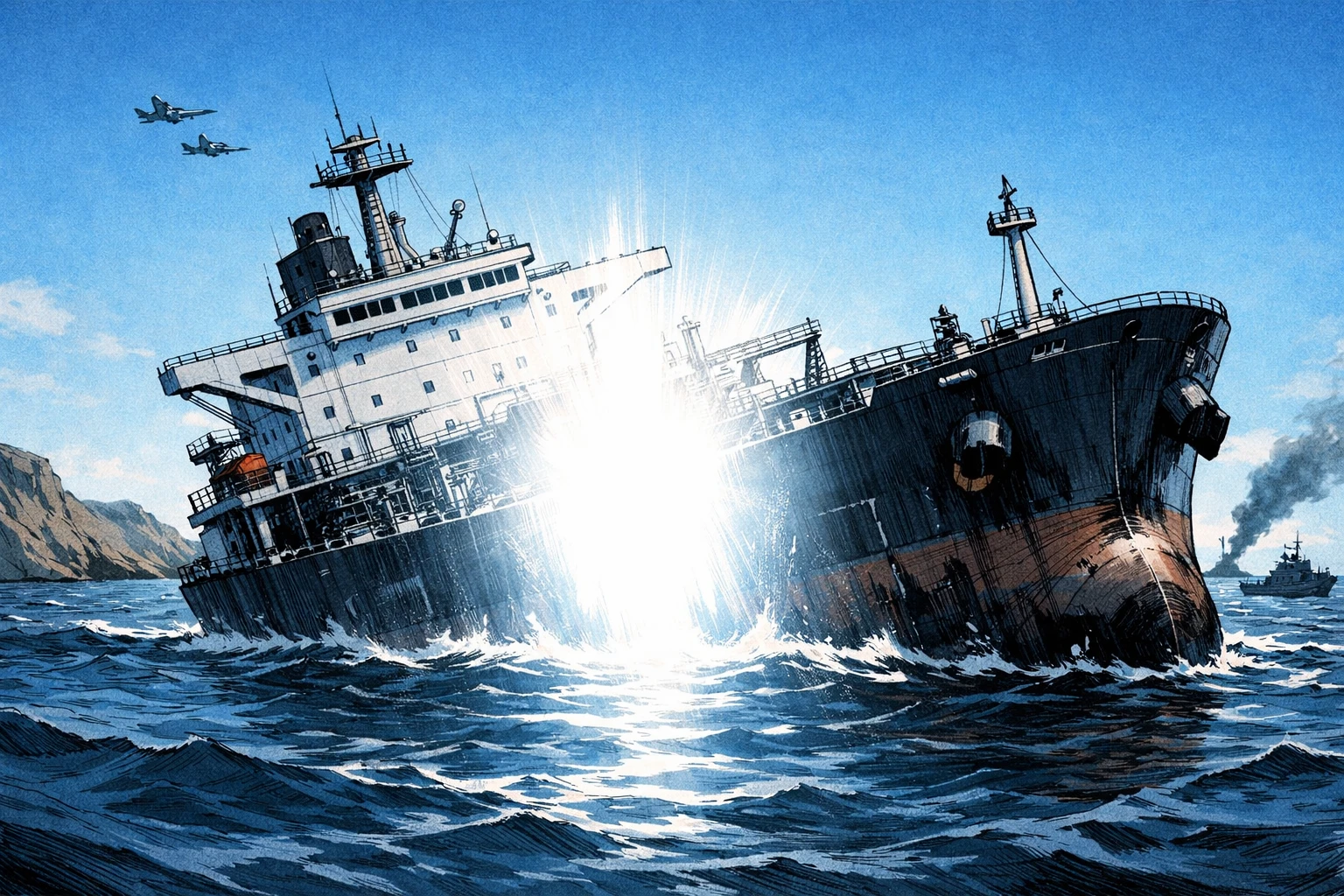
Crude oil tanker traffic through the Strait of Hormuz has ground to a near halt, triggering an acute supply shock. WTI crude futures surged 35.6% in a single week, breaking through $90 per barrel—a record weekly gain since the contract launched in 1983. Brent crude followed, currently trading at $93 per barrel.
Strait of Hormuz Blocked: 20% of Seaborne Oil Disrupted
Roughly 20% of the world's seaborne crude passes through the Strait of Hormuz. Satellite data shows vessel traffic has dropped to near zero. Regional tensions beyond the Israel-Iran conflict have forced several Gulf producers to slash output as storage capacity runs unevenly low.
Iraq has halted 1.5 million barrels per day of production. Kuwait announced preventive production cuts on March 7, with reductions expected to widen daily. ADNOC of the UAE issued a statement saying it is managing offshore oil output to meet storage demand. Qatar's Energy Minister Saad al-Kaabi told the Financial Times that oil prices could reach $150 if the Strait remains blocked for an extended period, and that Gulf exporters would invoke force majeure clauses.
White House Unveils $20B Tanker Insurance Plan; Analyst Says Physical Loss Unavoidable
The White House proposed a $20 billion "tanker insurance plan" to cap risk premiums. However, analyst Natasha Kaneva argued the market's focus has shifted from sentiment to actual loss: "If ships cannot pass safely, no amount of insurance can deliver oil to buyers." Fleet and tanker insurance underwriting remains suspended amid rising geopolitical confrontation.
Taiwan CPC Flags 1.5 NT Dollar Gasoline Hike on Monday
Retail gasoline prices are rising worldwide. The U.S. national average gasoline price jumped $0.27 per gallon in a week, hitting multi-year highs. Taiwan's CPC and Formosa Petrochemical pre-announced that gasoline prices will rise NT$1.5 per liter and diesel NT$1.1 per liter starting March 9, partially absorbed by a price stabilization mechanism. Further crude gains would add to local refinery costs.
Natural gas markets are also tightening. Asian benchmark LNG prices surged over 40% in a week after disruptions to Qatari exports.
Near-Term Focus on Reopening; Long-Term Stagflation Risk
Restoring safe navigation through the Strait of Hormuz is the only effective way to cool prices. If the blockade continues for weeks, the market will enter a phase of physical shortage. Central banks face simultaneous supply shocks and inflation pressure, leaving limited policy room. Without a diplomatic breakthrough, this energy crunch could become a prolonged backdrop, forcing the global economy to pay a permanently higher energy cost.