
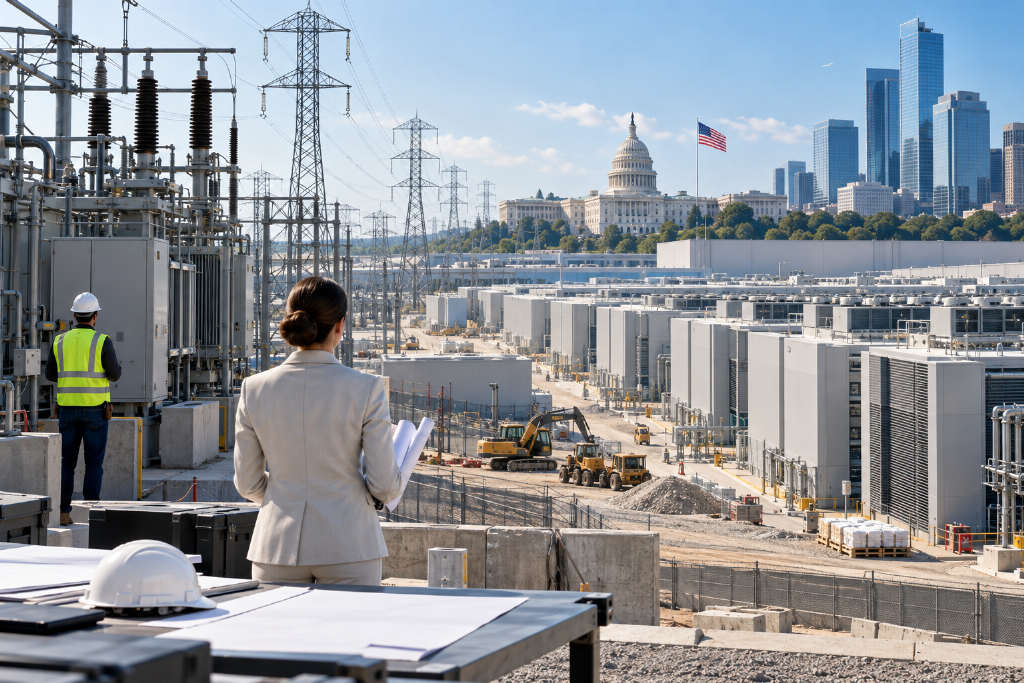
Morgan Stanley has grouped the main risks facing US AI infrastructure construction into three areas: people, power and politics. The bank said tighter local approvals, a reversal in supply-demand conditions that could push both prices and volumes lower, and electricity shortages could together threaten AI infrastructure investment plans worth as much as $1.6 trillion.
On the political side, the report said data center siting, grid interconnection applications, electricity pricing mechanisms and tax incentives are mainly controlled by state and local governments. With US midterm elections approaching, restrictions on data center construction could become an important factor for sentiment around the AI industry. The report also said removing related tax incentives has become a bipartisan issue, while regulatory decisions by utility commissions could have long-term effects on whether projects move forward.
On supply and demand, Morgan Stanley warned that the current shortage of AI compute has led companies to buy ahead of time and accept premium pricing. But if supply catches up with demand, or if demand growth slows, upstream products such as chips and memory could face simultaneous declines in pricing and shipment volumes, putting margins under pressure. Even if cloud providers’ capital spending only levels off rather than falls, suppliers could still lose pricing power.
Power is the most immediate constraint, according to the bank. Morgan Stanley’s model shows that even after including power options such as nuclear energy, gas turbines and fuel cells, the US could still face a net electricity shortfall of 32 gigawatts by 2028. By 2029, that gap could widen to about 72 gigawatts. Delays in power delivery could also leave GPUs purchased by cloud providers sitting idle, leading to equipment stockpiling and inventory buildup.
Morgan Stanley said it still maintains a constructive view on AI infrastructure, arguing that power shortages are more likely to delay projects than erase demand altogether. Even so, the bank warned that if political resistance, power bottlenecks and a supply-demand reversal hit at the same time, the result could be blocked chip procurement, weaker upstream margins and even a reversal of the broader AI capital expenditure cycle.


